
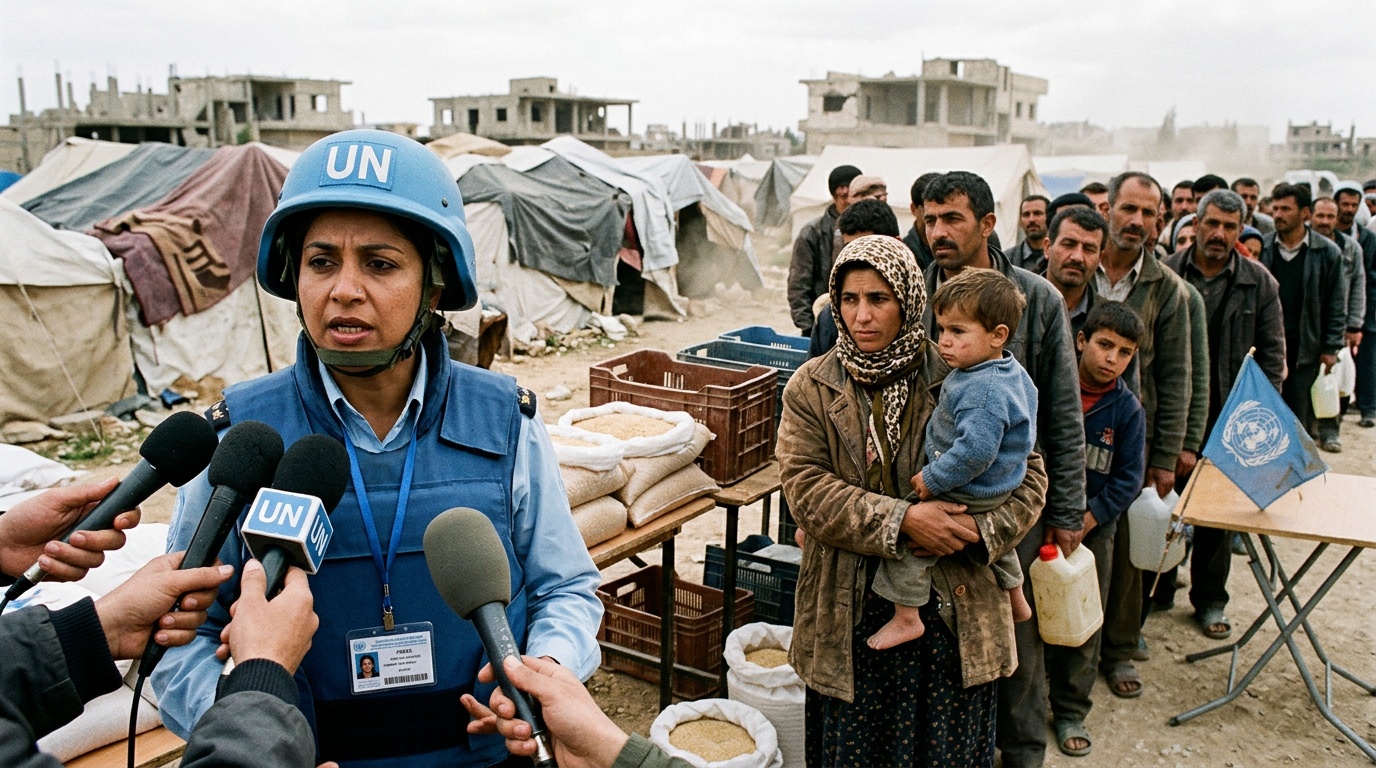
United Nations officials are warning that worsening food shortages are intensifying humanitarian emergencies across several conflict-affected regions. Fighting is disrupting farming, trade, transport, markets, and humanitarian operations at the same time. Millions of civilians now face severe hunger alongside displacement, disease, damaged infrastructure, and shrinking household incomes. Aid agencies say the overlapping pressures can quickly turn an existing emergency into a much deeper crisis. Children, pregnant women, displaced families, and communities cut off by fighting face particularly serious risks.
The warnings span conflicts in Africa, the Middle East, and other areas struggling with prolonged insecurity. Conditions vary between countries, but UN agencies repeatedly identify conflict as a major driver of acute hunger. Violence can prevent farmers from reaching fields and force families to abandon crops, livestock, and stored food. It can also close roads, damage ports, disrupt supply chains, and make commercial transport dangerous. Those disruptions reduce food availability while often driving prices beyond what vulnerable households can afford.
Conflict Drives Severe Food Insecurity
The World Food Programme and Food and Agriculture Organization regularly monitor hunger risks across vulnerable countries. Their assessments examine conflict, weather shocks, economic instability, displacement, food prices, and humanitarian access. Conflict frequently appears among the leading causes of severe food insecurity in the hardest-hit locations. Families often respond by reducing meal sizes, skipping meals, selling assets, or taking on debt. Such coping measures can provide temporary relief but leave households less prepared for future shocks.
Food insecurity also becomes more dangerous when conflict destroys basic services. Damaged water systems increase disease risks, while disrupted clinics reduce access to treatment. Malnutrition weakens immune systems and makes common illnesses more dangerous, particularly for young children. Families displaced from their homes may also lose access to land, employment, clean water, and local support networks. Therefore, UN officials increasingly describe hunger as part of a broader protection and public health emergency.
Sudan Faces an Extreme Hunger Crisis
Sudan has become one of the starkest examples of conflict worsening hunger and displacement. Fighting between the Sudanese Armed Forces and Rapid Support Forces began in April 2023. The conflict has devastated communities, displaced millions, disrupted markets, and severely restricted humanitarian operations. Food security experts have confirmed famine conditions in parts of Sudan during the conflict. Other communities have faced similarly alarming indicators and risks as violence blocks reliable access.
Humanitarian agencies have repeatedly sought safer and more predictable routes for food, medicine, and other essential supplies. However, insecurity, bureaucratic restrictions, damaged infrastructure, and funding shortages can delay operations. Aid workers also face serious security threats while trying to reach isolated communities. UN officials stress that sustained humanitarian access remains essential for preventing further deaths and malnutrition. Yet emergency assistance cannot replace functioning markets, farms, health systems, and livelihoods over the long term.
Gaza’s Food System Has Suffered Severe Damage
The Gaza Strip has also experienced extreme food insecurity during the Israel-Hamas war. Israeli military operations, displacement, infrastructure destruction, and restrictions affecting supplies have severely disrupted daily life and food systems. The UN has repeatedly raised concerns about hunger, malnutrition, water shortages, and inadequate healthcare. Humanitarian organizations say dependable access for commercial goods and aid remains crucial for meeting civilian needs. Conditions can change rapidly when crossings, distribution routes, warehouses, kitchens, or local markets stop functioning.
Israel says its restrictions and military measures address security concerns and prevent supplies from benefiting Hamas. UN agencies have called for faster, broader, and sustained humanitarian access while emphasizing protections required under international humanitarian law. Aid organizations also need safe internal routes to move supplies after they enter Gaza. Food deliveries alone cannot solve the crisis when water, sanitation, shelter, fuel, and healthcare remain under intense pressure. Consequently, humanitarian agencies coordinate multiple services to reduce preventable illness and death.
Hunger Persists Across Other Conflict Zones
Severe food insecurity also affects parts of South Sudan, Yemen, the Democratic Republic of the Congo, and the Sahel. Each crisis has distinct political, military, economic, and environmental causes. However, prolonged violence commonly forces displacement and interrupts agricultural production or trade. Communities hosting displaced people can face additional pressure on food, housing, water, schools, and medical services. Climate shocks can compound those problems through droughts, floods, crop losses, and livestock deaths.
Yemen illustrates how years of conflict can leave lasting economic and humanitarian damage even when front lines become less active. Many households depend on unstable incomes and humanitarian assistance to obtain basic necessities. Meanwhile, eastern Democratic Republic of the Congo has experienced repeated displacement amid armed violence. That movement can prevent families from planting crops or reaching established livelihoods. The resulting instability connects local security conditions directly with household nutrition and regional food availability.
Funding Shortfalls Force Difficult Aid Decisions
At the same time, UN agencies face major gaps between humanitarian needs and available funding. Donor shortfalls can force organizations to reduce rations, narrow eligibility, or prioritize communities facing the most extreme conditions. Such decisions become especially difficult when millions of people already meet severe food insecurity thresholds. WFP has repeatedly warned that funding constraints can reduce its ability to reach vulnerable populations. Agencies also require money for logistics, nutrition treatment, emergency agriculture, water systems, and healthcare.
Humanitarian financing cannot overcome access restrictions or active fighting by itself. Trucks require safe roads, functioning entry points, fuel, storage facilities, staff, and permission to move. Armed groups and military operations can make each part of that chain unreliable. Looting and attacks on humanitarian personnel can further reduce aid capacity. For that reason, UN officials routinely pair funding appeals with demands for civilian protection and unimpeded humanitarian access.
Malnutrition Creates Long-Term Consequences
Food shortages have effects that continue after immediate hunger subsides. Acute malnutrition can increase children’s risk of illness and death without timely treatment. Prolonged nutritional deprivation can also harm physical growth and development. Meanwhile, families may sell livestock, tools, land, or other productive assets to buy food. Those choices can weaken recovery after conflict declines and leave households dependent on assistance for longer periods.
Schooling can suffer as families relocate or children work to support household survival. Women and girls may face heightened protection risks while searching for food, water, fuel, or income. Displaced people can encounter overcrowded shelters and limited sanitation, increasing exposure to infectious diseases. These connected risks explain why food security responses extend far beyond distributing grain. Effective operations often combine food assistance with nutrition, healthcare, clean water, sanitation, agriculture, and protection services.
UN Agencies Call for Access and Conflict Reduction
UN officials consistently argue that humanitarian assistance can save lives but cannot resolve the conflicts driving many hunger emergencies. Agencies call on parties to protect civilians, humanitarian workers, medical facilities, and essential infrastructure. They also seek reliable access across front lines and borders when populations cannot obtain adequate food locally. International humanitarian law establishes protections and obligations concerning civilians and humanitarian relief during armed conflict. Compliance can determine whether assistance reaches communities before conditions deteriorate further.
Early action can also reduce the cost and human impact of worsening food crises. Cash assistance can support functioning markets, while agricultural support can protect livelihoods where farming remains possible. Nutrition screening can identify vulnerable children before their condition becomes life-threatening. Restoring water systems and healthcare can reduce diseases that make malnutrition more deadly. However, these measures require predictable financing and stable access to communities experiencing the greatest need.
Food Security Depends on More Than Emergency Deliveries
The widening hunger emergencies demonstrate how quickly conflict can dismantle systems that normally keep people fed. A harvest may fail because farmers flee, while markets may collapse because roads become unsafe. Currency depreciation or lost employment can then make remaining food unaffordable. Humanitarian relief becomes an essential lifeline when those failures occur simultaneously. Yet aid agencies cannot rebuild food security without safer conditions and functioning local economies.
UN warnings therefore focus both on immediate survival and preventing further deterioration. Officials continue urging governments, conflict parties, donors, and international institutions to support urgent humanitarian operations. They also emphasize political efforts that reduce violence and allow communities to restore livelihoods. Without improved access, adequate funding, and stronger civilian protections, food shortages can deepen already severe humanitarian crises. For conflict-hit populations, the consequences include rising malnutrition, repeated displacement, lost livelihoods, and greater risks of preventable death.