
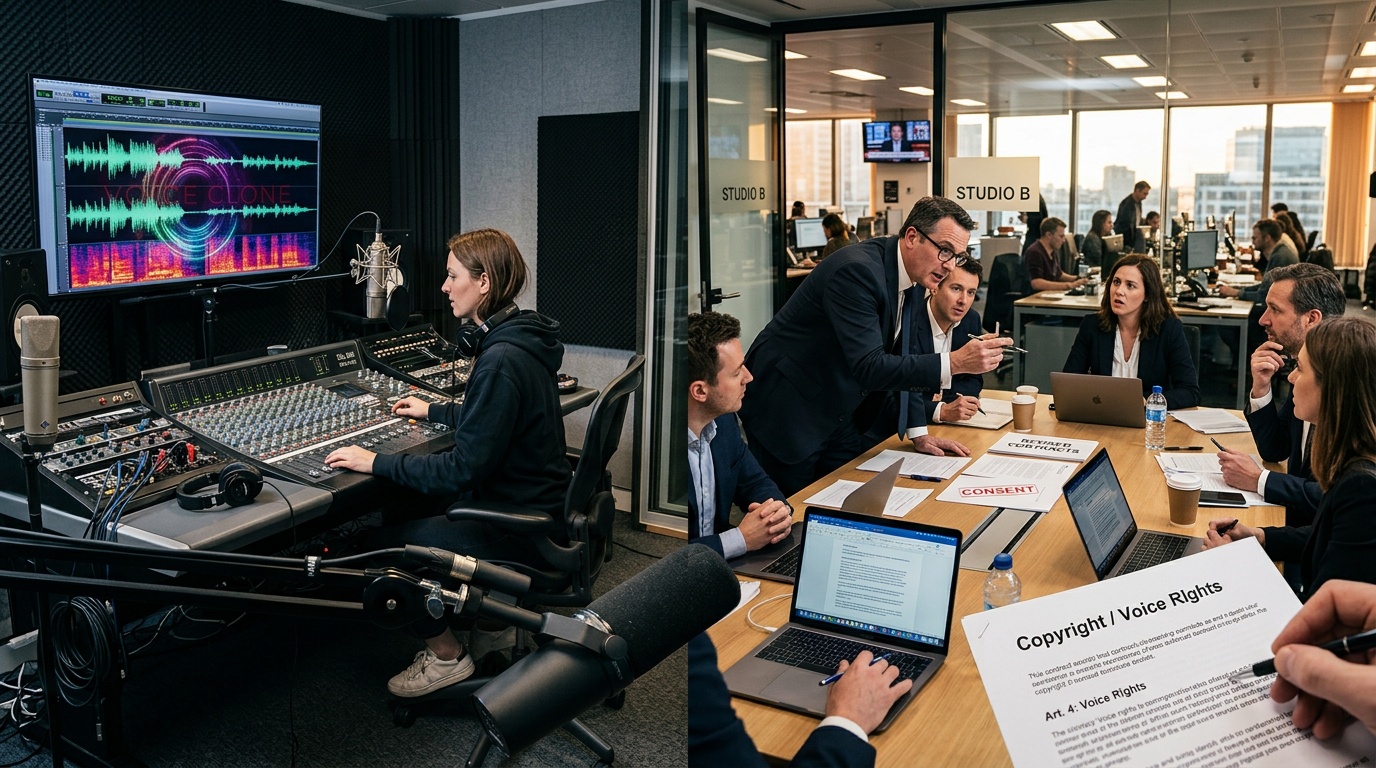
Studios and labels are racing to update contracts as voice cloning matures. Synthetic voices can imitate stars convincingly and at scale. That capability challenges long-standing rights, compensation models, and creative control. As a result, deal terms are changing across film and music.
Voice models lower costs for dubbing, trailers, and international releases. They also enable unauthorized copies and deceptive endorsements. Both opportunities and risks now appear in every negotiation. Consequently, agreements increasingly address how artificial voices can be trained, licensed, and reused.
Why Voice Cloning Forces a Rewrite
Traditional contracts assumed performances came from the human signatory. Generative systems can synthesize performances without new sessions. That shift breaks default assumptions about consent, control, and payment. It also amplifies reputational exposure from off-brand uses.
Producers want predictable access to voices for marketing and localization. Talent wants guardrails, approval rights, and ongoing compensation. These interests collide when a model can generate infinite takes. Therefore, contracts now define precise boundaries for synthetic performances.
New Consent and Control Clauses
Many agreements add explicit, written consent for any voice cloning. Clauses require clear disclosure before scanning or training. They describe the capture process, data retention, and derivatives allowed. They also identify who operates, hosts, and secures the resulting model.
Some deals separate “voice model” rights from “recording” rights. Talent can grant limited, revocable access to a fine-tuned model. Producers specify use cases, from ADR to trailers or games. Approvals often apply at project, scene, and territory levels.
Residuals, Royalties, and Synthetic Performances
Compensation frameworks are evolving for AI-assisted and AI-generated uses. Parties are setting rates for cloned ADR, dubbing, and localization. They tie residuals to distribution channels, usage duration, and audience reach. They also maintain union minimums where applicable.
Music contracts address cloned vocals and featured artist credit. Labels and artists negotiate per-track fees and royalty uplifts. Payment triggers can include streams, syncs, and derivative remixes. These provisions aim to prevent value leakage from untracked synthetic uses.
Scope, Duration, and Revocation Mechanics
Modern clauses define scope by medium, geography, and language. They cap duration, with sunsets and scheduled reviews. Revocation rights appear for reputational harm or misuse. Contracts sometimes include kill-switch obligations and model deletion on termination.
Unions and Guilds Reshape Baselines
Guild agreements have started codifying AI guardrails. Writers secured provisions limiting AI’s credit and required disclosures. Screen actors negotiated informed consent and compensation for digital replicas. Musicians have pushed for protections around digital doubles and reuse.
These baselines influence individual deals and studio policies. They set minimums for consent, notice, and payment. They also require clear documentation of AI inputs and outputs. As talks continue, union standards will likely expand and solidify.
Labels, Studios, and Distributors Respond
Studios are piloting internal clearance workflows for synthetic media. Legal teams catalog training data and model versions used. Production checklists cover source material, approvals, and audit trails. Distributors request provenance metadata before accepting deliverables.
Labels have issued guidance against unauthorized voice models. Takedown practices expanded after viral soundalike tracks emerged. Some labels test official voice models for approved collaborations. They pair those tests with watermarking and contributor attribution.
Litigation and Legal Precedents
Courts have long recognized voice as a protectable attribute. Midler v. Ford held soundalike ads violated publicity rights. Waits v. Frito-Lay reached a similar conclusion on endorsements. Those cases now inform claims against AI-enabled imitations.
Recent lawsuits challenge training on copyrighted recordings and lyrics. Industry groups sued AI music generators alleging infringement. Platforms face claims over deceptive endorsements using cloned voices. These disputes pressure negotiators to address training and licensing explicitly.
Regulatory and Policy Backdrop
Right of publicity laws vary by state and country. California and New York protect name, image, and voice. Tennessee enacted the ELVIS Act targeting unauthorized AI voice clones. These statutes raise the stakes for unlicensed imitation.
Policymakers also push transparency for synthetic media. The European Union’s AI Act adds disclosure obligations. U.S. agencies warn against deceptive deepfakes and endorsements. Executive branch guidance encourages provenance signals and watermark research.
Technical Safeguards and Watermarking
Contracts increasingly require technical controls around models and outputs. Parties may prohibit commingled training with outside datasets. They mandate model isolation, role-based access, and event logging. They also require prompt filters that block impersonation requests.
Watermarking and provenance standards support auditability. Audio watermarks can signal synthetic origins without audible artifacts. Content credentials can attach cryptographic provenance metadata. Together, these tools help enforce consent, attribution, and allowed uses.
Training Data and Derivative Rights
Training provisions now appear as dedicated schedules. Teams define allowed sources, retention, and model outputs. Some agreements ban training on unreleased takes and outtakes. Others restrict training to isolated stems or de-identified features.
Derivative works clauses address outputs resembling specific performances. Parties debate thresholds for substantial similarity and market harm. They also define permitted emulation of style without identity. These lines matter for both compliance and creativity.
Global and Posthumous Rights
International projects face divergent laws and customs. Some territories emphasize moral rights and integrity. Others prioritize economic rights and licensing flexibility. Consequently, agreements map jurisdictional rules to localized consent workflows.
Estates now license posthumous voice models with care. Contracts address authenticity claims and audience expectations. They include strict review for scripts and endorsements. These terms protect legacy while enabling curated new works.
Insurance, Indemnities, and Risk Allocation
Risk management language is expanding alongside creative terms. Policies now evaluate exposure from synthetic voice misuse. Producers seek coverage for takedowns and reputational harm. Carriers, however, scrutinize model governance and security controls closely.
Indemnities allocate liability for training and deployment choices. Vendors warrant lawful data sources and adequate consent. Studios warrant authorized use of resulting outputs. Mutual notice and cure periods support collaborative problem solving.
Practical Steps for Creators and Companies
Artists should inventory voice assets and prior grants. They should document desired use cases and red lines. Negotiators can attach a voice model addendum to deals. That addendum can govern scanning, training, and every synthetic use.
Companies should standardize consent forms and audit trails. They should test watermarking and provenance in controlled pilots. Cross-functional governance should review scripts, prompts, and model updates. Continuous training on policy and tools helps teams execute responsibly.
Sample Clauses Emerging in the Market
Define “Synthetic Voice” and “Voice Model” with precise scope. Require written, informed consent before any capture or training. Limit use by project, media, territory, and duration. Include renewal windows and explicit off-switch procedures.
Establish approval rights for scripts and promotional contexts. Set fees for cloning sessions and per-use payments. Tie residuals to platforms and audience metrics. Prohibit further training outside the agreed dataset and environment.
The Outlook for Creative Work
Voice cloning will remain woven into production workflows. Contracts will determine whose values guide that adoption. Clear, enforceable terms can reward talent and reduce disputes. With aligned incentives, synthetic voices can support sustainable creativity.