
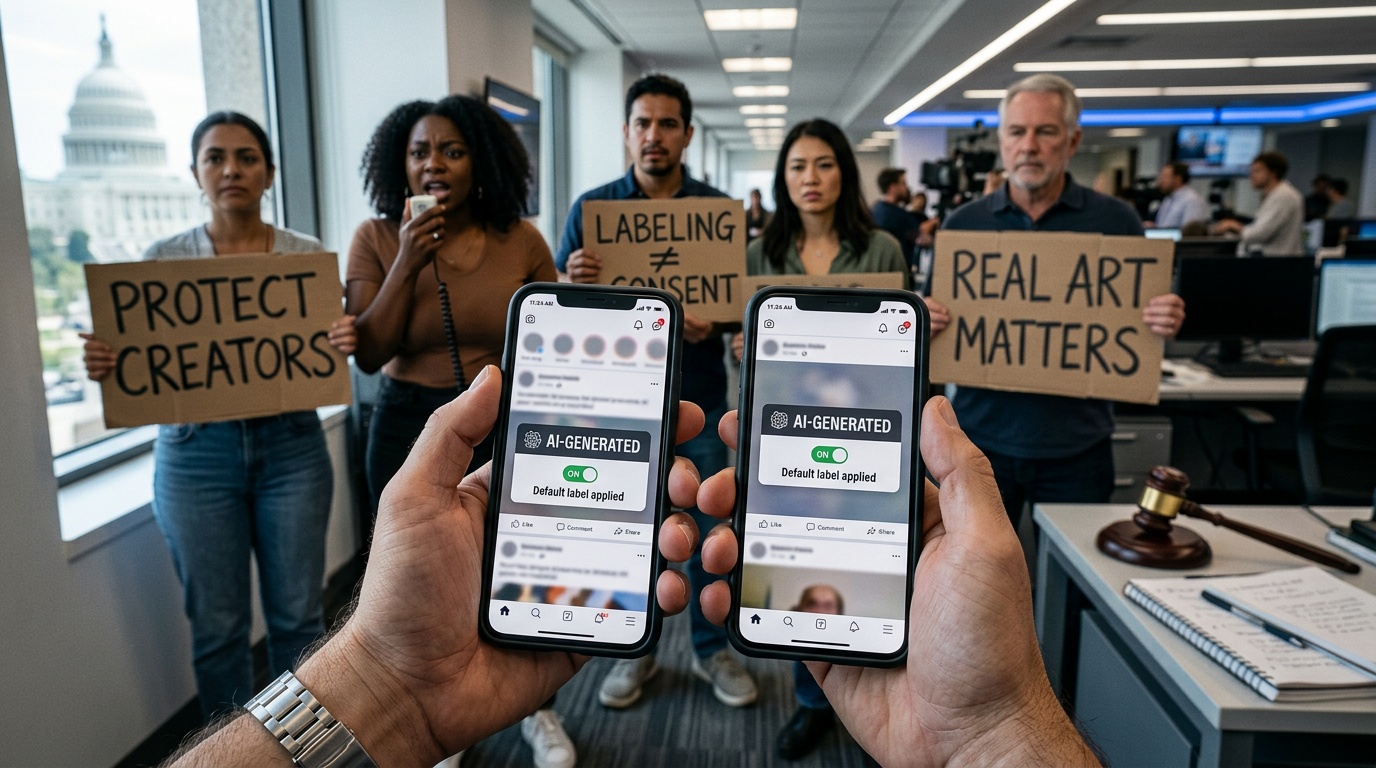
Major social platforms are moving to label AI-generated content by default or when clear signals appear. Companies say the labels help audiences understand what they are seeing, hearing, or sharing. Platforms also frame the changes as necessary risk controls during a volatile election cycle. Creators argue the labels can be vague, stigmatizing, and inconsistently applied. Many complain that traditional edits now trigger AI flags that imply deception. That tension is shaping product design, policies, and enforcement approaches. The debate will intensify as detection tools evolve and regulations tighten.
What the New Default Labels Do
Default labels typically appear when platforms detect provenance signals or when creators disclose synthetic elements. The most common trigger involves Content Credentials, a C2PA-backed metadata standard embedded by creative tools. Labels often read “Made with AI,” “AI-generated,” or “Contains synthetic content,” depending on context. Some platforms show a prominent notice for sensitive topics like health, elections, or public safety. Others place a lighter disclosure within details panels or captions. Placement and wording matter, because clarity affects trust and perceived severity.
Platforms increasingly combine automatic detection with manual creator disclosures. They encourage, and sometimes require, creators to self-report realistic synthetic scenes. If creators fail to disclose, companies can add labels themselves or apply penalties. Those penalties range from reduced reach to removal for policy violations. This mix of automation and accountability underpins today’s labeling systems. It also leaves room for disputes about accuracy and intent.
Platforms Taking Action
Meta: Facebook and Instagram
Meta expanded AI content labels across Facebook and Instagram using multiple signals. The company reads Content Credentials from tools like Adobe and can apply labels automatically. It also requires disclosures for realistic synthetic media that could mislead viewers. Photographers reported frustration when routine edits triggered “Made with AI” labels. They argued the phrasing suggested fabrication rather than enhancement or retouching. Meta says it continues to refine triggers and appeals to reduce overlabeling.
YouTube
YouTube rolled out creator disclosures for altered or synthetic content that could confuse viewers. The platform adds visible labels on watch pages and sometimes uses a more prominent notice. It reserves heightened labeling for sensitive topics like news, elections, and health. Creators must accurately disclose realistic synthetic scenes, voices, or performances. YouTube can remove noncompliant videos or apply policy penalties for deceptive practices. These steps build on long-standing manipulated media and spam policies.
TikTok
TikTok launched automatic labeling for content carrying standardized provenance metadata. The company reads Content Credentials attached by participating partners and creative tools. TikTok also requires creators to tag AI-generated content through built-in disclosure tools. Undisclosed realistic synthetic media can face takedowns or reduced distribution. The company integrates labeling across video, image, and audio formats. Its CapCut ecosystem now supports provenance features to streamline compliant publishing.
Snapchat and Others
Snap applies an “AI” watermark to certain outputs, including Dreams-style portraits and effects. It also uses labels to indicate synthetic elements in lenses and features. Other platforms rely on policy-driven notices and community annotations for manipulated media. Some have not yet deployed broad automatic AI labels across all formats. However, most now require disclosures for realistic synthetic depictions that could mislead. The direction of travel remains clear across the competitive landscape.
Why the Shift Is Accelerating
Election cycles and high-velocity misinformation campaigns are driving urgency across trust and safety teams. Platforms must mitigate systemic risks under the European Union’s Digital Services Act. Very large platforms face explicit obligations to address disinformation and manipulated media risks. The EU AI Act also introduces transparency duties for deepfakes and synthetic content. Regulators increasingly expect standardized approaches, measurable outcomes, and robust reporting. The resulting pressure accelerates labeling and provenance investments.
Industry coordination also plays a significant role. Leading firms endorsed an elections-focused accord to curb deceptive AI content. That pledge prioritized detection, provenance, and collaborative takedown workflows. Advertisers have pressed for stronger safeguards around political and issue messaging. Civil society groups additionally want harm reduction around deepfake harassment and scams. Those forces converge on labeling as a pragmatic first step.
How Detection and Labeling Work
Today’s systems lean on provenance standards, notably the C2PA framework and Content Credentials. Creative tools from major vendors can attach tamper-evident metadata showing edit histories and generators. Platforms read those markers to place disclosures without guessing from pixels alone. Some also experiment with watermarking methods, like Google’s SynthID for images. Model-based classifiers supplement provenance when metadata is missing or stripped. Each method carries tradeoffs in reliability, robustness, and privacy.
Metadata can be removed through screenshots, recompression, or re-encoding. That makes exclusive reliance on provenance insufficient for enforcement. Classifiers struggle with novel models, heavy compression, and adversarial transformations. Watermarks can degrade under editing or be absent in cross-platform workflows. As a result, platforms combine signals and emphasize creator accountability. Appeals processes and policy nuance try to catch edge cases.
Creator Backlash and Concerns
Creators worry default labels carry a stigma that undermines trust and artistry. Photographers report everyday edits now appear as “AI” to casual viewers. Filmmakers fear audiences will conflate generative scenes with harmless visual effects. Musicians worry about labels when using AI-assisted mastering or restoration tools. Many argue labeling should distinguish between enhancement and fabrication. They want clearer taxonomy and context around what “AI-generated” actually means.
Inconsistent application fuels resentment and confusion across communities. Some lightly edited posts receive bold labels, while obvious fakes slip through. Creators also report reach declines following labeled uploads, though evidence remains mixed. Monetization impacts concern YouTubers who depend on advertiser trust and suitability. Artists additionally fear retroactive enforcement on archives lacking provenance metadata. These frustrations are prompting calls for precision, appeals, and education.
Enforcement and Legal Exposure
Failing to mitigate deepfake risks carries legal, financial, and reputational consequences. Under the DSA, large platforms face possible fines up to six percent of global revenue. Regulators can demand systemic risk assessments and remedial measures. In the United States, regulators view undisclosed synthetic endorsements as potentially deceptive. Several states now restrict election deepfakes and require disclosures in political advertising. Globally, advertising standards bodies push for clear synthetic content notices. These converging frameworks heighten urgency around consistent labeling practices.
What Changes for Users and Brands
Audiences should expect more visible AI disclosures across feeds, stories, and short-form videos. Labels will likely expand to audio and live streams over time. Creators should review platform rules and update workflows for provenance. Using Content Credentials can reduce mistaken flags and support transparency. Clear captions help explain what is synthetic and what is not. Brands should align creative suppliers on standards and keep audit trails for campaign assets.
Teams should also test disclosure flows before major launches. They can simulate reposting, editing, and cross-platform publishing to check persistence. Legal and policy partners can map jurisdictional rules to campaign plans. Election and health content deserves extra scrutiny and documentation. Appeals channels matter when labels misrepresent edits or context. Preparedness reduces disruption when policies or algorithms change rapidly.
The Road Ahead
Expect more interoperability across provenance standards and creative suites. As more tools embed Content Credentials, automatic labeling will become more consistent. Platforms will keep tuning triggers to reduce false positives and negatives. They will likely expand “tiered” labels that differentiate enhancement from fabricated realism. Education efforts will explain labels and encourage responsible synthetic storytelling. The outcome will shape trust, creativity, and safety across the social web.
Better signals alone will not solve every challenge. Adversaries will keep adapting to detection methods and policy constraints. However, stronger provenance, clearer disclosures, and accountable publishing can raise the bar. Thoughtful design can also avoid punishing legitimate creative workflows. As expectations solidify, transparency should help users understand what they are consuming. That understanding remains the goal driving today’s rapid labeling push.