

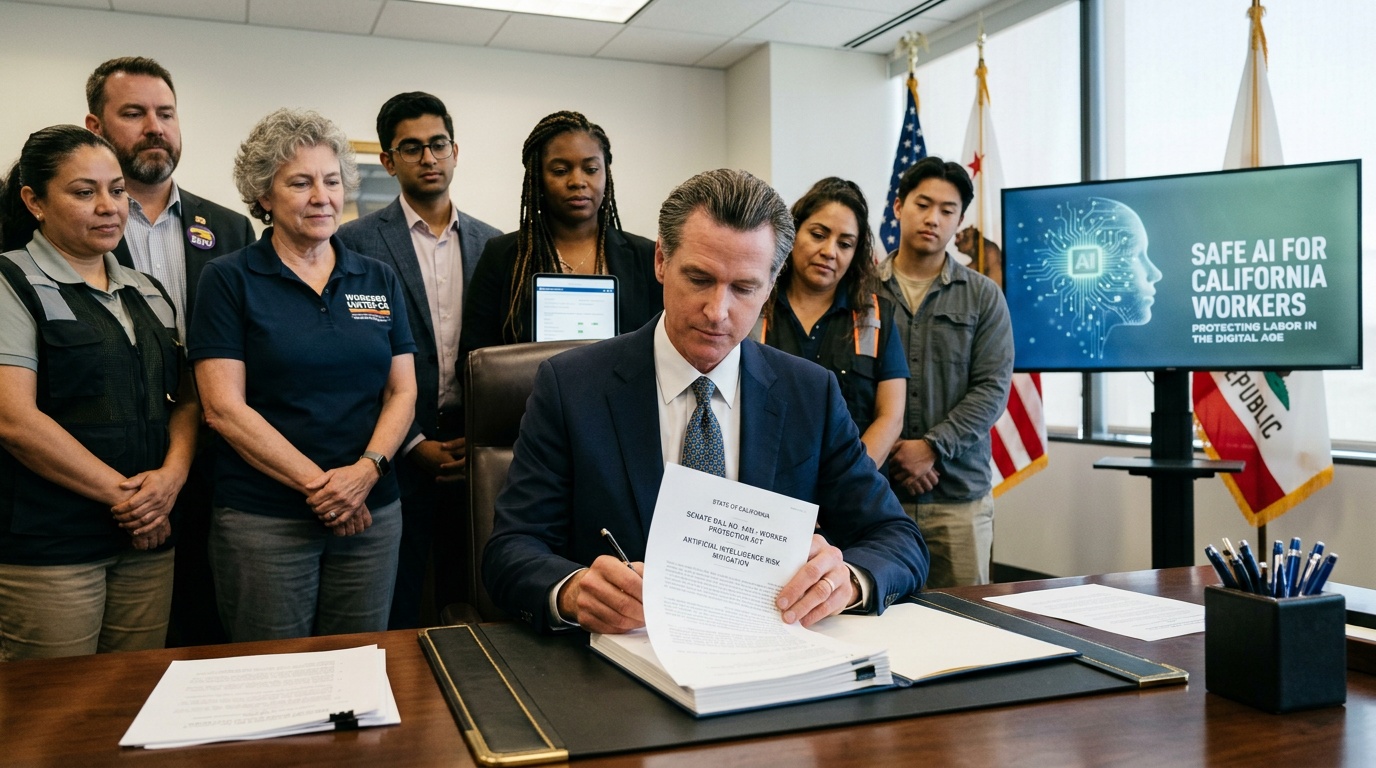
California Governor Gavin Newsom signed two laws on September 17, 2024, addressing artificial intelligence risks in entertainment work. Assembly Bill 2602, or AB 2602, governs certain contracts involving digital replicas of living performers. Assembly Bill 1836, or AB 1836, restricts unauthorized replicas of deceased performers. Together, the measures respond to concerns raised during Hollywood labor disputes.
Newsom signed the bills at SAG-AFTRA Plaza in Los Angeles alongside union leaders and lawmakers. SAG-AFTRA represents actors, broadcasters, recording artists, and other media professionals. The union made artificial intelligence protections central to its 2023 strike and contract negotiations. Performers feared studios could copy voices or appearances while reducing future paid work.
The laws do not ban AI tools or all digital recreations. Instead, they establish consent and representation rules around specific commercial uses. Their scope matters because digital replicas can support creative work when performers knowingly approve them. The same technology can threaten bargaining power when companies seek broad rights through vague agreements.
How AB 2602 protects living performers
AB 2602 makes certain digital replica clauses unenforceable under California law. The rule applies when a contract covers personal or professional services. It targets clauses allowing a replica to replace work that the individual would otherwise perform personally. A digital replica can reproduce a person’s voice or likeness through computer generated and other technological methods.
However, the law sets several conditions before invalidating a provision. The agreement must lack a reasonably specific description of the replica’s intended uses. The performer also must lack representation by legal counsel or a labor union during negotiations. These requirements focus the statute on vague grants obtained without meaningful professional support.
This structure encourages producers to describe planned uses and ensure informed bargaining. It does not automatically invalidate every agreement involving synthetic media. A represented performer may still authorize a replica under negotiated terms. Likewise, detailed agreements can remain enforceable when they satisfy applicable legal requirements.
Why contract language became a flashpoint
AI systems can create convincing speech, movement, and facial performances from recorded material. That capability gives studios new editing, dubbing, and production options. Yet broad contract clauses may transfer rights beyond one project or expected purpose. Performers therefore sought clearer control over how employers reuse their identities.
The 2023 SAG-AFTRA strike brought these questions into public view. Union negotiators demanded compensation and consent standards for digital replicas. Their eventual television and theatrical agreement included protections, but state legislation reaches beyond a single collective bargaining contract. The statute also gives California courts a rule for assessing covered clauses.
AB 1836 covers deceased personalities
AB 1836 addresses another problem: digital recreations can feature people who cannot grant fresh consent. The law creates liability for producing, distributing, or making available certain unauthorized digital replicas. It covers a deceased personality’s voice or likeness in expressive audiovisual works and sound recordings. Rights holders can authorize uses after a performer dies.
A person who violates the statute may face damages and other available remedies. The law recognizes at least $10,000 in damages for specified violations, or actual damages if greater. A prevailing party may also recover profits attributable to the unauthorized use and legal costs. Courts can award injunctive or other equitable relief when appropriate.
The statute contains important exceptions protecting speech and public information. It generally permits news, public affairs, sports coverage, documentaries, and historical or biographical works. It also protects satire, parody, criticism, commentary, scholarship, and certain incidental uses. Advertisements for an exempt work can qualify when they use the same protected material.
Balancing consent with expression
Those exceptions aim to prevent the law from suppressing legitimate storytelling or reporting. A biographical film may need to depict a deceased public figure. A news organization may also show synthetic material while explaining misinformation. The restrictions focus instead on unauthorized replicas used as performances within covered expressive products.
California already protected postmortem publicity rights before AB 1836. However, lawmakers wanted clearer rules for replicas embedded in films, programs, games, and recordings. Supporters cited unauthorized digital uses of famous performers as a growing risk. The new provisions adapt existing identity protections to modern generative technologies.
What the laws mean for employers
Studios, game developers, record companies, and advertising businesses should review replica provisions carefully. They need specific descriptions, documented consent, and appropriate representation when AB 2602 applies. Businesses should also identify who controls a deceased performer’s rights before releasing covered material. Existing licenses may require legal review because each project presents different facts.
Employers should not treat union coverage as a substitute for precise communication. Clear notices can explain whether a replica supports editing, dubbing, promotion, or future productions. Payment terms should address reuse, duration, media, territory, and possible modifications. Recordkeeping can help demonstrate what the performer understood and approved.
The measures also create practical questions for global productions. A company may hire talent elsewhere while distributing content in California. Choice of law provisions, union agreements, and publicity rights may overlap. Companies therefore need tailored advice rather than a single universal AI policy.
Limits and broader significance
These laws protect a defined group, not every California worker exposed to automation. They do not broadly regulate hiring algorithms, productivity monitoring, scheduling systems, or workplace surveillance. They also do not guarantee employment when technology changes production methods. Their central contribution involves identity, consent, representation, and compensation within creative work.
That narrow scope still carries wider importance. Performers supply the human expressions that digital systems can imitate at scale. By regulating contracts and postmortem uses, California places responsibility on businesses deploying those imitations. Other states, unions, and companies may study the framework while developing their own rules.
Enforcement and next steps
The measures took effect on January 1, 2025, with application details set by their statutory text. Disputes will likely clarify what counts as a reasonably specific description. Courts may also examine whether particular replicas fall within AB 1836’s exceptions. Contracting parties should preserve drafts, consent records, representation details, and final approvals.
The signing also reflected cooperation between state officials and organized labor. Newsom presented the bills as protections for workers whose voices and likenesses hold economic value. SAG-AFTRA leaders praised the measures as safeguards against exploitation. The laws emerged after legislators heard sustained concerns about consent, replacement, and lost income.
Ultimately, AB 2602 and AB 1836 establish targeted guardrails rather than comprehensive AI regulation. They preserve authorized production while challenging vague contracts and unapproved digital performances. For California’s creative workforce, the package makes human permission a central requirement. Its effectiveness will depend on careful contracting, responsible compliance, and future court decisions. The statutes now offer a baseline for negotiating digital identity rights fairly and transparently.
