

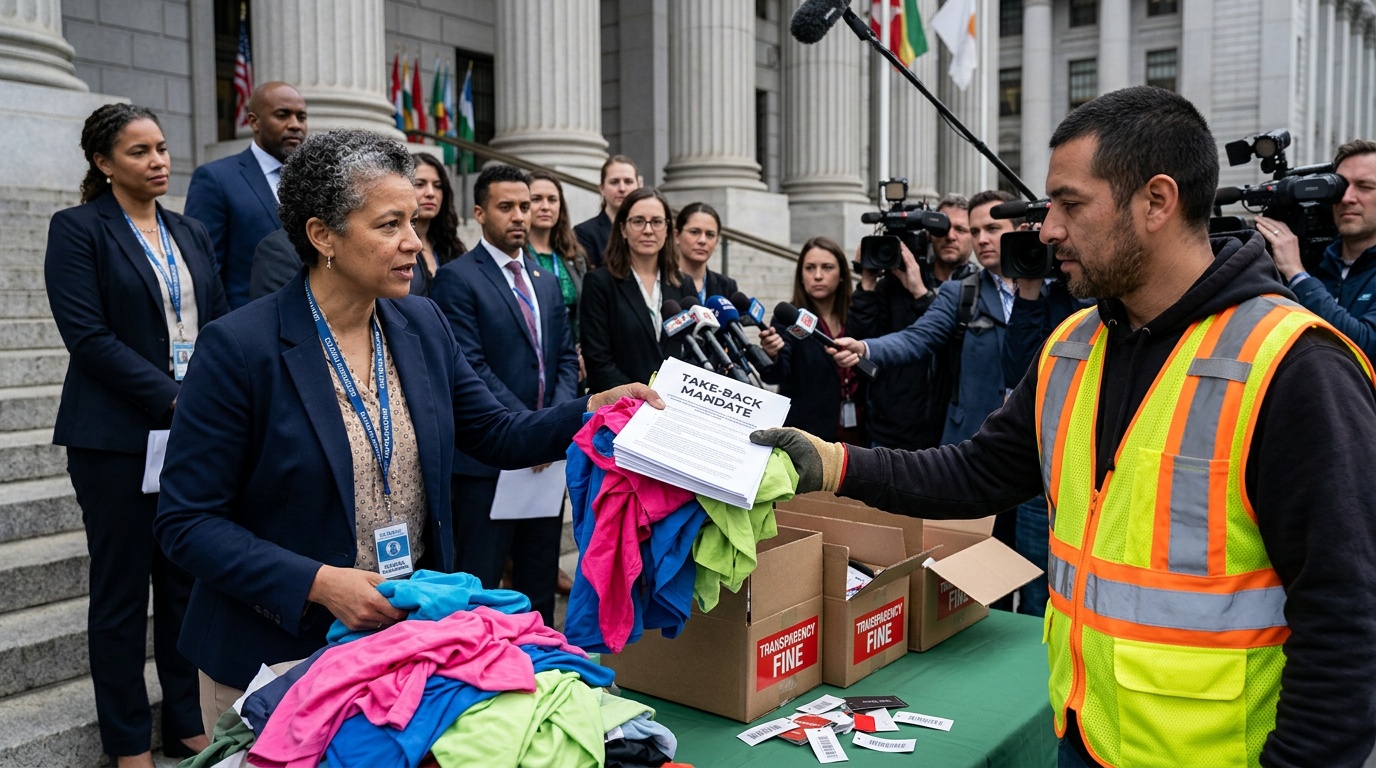
Ultra-fast fashion faces mounting regulatory pressure across major markets. Lawmakers want brands to collect used textiles and prove environmental claims. Authorities also plan sharper sanctions for misleading marketing and opaque supply chains. The policy momentum now reaches from Europe to North America and Asia-Pacific. Companies must adjust quickly or risk penalties, reputational harm, and product disruptions.
Regulators link textile waste, climate impacts, and labor concerns to rapid product turnover. They see large online platforms accelerating volumes and complicating oversight. This perception guides new measures that emphasize accountability and traceability. The resulting rules create structural changes along fashion value chains. Meanwhile, enforcement actions signal that voluntary steps no longer satisfy policymakers.
What regulators mean by ultra-fast fashion
Ultra-fast fashion describes models delivering low-cost styles at extreme speed and scale. These models leverage real-time data, vast supplier bases, and rapid production cycles. Authorities worry that relentless novelty elevates waste and obscures sourcing risks. Regulators therefore focus on platforms and brands with high SKU churn. This focus shapes how thresholds and obligations may ultimately apply.
The term lacks a single legal definition today. However, policy texts increasingly reference rapid turnover and low prices. They also cite online-only marketplaces with cross-border shipping volumes. This language signals where oversight will likely concentrate. Companies should monitor definitions because coverage determines cost and liability.
Take-back and EPR mandates gather pace
European Union sets the direction
The European Union requires separate collection of textile waste by 2025. This obligation under the Waste Framework Directive drives national action. Member States must build systems that divert textiles from residual waste. Many governments are turning to Extended Producer Responsibility, or EPR. EPR schemes make producers finance collection, sorting, and treatment.
EU lawmakers are negotiating updates that specify textile EPR frameworks. Proposals include eco-modulated fees rewarding durability, repairability, and recycled content. Authorities also discuss targets for reuse and fiber-to-fiber recycling. These steps aim to align business models with circular outcomes. The measures would support investment in sorting and recycling capacity.
The Ecodesign for Sustainable Products Regulation advanced in 2024. It enables performance requirements and digital product passports for many goods. Textiles are slated for early policy attention under work plans. Product passports would carry composition and care details digitally. They would also support sorting and claims verification at scale.
National schemes expand in Europe
France operates a mature EPR program for clothing, linens, and footwear. The scheme, managed by an approved organization, funds wide collection networks. France also prohibits destroying many unsold consumer products, including textiles. Authorities are phasing in environmental labeling requirements for apparel. These measures push producers toward eco-design and better data.
French lawmakers also advanced a bill targeting ultra-fast fashion’s impacts. The bill proposes advertising restrictions and an environmental charge per item. It also calls for prominent environmental scoring for listed products. Further regulatory steps will determine final obligations and timing. Companies selling into France should prepare for stricter expectations.
The Netherlands introduced an EPR regime for textiles in 2023. Producers must register, report volumes, and meet reuse and recycling goals. Authorities will phase targets and enforcement over coming years. Other countries, including Sweden and Denmark, have proposed EPR frameworks. Spain has also consulted on a national scheme for textiles.
Moves in North America
Several United States states are studying textile EPR models. California and New York have considered producer responsibility bills for apparel. Legislative debates continue, with details under development. Massachusetts already restricts disposal of textiles in trash streams. Municipal programs in major cities support collection partnerships and pilots.
Canada shows growing momentum at provincial levels. Quebec announced plans to implement EPR for textiles. Officials are developing program design and timelines with stakeholders. Other provinces are evaluating stewardship options or voluntary pilots. National competition authorities also scrutinize environmental marketing across retail categories.
Asia-Pacific explores stewardship
Australia’s environment ministers signaled potential regulation of clothing waste. They warned that mandatory stewardship could proceed if voluntary efforts lag. Officials cited high landfill rates and rising imports. Industry groups have launched pilots for collection and repair. Timelines and scheme details remain under government consideration.
Other regional governments are publishing circular economy strategies. They highlight textiles as a growing waste challenge. Many are assessing extended producer responsibility as a policy tool. Pilot projects are testing sorting, resale, and recycling logistics. Further announcements are expected as data and capacity improve.
Transparency rules sharpen and fines increase
Green claims and marketing scrutiny
European rules now restrict generic environmental claims without proof. The Empowering Consumers Directive bans unsubstantiated statements on sustainability performance. The proposed Green Claims Directive sets verification and labeling standards. It also contemplates penalties for misleading claims and non-compliance. National authorities can require corrections, confiscations, and monetary fines.
Enforcers are scrutinizing fashion retailers’ websites and labels. They examine terms like “eco,” “sustainable,” and “conscious.” Many cases focus on unclear baselines and aggregation of impacts. Several authorities have secured commitments to change advertising practices. Companies increasingly reserve claims for verified programs and metrics.
Marketplace and platform obligations
Large online platforms face new European transparency duties under the DSA. They must trace traders, remove illegal listings, and assess risks. Non-compliance can trigger significant fines under the regulation. Authorities have designated multiple very large platforms since 2023. Additional designations and investigations are ongoing this year.
These obligations affect ultra-fast fashion platforms with cross-border reach. Marketplaces must verify product information and cooperate with regulators. They must also present clear details on sellers and product origin. The requirements complement national product safety and consumer rules. Platforms are strengthening governance, audits, and notice systems.
Supply chain due diligence expands
Large companies in Europe face new due diligence requirements. The Corporate Sustainability Reporting Directive mandates detailed disclosures. It demands granular metrics on environmental and social risks. A separate due diligence directive also advanced in 2024. It requires risk management across value chains for in-scope firms.
National laws already require vigilance in key markets. France’s Duty of Vigilance law imposes broad obligations on large companies. Germany’s Supply Chain Act demands risk assessment and grievance channels. Non-compliance can draw fines and procurement exclusions. These frameworks elevate expectations for traceability in textiles and footwear.
How companies are responding
Collection, repair, and redesign
Brands are launching take-back programs online and in stores. They partner with recyclers, charities, and resale platforms. Some firms pilot repair services and spare parts offerings. Others test rental, made-to-order, and on-demand production. These steps aim to cut returns and extend product life.
Design teams are shifting toward mono-materials and trims that detach. They emphasize durability, repairability, and recycled inputs. Suppliers are trialing fiber-to-fiber recycling at commercial scale. Operational teams are planning for eco-modulated EPR fees. Companies want designs that minimize future compliance costs.
Data systems and traceability
Firms are mapping supply chains to tier two and beyond. They are digitizing bills of materials and transaction records. Many are testing digital product passport architectures for apparel. These systems connect SKU data with claims evidence. They also support automated reporting to stewardship schemes.
Marketing, legal, and sustainability teams are aligning review processes. They require substantiation for every environmental statement. They also track national labeling differences for textiles. Training programs reinforce acceptable claims and documentation standards. These controls reduce enforcement risk across multiple jurisdictions.
Compliance playbook for fashion brands
Practical steps help companies prepare for the next wave. The following actions address common regulatory themes and timelines. They also reduce waste and improve customer trust. Early preparation lowers costs and operational friction significantly.
- Register for textile EPR where required and monitor expansions.
- Build or join networks for take-back, reuse, and recycling.
- Capture product composition and supplier data at SKU level.
- Prepare digital product passport fields and identifiers.
- Eco-design for durability, repairability, and recyclability.
- Substantiate every environmental claim with accessible evidence.
- Standardize green claims review across markets and channels.
- Enhance marketplace controls for third-party sellers.
- Establish grievance and traceability systems across tiers.
- Pilot repair and resale to reduce returns and waste.
- Model EPR fee impacts across collections and materials.
- Engage with recyclers to secure future processing capacity.
- Train teams on evolving rules and enforcement priorities.
- Set measurable targets tied to regulatory milestones.
Outlook
Regulatory momentum will continue as textile waste volumes grow. Governments want measurable progress on collection, reuse, and recycling. They also expect credible, verifiable information on product impacts. The combination of EPR and transparency rules creates structural change. Companies that adapt early can shape standards and secure advantages.
Policy coordination will likely rise across borders and agencies. Authorities will share data and align enforcement on green claims. Platforms will become key partners for oversight and product governance. Technical standards for product passports will mature through pilots. Clear formats will accelerate sorting and materials recovery.
Costs will initially increase for producers under EPR schemes. However, well-designed products can reduce fees over time. Efficient logistics and accurate data will also lower costs. Brands can protect margins by avoiding waste and returns. Strong design choices deliver both resilience and compliance benefits.
Ultra-fast fashion must address speed with responsibility and transparency. Regulators have set clear expectations for take-back and claims. Enforcement will intensify as systems and data improve. Companies can still lead by redesigning products and services. Those moves will help meet rules and satisfy customers.
