
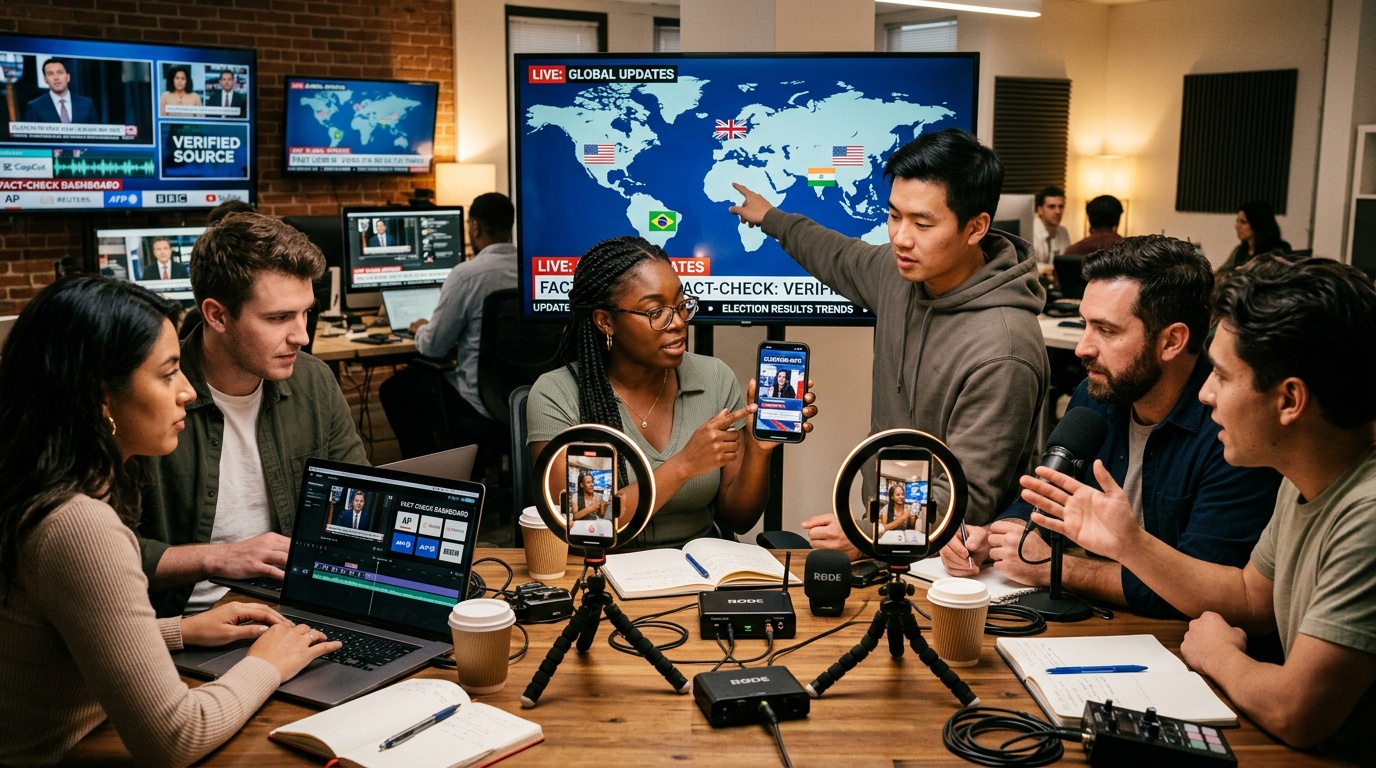
Election cycles now span continents, platforms, and time zones. TikTok creators have responded by forming collaborative short-form news collectives. These groups produce timely explainers, debunks, and civic guides for mobile audiences. Their shared goal emphasizes accuracy, speed, and accessible context.
Global voters increasingly encounter breaking claims in vertical video. Creators recognize the need for rapid, responsible verification. They also see a chance to improve media literacy for first-time voters. That combination drives collaborative approaches across regions and languages.
A New Wave of Election-Focused Creators
Short-form video has become a primary news gateway for many young users. Creators therefore experiment with newsroom-like structures on TikTok. They combine subject expertise with native platform storytelling. That mix helps audiences navigate complex electoral information quickly.
These collectives typically feature journalists, researchers, and community educators. Many members already create independently on their profiles. They then coordinate under shared editorial frameworks and calendars. The structure lets them scale output without sacrificing clarity.
Why Collectives Flourish on TikTok
Creators can reach large, diverse audiences through TikTok’s recommendation systems. The format favors concise, engaging, and timely updates. Teams can publish iterative explainers as stories evolve. That approach matches the platform’s fast discovery cycles.
Trust also travels through personalities and transparent processes. Viewers reward creators who show sources and methods. Collectives can reinforce that trust with shared standards. Coordinated branding and repeatable formats further strengthen recognition.
How Short-Form News Collectives Organize
Most groups divide roles across research, scripting, on-camera hosting, and editing. They operate internal pitch channels and editorial checklists. Members track claims, emerging narratives, and platform trends daily. Agile organization keeps output aligned with audience needs.
Workflows and Review Steps
Teams outline scripts with clear claims, sources, and counterpoints. A peer reviewer confirms sourcing and logical flow. Editors add captions, visual receipts, and accessibility features. Hosts then publish and monitor comments for follow-up questions.
Editorial Standards and Verification
Collectives emphasize evidence-based reporting and transparent corrections. They prefer primary documents, official data, and on-record experts. Reverse image search and geolocation tools help verify visuals. Teams also review metadata and consider likely manipulation techniques.
Sourcing and Evidence
Creators cite public records, court filings, government portals, and election agencies. They also reference reputable outlets and independent experts. When evidence is limited, they clearly label uncertainty. That commitment reduces speculation and rumor amplification.
Using Platform Features Effectively
Collectives design formats that fit TikTok’s native tools. Playlists group related explainers into clear learning paths. Pinned videos highlight voter resources and verification tips. Comments and Q&A drive topic selection for follow-ups.
Live Streams, Duets, and Playlists
Live sessions allow clarifying questions and real-time updates. Moderators enforce civility and remove abusive content. Duets and stitches show side-by-side source analysis. Playlists bundle myth-busting series for bingeable, cohesive education.
Tactics to Counter Misinformation
Creators pre-bunk common falsehoods with concise explainers. They outline election processes before rumors surface. Debunks avoid repeating exact false claims in hooks. Visual receipts confirm facts without sensational framing.
Teams highlight provenance, context, and probability assessments. They label synthetic media when applicable and explain detection cues. Corrections appear in updated videos, pinned comments, and captions. That visibility helps prevent recycled misinformation cycles.
Partnering With Fact-Checkers and Newsrooms
Many creators consult independent fact-checkers and local journalists. Partnerships improve access to regional expertise and documents. Cross-posting expands reach across platforms and communities. Collaborations also streamline corrections and content archiving.
Legal, Safety, and Ethics
Collectives disclose funding and conflicts to maintain credibility. TikTok prohibits paid political advertising on the platform. Creators therefore avoid sponsored political ads and follow disclosure laws. They also comply with election-specific rules in their countries.
Safety planning protects members from harassment and doxxing. Teams establish escalation policies and reporting procedures. They limit sensitive personal data in public materials. Shared guidelines reduce risk while preserving open communication.
Measuring Impact and Audience Trust
Collectives track watch time, completion, shares, and saves. They monitor comment sentiment and recurring questions. Surveys and feedback forms capture learning outcomes. These signals guide format tweaks and editorial priorities.
Persistent Challenges and Emerging Risks
False claims spread quickly through coordinated networks and private chats. Algorithms can reward novelty over nuance. Teams face takedowns or mistaken moderation decisions. They also confront language gaps and ambiguous translations.
Manipulated media and convincing voice clones complicate verification. Bad actors adapt quickly to platform rules and formats. Collectives respond with faster pre-bunks and clearer provenance cues. They also diversify channels to avoid single-platform dependence.
Building Sustainable Operations
Sustainability relies on documented workflows and shared assets. Teams maintain style guides, research memos, and template scripts. They train new contributors through mentorship and practice runs. That investment reduces burnout during peak cycles.
Funding mixes often include grants, reader donations, and merchandise. Transparent budgets prevent conflicts and maintain trust. Creators schedule rotations to ensure rest and backups. Healthy operations support consistent, high-quality coverage.
Outlook Beyond the Election Cycle
These collectives plan to continue civic education after elections. Policy explainers, media literacy, and accountability coverage will persist. Audiences benefit from ongoing, trustworthy short-form journalism. That continuity deepens resilience against future misinformation waves.
Conclusion
TikTok creators are building collaborative models for credible news in short videos. Their collectives combine speed with rigorous verification. Platform-native storytelling delivers practical voter guidance and timely debunks. With sustainable structures, these teams can strengthen civic understanding worldwide.