

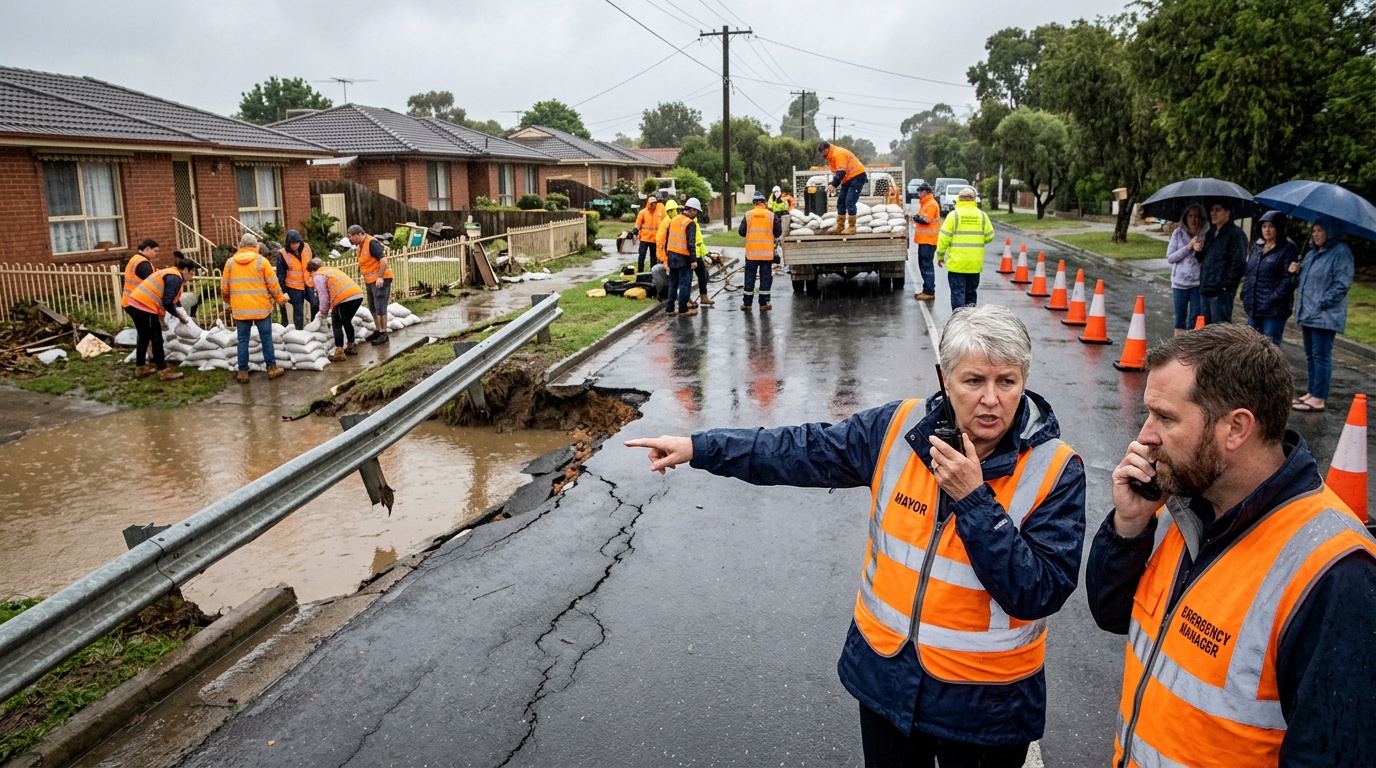
Local officials are expanding flood relief efforts after severe storms damaged roads, homes, utilities, and other essential infrastructure. Emergency crews are focusing on public safety while governments assess damage and organize longer-term recovery work. Flooding can leave communities facing hazards that continue after rainfall ends. Standing water, damaged pavement, unstable structures, and disrupted utilities can complicate the response for residents and emergency workers.
Officials Increase Emergency Assistance
Local governments often expand relief operations as inspectors develop a clearer picture of storm damage. Officials may open assistance centers, distribute supplies, and coordinate temporary shelter for displaced households. Public works departments also deploy employees and contractors to clear debris from streets and drainage systems. These operations help restore access while emergency managers identify neighborhoods requiring additional resources.
Emergency management agencies typically coordinate work among police, firefighters, road crews, utility providers, and humanitarian organizations. That coordination becomes especially important when flooding affects several communities simultaneously. Officials must prioritize urgent threats while tracking requests for assistance across damaged areas. They also communicate evacuation information, road closures, shelter locations, and safety guidance to the public.
Road Damage Complicates the Recovery
Floodwaters can quickly damage roads by washing away pavement, eroding shoulders, and weakening soil beneath transportation routes. Culverts and bridges can also sustain damage when fast-moving water carries trees, rocks, and other debris downstream. Transportation departments generally close questionable routes until engineers can inspect them. These closures protect drivers and allow crews to determine whether temporary or permanent repairs are necessary.
Damaged transportation networks can create broader problems for recovery operations. Blocked roads may delay ambulances, utility crews, supply deliveries, and residents traveling between communities. Rural areas can face particular difficulties when a damaged bridge eliminates the only nearby route. Officials may establish detours while crews stabilize roadbeds and replace damaged drainage structures.
Road repairs can continue well beyond the initial emergency response. Workers must sometimes rebuild foundations before replacing pavement or reopening lanes. Engineers may also examine drainage capacity before completing permanent reconstruction. That process can reduce the risk that another storm damages newly repaired infrastructure.
Flooded Homes Create Immediate Needs
While transportation crews address damaged roads, housing conditions remain another major concern. Floodwater can damage walls, flooring, electrical equipment, appliances, and heating systems. Residents may also lose furniture, clothing, documents, and other personal property. Homes with extensive structural or electrical damage may remain unsafe until qualified professionals complete inspections and repairs.
Emergency officials commonly advise residents to avoid entering buildings when structural damage is visible. Electrical hazards can persist when water reaches outlets, wiring, service panels, or household equipment. Floodwater can also contain sewage, fuel, chemicals, and biological contaminants. Protective clothing and careful cleanup practices can therefore reduce exposure to harmful materials.
Mold becomes another concern as wet materials remain inside buildings. The Federal Emergency Management Agency recommends drying flooded structures and removing damaged materials as quickly as conditions safely allow. Residents should document damage before discarding property when possible. Photographs, videos, receipts, and repair estimates can support insurance claims and applications for eligible assistance.
Relief Efforts Extend Beyond Rescue Operations
As immediate dangers decrease, local relief efforts generally shift toward food, housing, cleanup, transportation, and health needs. Community organizations can help distribute drinking water, meals, cleaning supplies, hygiene products, and protective equipment. Volunteers may assist with debris removal when local authorities determine conditions are safe. Officials can also connect affected residents with government agencies and nonprofit organizations.
Temporary housing presents a difficult challenge when multiple homes become uninhabitable. Hotels, emergency shelters, relatives, and rental properties can provide short-term options. However, longer displacement may increase financial pressure on families already paying for repairs. Local agencies may use assistance programs to address eligible housing costs, depending on available resources and disaster declarations.
Damage Assessments Shape Funding Decisions
Detailed damage assessments play an important role as local governments expand recovery programs. Inspectors document impacts involving homes, businesses, roads, bridges, public buildings, and utilities. Governments use this information to estimate losses and identify recovery priorities. Accurate assessments can also support requests for assistance from higher levels of government.
Federal disaster assistance in the United States depends on specific legal requirements and the type of declaration issued. FEMA programs may support eligible public infrastructure costs after qualifying disasters. Separate programs can provide assistance to eligible households under applicable declarations. State and local programs may provide additional support under their own eligibility rules.
Insurance remains an important part of recovery for many property owners. Standard homeowners insurance generally does not cover flood damage. Separate flood insurance policies may cover qualifying losses according to policy terms and limits. Residents should contact their insurers promptly and retain records connected to storm damage and repairs.
Utilities and Public Health Require Attention
Storm damage can affect water systems, sewer networks, electricity, natural gas service, and communications infrastructure. Utility crews must often inspect equipment before safely restoring service. Flooding can contaminate private wells and threaten public water infrastructure. Health departments may issue testing instructions or water advisories when officials identify possible contamination.
Residents using generators also face serious safety risks during power outages. Generators produce carbon monoxide, an odorless gas that can cause illness or death. The Centers for Disease Control and Prevention advises operating generators outdoors and away from windows, doors, and vents. Generators should never operate inside homes, garages, or other enclosed spaces.
Cleanup Brings Additional Challenges
Debris management becomes increasingly important as neighborhoods move from emergency response into recovery. Floods can leave damaged furniture, construction materials, tree limbs, mud, and household waste along roadsides. Local officials may establish special collection procedures or designated disposal locations. Hazardous materials require different handling than ordinary household debris.
Officials also monitor drainage systems during cleanup because additional rainfall can renew flooding risks. Debris can obstruct storm drains, culverts, channels, and roadside ditches. Public works crews often clear those locations while repairing damaged infrastructure. Residents should avoid entering fast-moving water or attempting dangerous debris removal without proper equipment.
Recovery Planning Looks Beyond Immediate Repairs
The transition toward long-term recovery gives officials opportunities to reconsider how damaged infrastructure handles future storms. Governments may evaluate larger culverts, improved drainage, stronger bridges, or road designs that better tolerate flooding. Communities can also review floodplain rules and emergency communication systems. Such projects usually require engineering studies, funding, permitting, and public planning.
Officials must balance rapid repairs with decisions that can reduce future losses. Restoring a damaged road exactly as before may offer faster access. However, rebuilding vulnerable infrastructure differently can improve resilience when funding and regulations permit those changes. The appropriate approach depends on local conditions, engineering requirements, costs, and expected flood risks.
Reliable Information Remains Essential
Clear public communication remains critical throughout every stage of flood recovery. Conditions can change as rivers rise, roads deteriorate, or additional storms approach. Residents should follow official local alerts for current evacuation orders, closures, shelter information, and drinking water guidance. Emergency managers may update instructions as crews complete inspections and restore access.
Drivers should never assume a flooded roadway is safe because another vehicle crossed successfully. Water can conceal washed-out pavement and dangerous debris. Moving floodwater can also carry vehicles away from the roadway. Transportation and emergency agencies consistently advise motorists to avoid flooded roads and obey barricades.
Recovery ultimately extends beyond reopening streets and removing damaged property. Families may need months to repair homes, resolve claims, and regain financial stability. Governments can face similarly lengthy work rebuilding infrastructure and completing reimbursement requirements. Expanded local relief efforts provide the bridge between the immediate emergency and that longer rebuilding process.
The scale of that work depends on the storm, local damage, available funding, and community needs. Continued assessments allow officials to adjust resources as those needs change. Safe transportation, stable housing, functioning utilities, and accurate information remain central priorities. Together, those measures help communities move from flood response toward sustained recovery.
