

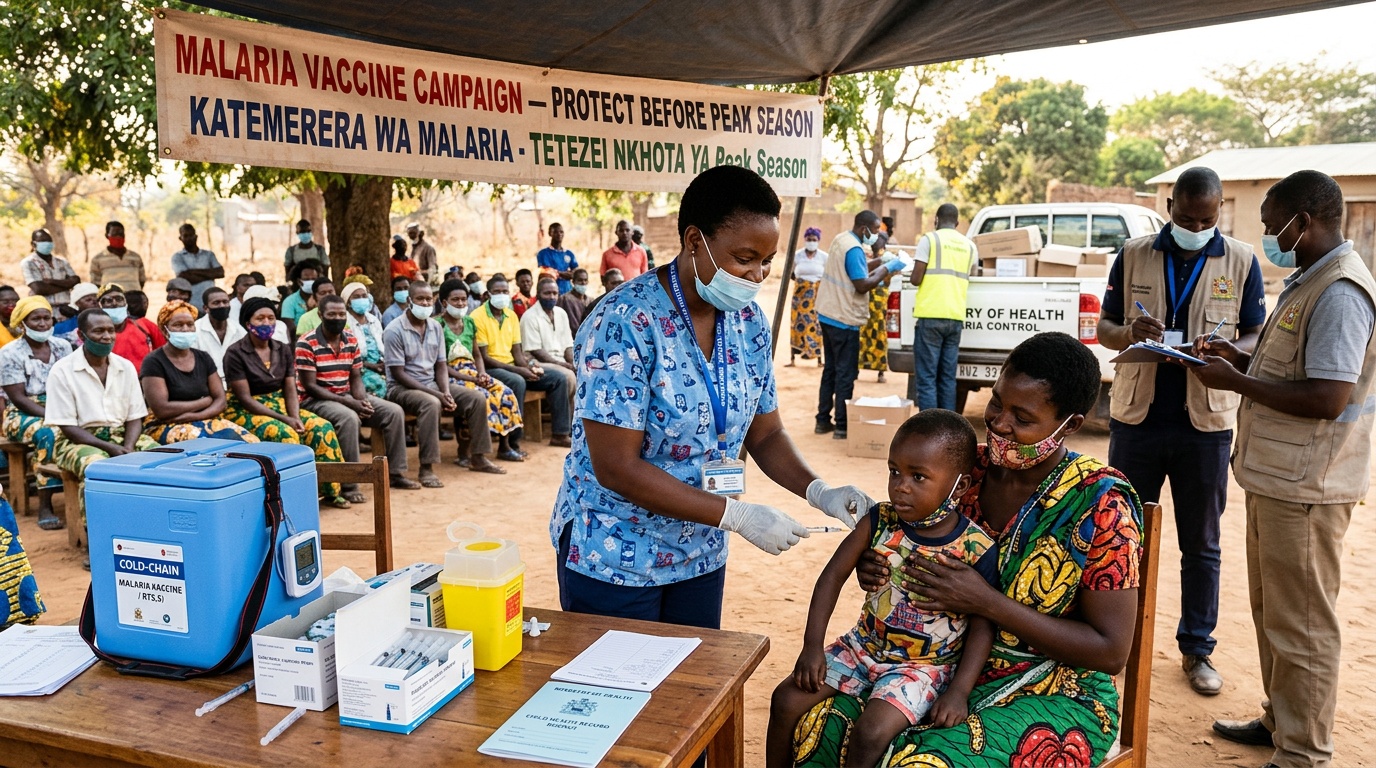
Health agencies are accelerating malaria vaccine distribution across Africa as the rainy season nears in many regions. Governments, partners, and communities are working together to protect young children before transmission spikes. Expanded supply, clearer guidance, and fresh funding are driving this pre-season push. The effort aims to save lives and ease pressure on stretched health systems.
Officials are prioritizing districts with the highest transmission and the greatest clinical burden. Teams are synchronizing vaccine deliveries with bed net campaigns and testing drives. This coordinated timing strengthens protection when mosquitoes proliferate. Strong planning now can reduce malaria cases during the coming months.
Why timing matters before peak transmission
Malaria transmission often surges after seasonal rains create breeding sites for Anopheles mosquitoes. Vaccinating children before the rains helps build immunity on time. Doses given ahead of peak months can prevent many clinic visits and hospitalizations. Early action also reduces the risk of severe disease among infants and toddlers.
Public health planners use historical case data and rainfall forecasts to guide schedules. They align outreach with agricultural calendars and school breaks. Mobile teams bring vaccines to remote villages before roads become impassable. These strategies help reach children who face the highest risks.
The vaccines in use and the evidence base
Two WHO-recommended malaria vaccines are now available for wider use in Africa. RTS,S/AS01, developed by GSK and partners, received a WHO recommendation in 2021. R21/Matrix-M, developed by the University of Oxford and the Serum Institute of India, followed in 2023. Both target Plasmodium falciparum, the most deadly malaria parasite in Africa.
RTS,S has shown meaningful protection against clinical malaria in young children. Studies also observed reductions in severe malaria and hospital admissions. R21 showed high efficacy in a phase 2b trial, with further data still accumulating. WHO reviewed available evidence before issuing programmatic recommendations.
Experts emphasize that vaccines complement, rather than replace, other interventions. Bed nets, rapid diagnosis, effective treatment, and seasonal chemoprevention remain essential. Combining tools can produce larger gains than any single measure alone. Countries are adapting strategies to local transmission patterns and health system capacities.
Countries scaling up distribution ahead of the rains
Multiple African countries are rolling out malaria vaccines through their routine immunization systems. Ghana, Kenya, and Malawi expanded access after successful pilot programs. Cameroon introduced nationwide malaria vaccination in early 2024. Other countries are launching phased introductions across high-burden districts.
Shipments are reaching immunization depots with support from UNICEF, WHO, and Gavi. National programs are allocating doses to clinics based on child population estimates. Health workers are updating registers and outreach plans to prioritize eligible children. The goal is timely delivery before transmission intensifies.
Local leadership is proving crucial during this ramp-up period. District managers are reviewing stock levels and revising microplans weekly. Community health workers are mapping households and confirming vaccination status. These practical steps keep campaigns responsive as conditions change.
Logistics, cold chain, and last-mile delivery
Maintaining a reliable cold chain remains a top priority for program teams. New solar-powered refrigerators are helping clinics keep doses at target temperatures. Data loggers track temperature excursions and trigger alerts for rapid response. These improvements reduce wastage during long journeys to rural sites.
Transportation planning adapts to seasonal road conditions and fuel availability. Motorcycle couriers and boats support deliveries to hard-to-reach communities. Some countries are piloting drones for emergency resupply during floods. These methods help sustain momentum when weather disrupts normal routes.
Digital tools are supporting better visibility across supply chains. Inventory dashboards highlight low-stock clinics before stockouts occur. Barcode scanning reduces errors and speeds reconciliation at district stores. Accurate data enables managers to reallocate doses as needs evolve.
Dosing schedules and delivery strategies
Both vaccines use multi-dose schedules that begin in infancy. Countries are aligning first doses with existing infant immunization visits. Schedules generally include three primary doses and a later booster. Careful counseling helps families complete the full course on time.
Some Sahelian countries are adopting seasonal delivery approaches. Teams administer doses shortly before expected transmission peaks. This timing can align with seasonal malaria chemoprevention in eligible areas. Coordinated delivery may enhance protection where transmission is sharply seasonal.
Clinic-based services pair with targeted outreach to expand coverage. Mobile sessions reach nomadic communities and flood-prone settlements. Evening or weekend hours accommodate caregivers with daytime work. Flexibility increases completion rates for multi-dose regimens.
Community engagement and demand generation
Clear communication is central to program success during this acceleration phase. Health workers explain eligibility, schedules, and expected side effects. Community leaders reinforce messages through trusted local channels. Dialogue builds confidence and encourages timely clinic visits.
Radio spots, town hall meetings, and social media extend campaign reach. Materials address myths and emphasize continued use of bed nets. Families learn that vaccines add protection but do not confer complete immunity. Balanced messaging supports informed decisions by caregivers.
Feedback loops help programs refine services quickly. Hotlines and community meetings surface barriers and suggestions. Managers then adjust session times and locations accordingly. Responsive approaches improve convenience and equity.
Impact projections and monitoring
Analysts expect the expanded rollout to prevent many cases in high-burden districts. Early program data show strong demand and steady dose completion. Facilities report fewer febrile visits where multiple tools are combined. Reduced caseloads free staff to focus on severe cases.
Monitoring systems track coverage, safety, and effectiveness in real time. Health workers record doses in child registers and digital tools. Supervisors review trends and flag gaps for immediate action. Transparent reporting strengthens accountability and public trust.
Researchers will continue studying long-term outcomes as cohorts age. Findings will guide schedule refinements and delivery models. Evidence will also inform resource allocation across complementary interventions. Continuous learning enhances program value over time.
Challenges and constraints to watch
Supply constraints are easing but still require careful planning. Countries are phasing introductions to match available doses. Forecasting accuracy remains vital for minimizing stockouts and wastage. Cross-border collaboration helps balance inventories as needs shift.
Funding gaps could slow progress in some settings. Health systems also face workforce shortages and competing priorities. Conflict and displacement complicate outreach and follow-up visits. Programs must adapt rapidly while protecting staff and communities.
Programs emphasize that vaccines do not replace core prevention tools. Bed nets, indoor spraying, and prompt treatment remain essential. Strong case management keeps deaths low when infections occur. Integrated strategies deliver the most reliable protection.
What to expect before the rains begin
Households can expect more clinic sessions and mobile outreaches in the coming weeks. Health workers will prioritize children in the eligible age range. Caregivers should bring child health cards to support accurate recording. Staff will schedule return dates for upcoming doses.
Clinics may also pair malaria services with other child health offerings. Vitamin A, deworming, and growth monitoring often run alongside vaccination. Bundled services reduce travel time for families. They also improve overall child health outcomes.
Communities can support ramp-up efforts by sharing accurate information. Local leaders can organize transport and coordinate session announcements. Civil society groups can help reach marginalized households. Collective action can raise coverage quickly before transmission peaks.
What caregivers should know
Eligible children will receive several doses over many months. Completing the schedule is important for strong protection. Mild fever or soreness can occur after vaccination and usually resolves quickly. Caregivers should seek medical help for persistent or severe symptoms.
Vaccination works best alongside other preventive steps at home. Children should continue sleeping under treated bed nets every night. Caregivers should seek prompt testing for any fever. Early treatment reduces complications and prevents severe illness.
Health workers can answer questions about schedules, safety, and eligibility. Caregivers should keep vaccination cards in a safe place. Reminders from clinics or community groups can help families return on time. Timely visits support full protection during peak months.
The road ahead for malaria control
Manufacturers are expanding production capacity to meet growing demand. Additional supply should enable more countries to scale programs. Ongoing research will refine dosing approaches and delivery models. Continuous investment will sustain gains achieved this season.
Partnerships remain central to long-term success against malaria. Governments, global agencies, and communities share responsibility for results. Coordinated action can maintain momentum beyond the rainy season. Consistent efforts will reduce deaths and economic disruption over time.
As distribution accelerates, officials are tracking lessons for future campaigns. Strong planning, community dialogue, and agile logistics are proving decisive. These practices will help during future seasons and other health initiatives. Preparedness today can deliver lasting benefits for children across Africa.
The coming months will test systems as rains transform landscapes. Early signs suggest the vaccines are reaching priority districts in time. Integrated efforts can blunt the seasonal surge and save many young lives. With focus and follow-through, countries can protect more children before peak transmission.
