

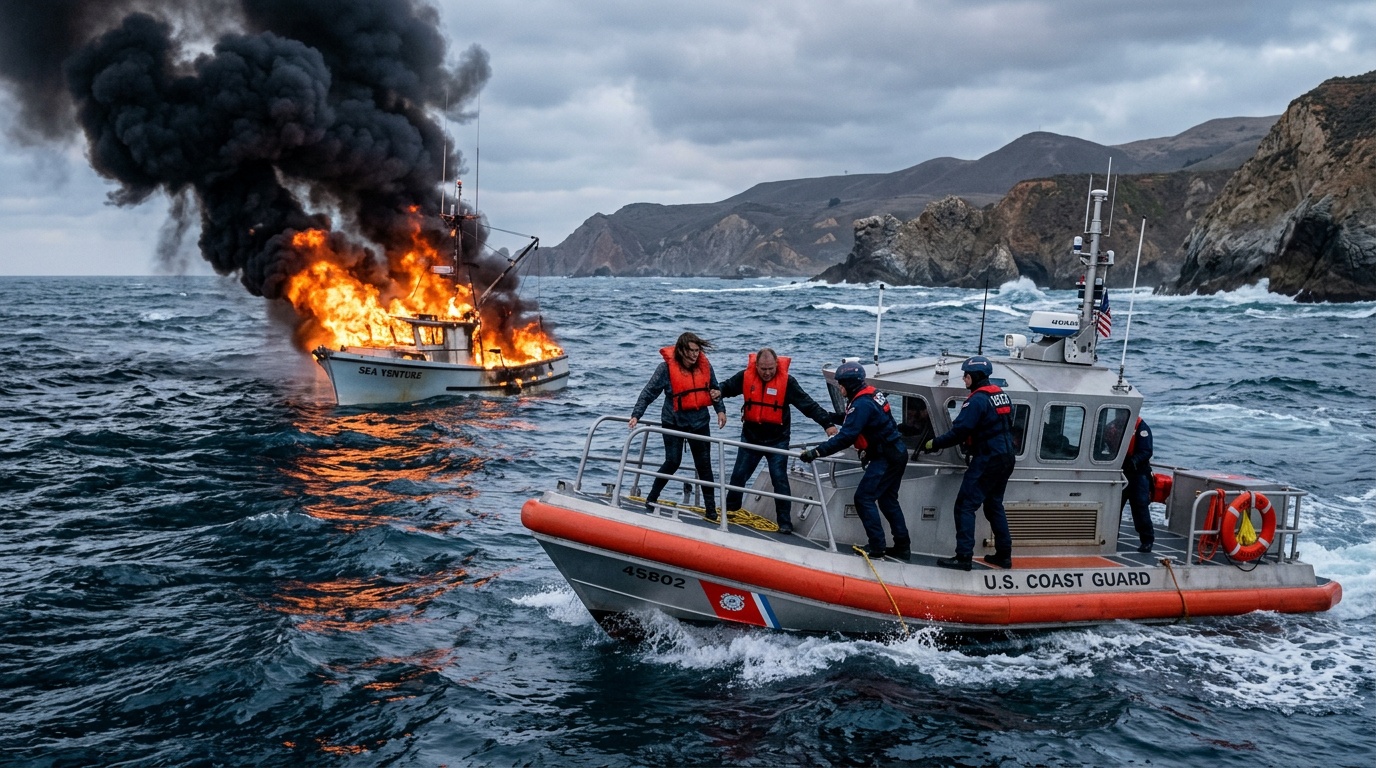
Three People Reach Safety
A Coast Guard crew rescued three people from a burning vessel off California, ending an immediate threat to life. The emergency combined fire, open water, smoke, and possible fuel hazards. Each danger could have worsened before the survivors reached a safer platform. The rescue moved the three occupants away from the flames and unstable conditions. It also allowed responders to manage the remaining hazards without risking more civilian lives.
The operation demonstrated how quickly a routine voyage can become a serious maritime emergency. Fires spread rapidly aboard boats because machinery, electrical equipment, fuel, and enclosed compartments sit close together. Smoke can also block exits and reduce visibility within minutes. Occupants may have little time to fight the fire before abandoning their vessel.
An Immediate Threat on the Water
Unlike a building fire, a vessel fire leaves occupants with few safe places to escape. People may enter cold water, board a life raft, or move toward the vessel’s least affected section. Waves and wind can then separate survivors from their boat. Those conditions make a fast rescue essential, even when flames remain concentrated within one area.
How the Coast Guard Responds
The response began when Coast Guard personnel received information about the vessel and its occupants. Watchstanders evaluate emergency reports, establish a likely position, and determine which resources can arrive fastest. They may dispatch rescue boats, helicopters, cutters, or several units together. Crews also seek updated information about injuries, fire conditions, weather, and survival equipment.
That early assessment helps rescuers prepare before reaching the scene. Boat crews can ready flotation devices, firefighting equipment, medical supplies, and towing gear. Aviation crews can prepare rescue swimmers and hoisting equipment when conditions require them. Dispatchers may also alert nearby vessels, local fire departments, and emergency medical services.
Communication Supports the Rescue
Reliable communication often determines how quickly responders locate a distressed vessel. Mariners can issue a mayday call on marine radio channel 16. They can also activate emergency beacons or use digital selective calling equipment. Accurate coordinates reduce search time and help crews approach from a safer direction.
However, smoke or electrical failure can disable communications aboard a burning boat. Occupants may then rely on mobile phones, flares, signaling mirrors, or nearby mariners. Coast Guard watchstanders compare every available report while directing response units. This coordination continues until crews locate everyone connected with the emergency.
Vessel Fires Create Complex Hazards
With rescuers approaching, the burning vessel remained a dangerous and unpredictable object. Marine fuel can intensify flames or create explosive vapors around damaged tanks. Batteries may release toxic gases, especially when heat affects lithium-ion cells. Fiberglass, upholstery, paint, and plastics can produce thick, harmful smoke.
Fire can also weaken a vessel’s structure and damage systems below the waterline. Burned hoses, melted fittings, or failed pumps may allow flooding. A vessel can develop a dangerous list or sink after flames compromise its hull. Responders must therefore balance firefighting efforts against risks to their own crews.
California Waters Add Further Challenges
Conditions off California can change significantly with location, weather, and distance from shore. Wind can drive flames across a deck and carry smoke toward rescuers. Ocean swells can complicate transfers between vessels, even during otherwise favorable weather. Cold water also increases hypothermia risks for anyone forced overboard.
Commercial traffic, fishing activity, and recreational boating can create additional concerns along the coast. Responders must protect survivors while watching for approaching vessels and floating debris. Darkness can make those hazards harder to identify. Daylight improves visibility, but glare and smoke can still obscure people in the water.
Moving the Survivors Away From Danger
The rescue’s central achievement involved moving all three people beyond the fire’s immediate reach. Transferring survivors requires careful timing when waves push boats together or pull them apart. Crew members use hand signals, lines, ladders, and flotation equipment during these movements. They must also account for panic, exhaustion, burns, or smoke exposure.
Once aboard a rescue platform, survivors receive an initial medical assessment. Crews check breathing, circulation, alertness, body temperature, and visible injuries. Smoke inhalation can cause delayed symptoms, including coughing, headaches, confusion, and breathing difficulties. Medical professionals may recommend further evaluation after survivors return ashore.
Accountability Remains Essential
Rescuers must confirm how many people were originally aboard the vessel. Conflicting passenger counts can trigger unnecessary searches or leave someone missing. Crews compare statements from survivors with registration information and emergency reports. They may search the water and damaged vessel until they confirm everyone’s location.
Managing the Vessel Afterward
After securing the survivors, authorities must address the burning or disabled vessel. An unattended boat can drift into shipping lanes, beaches, rocks, or environmentally sensitive areas. Responders may establish a safety zone around the scene. They can also broadcast navigational warnings to mariners operating nearby.
Firefighting decisions depend on the vessel’s condition and the danger facing crews. Water can suppress flames, but excessive water may reduce stability and increase sinking risks. Foam works better against some fuel fires by limiting oxygen and vapor release. Responders may allow controlled burning when direct intervention presents greater danger.
Environmental Risks Require Attention
A damaged vessel can release diesel, gasoline, lubricants, batteries, plastics, and other pollutants. Coast Guard personnel evaluate visible sheens and estimate the amount of fuel aboard. They may notify environmental response teams and California agencies. Salvage contractors can recover the vessel or remove remaining fuel when conditions permit.
Debris also creates hazards after flames destroy equipment and parts of the hull. Floating material can endanger wildlife or damage another vessel’s propeller. Responders document significant debris fields and coordinate recovery when practical. Owners usually retain responsibility for salvage, although agencies oversee safety and pollution concerns.
Lessons for California Boaters
The rescue underscores the importance of carrying accessible, properly maintained safety equipment. Every person should have a suitable life jacket available before departure. Fire extinguishers must match the vessel’s size and machinery arrangement. Operators should inspect them regularly and replace damaged or expired units.
Boaters should also inspect fuel lines, electrical wiring, batteries, ventilation systems, and engine compartments. Fuel odors, overheated wiring, and repeated circuit failures require immediate investigation. Operators should shut down engines when safe and isolate electrical power during a fire. However, they should never remain aboard after conditions become unmanageable.
A float plan can shorten a search when communications fail. The plan should identify passengers, the vessel, the route, and the expected return time. Someone ashore should know when to contact authorities. Registered emergency beacons provide another dependable method for transmitting a distress location.
A Rescue With Broader Significance
The three-person rescue ended the most urgent part of the emergency. Investigators can later examine mechanical, electrical, operational, and maintenance factors connected with the fire. Their findings may help determine where the blaze started. They may also identify safety measures that could prevent similar incidents.
Most importantly, the operation removed three people from a rapidly changing marine hazard. The outcome reflects trained crews, coordinated communication, and established search-and-rescue procedures. It also reminds boaters that fire demands immediate action. Preparation, early reporting, and proper safety equipment can give rescuers crucial time.
