

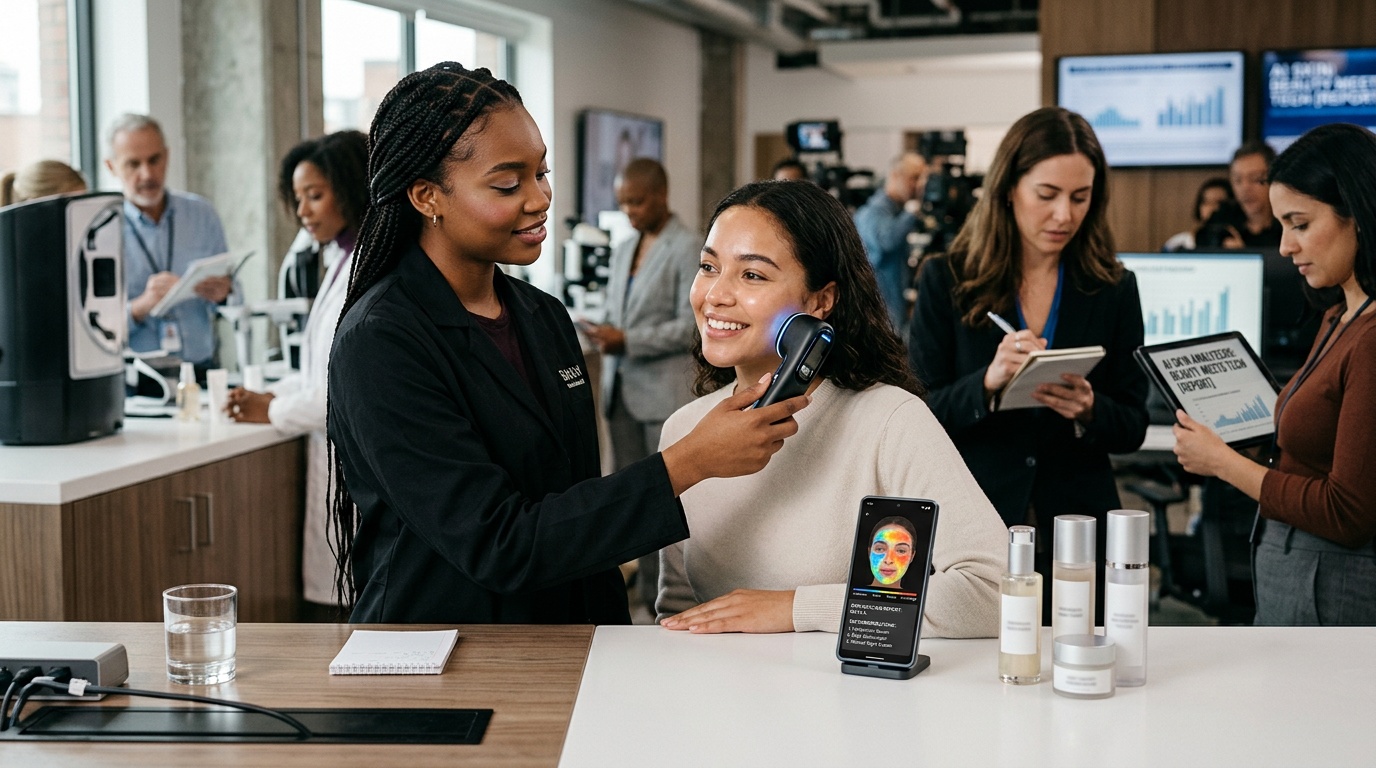
Beauty brands are sprinting to release AI skin analyzers as personalization reshapes the skincare market. Consumers want routines tuned to their unique concerns, not generic product lines. Smartphone cameras, faster chips, and cloud models now make diagnostics widely accessible. As a result, a once boutique service now fits inside everyday apps. The shift is rapid, visible, and increasingly global.
Why Personalized Skincare Is Surging
Shoppers face crowded shelves and complex ingredient stories, creating decision fatigue. AI tools promise quick clarity by translating selfies into clear recommendations. Younger customers already expect digital guidance across beauty journeys. Established brands chase that expectation to defend loyalty and market share. Startups push innovation, forcing incumbents to move faster.
Retailers also feel the pressure to differentiate beyond price. Diagnostics create experiential retail moments that online screens cannot fully match. Advisors can reference AI outputs and build trust with concrete visuals. That dynamic improves conversion while deepening routine adherence. With those results, momentum naturally accelerates.
How AI Skin Analyzers Work
The Computer Vision Pipeline
Most systems rely on computer vision to interpret facial images. The pipeline usually detects a face, segments regions, and normalizes lighting. Algorithms then quantify pores, redness, texture, pigmentation, and fine lines. Models compare findings against population benchmarks to score skin conditions. Finally, a recommendation engine maps scores to routines and products.
Training Data and Model Design
High quality training data is central to reliable analysis. Teams use dermatologist-labeled images across diverse ages, tones, and geographies. Engineers augment images to simulate different lighting and camera conditions. Many platforms use convolutional networks, sometimes paired with transformers for context. Vendors update models continuously as new images and labels arrive.
Accuracy Limits and Environmental Factors
Smartphone photos vary significantly by exposure, resolution, and sensor quality. Makeup, sunscreen, and filters can also mislead texture and color cues. Most vendors display confidence ranges to reflect those uncertainties. Good apps request multiple angles and consistent lighting to reduce noise. Clear instructions and retakes typically improve reliability for everyday users.
Who Is Building and Using These Tools
Global beauty groups have invested heavily in AI diagnostics. Several acquired or partnered with beauty tech specialists to accelerate deployment. Technology providers also license white‑label analyzers to brands and retailers. Dermatology networks increasingly explore triage tools for nonmedical guidance. That overlap brings both opportunity and compliance challenges.
Retail chains pilot kiosks and tablets that guide walk‑in consultations. Advisors use on‑screen maps to explain redness, hydration, or spots. The visuals help shoppers understand tradeoffs between actives and textures. Shoppers then receive printed or digital routines linked to inventory. That loop supports same‑day sales and subscription refills later.
Smartphones Versus Dedicated Hardware
Most analyzers now run on smartphones for convenience and reach. Casual users prefer quick, free scans without extra accessories. Dedicated devices still matter for advanced imaging and consistency. Some systems use polarized light or 3D depth sensing for deeper insights. Clinics and premium counters often prefer that stability and accuracy.
Hybrid strategies are emerging across the category. Brands offer basic at‑home scans and richer in‑store diagnostics using kiosks. Data synchronizes to profiles that track progress over time. The continuity reinforces regimen adherence and loyalty program engagement. Users receive nudges when conditions or seasons change significantly.
From Scores to Skincare Recommendations
AI analyzers convert visible concerns into practical routines and product lists. Recommendation engines align scores with actives, formats, and usage sequences. The best systems include contraindication checks and sensitivity flags. They also explain why a product suits a measured condition. That transparency builds confidence and reduces return rates.
Personalization extends beyond product suggestions to coaching and cadence. Apps set reminders, track adherence, and solicit feedback on feel and results. Over time, algorithms fine‑tune routines using observed responses. They may downshift exfoliation or increase barrier support as needed. This iterative loop resembles a digital skincare coach.
Data Privacy, Consent, and Security
Facial images and skin health data qualify as sensitive information. Responsible brands secure explicit consent before scanning or storing images. Clear notices should describe purposes, retention periods, and sharing policies. Strong encryption and access controls protect images and derived features. Some vendors now support on‑device analysis to minimize data movement.
Region‑specific rules also influence system design. Privacy laws impose restrictions on biometric processing in several markets. Teams implement age gates, opt‑outs, and data deletion workflows. Privacy reviews now sit alongside model performance reviews. That governance reduces risks and improves consumer trust.
Bias, Inclusivity, and Model Validation
AI analyzers must perform well across all skin tones and ages. Insufficient diversity in training data can skew outputs and recommendations. Teams audit datasets, stratify results, and address performance gaps. External dermatology advisors often review labeling standards and clinical relevance. Regular validation reports help brands demonstrate fairness and reliability.
Language matters alongside visual inclusivity. Interfaces should avoid stigmatizing terms for common conditions. Plain explanations help users understand scores without anxiety. Accessible design supports users with vision or language constraints. Inclusivity drives both ethics and market reach.
Marketing Claims and Regulatory Boundaries
Claims must match what the tool actually measures and predicts. Nonmedical wellness guidance faces fewer regulatory hurdles in many regions. Medical claims, such as diagnosing diseases, trigger stricter oversight. Brands therefore frame outputs as educational and supportive, not diagnostic. Clear disclaimers advise users to consult professionals for medical concerns.
Evidence underpins credible performance claims in campaigns. Teams gather reproducibility data across devices and lighting. They document sensitivity, precision, and agreement with expert graders. Independent studies or peer review strengthen credibility further. Regulatory teams ensure advertising aligns with substantiation files.
Partnerships and Ecosystems
Many brands partner with specialized AI vendors for faster deployment. Vendors bring pretrained models, mobile SDKs, and analytics dashboards. Integrators connect analyzers to e‑commerce, CRM, and loyalty systems. That interoperability enables seamless checkouts and personalized follow‑ups. Ecosystem maturity now influences vendor selection as much as accuracy.
Retailers often standardize on a few core technologies. Consistency simplifies staff training and data governance across stores. Co‑marketing programs share traffic and insights with participating brands. These alliances also support joint innovation pilots. Success stories then scale across categories and regions.
Measuring Business Impact
Leaders track metrics that link diagnostics to revenue growth. Key indicators include conversion lift, average order value, and regimen breadth. Retention also improves when users follow personalized routines consistently. Longitudinal skin score improvements build advocacy and referrals. Dashboards visualize these trends for category and market teams.
Operational metrics matter alongside sales numbers. Teams monitor scan completion rates and time to recommendation. They review abandonment points and simplify user flows. Advisors receive coaching where customers stall or disengage. Continuous improvement keeps experiences fast, accurate, and delightful.
What Consumers Should Know
Good lighting and clean skin improve analysis quality markedly. Users should remove heavy makeup and wipe lenses before scanning. Multiple images usually beat a single rushed photo. Consumers should review privacy settings and decide on data retention. They should also treat outputs as guidance, not medical advice.
Consistency unlocks the most value from these tools. Tracking results over weeks reveals meaningful progress or setbacks. Users can then adjust routines thoughtfully, not reactively. A dermatologist can complement digital guidance when issues persist. Balanced approaches often deliver the best outcomes.
The Road Ahead for AI Skincare
On‑device AI will grow as phones gain stronger neural chips. Faster local processing improves privacy and responsiveness. Multimodal models may blend photos with lifestyle and environment data. Weather, sleep, and stress inputs could refine recommendations further. Brands will also integrate ingredient transparency and sustainability preferences.
Standardized benchmarks would help the field mature responsibly. Shared test sets can clarify performance claims across vendors. Cross‑brand collaboration on inclusivity will benefit all consumers. Clearer guidelines can also reduce compliance uncertainty. Those shifts will unlock broader adoption and trust.
AI will not replace dermatologists, but it will raise the baseline. Everyday users will navigate skincare with more confidence and clarity. Advisors will spend more time educating, not guessing. Brands that balance innovation with responsibility will lead. The race is on, and the winners will earn lasting loyalty.
