
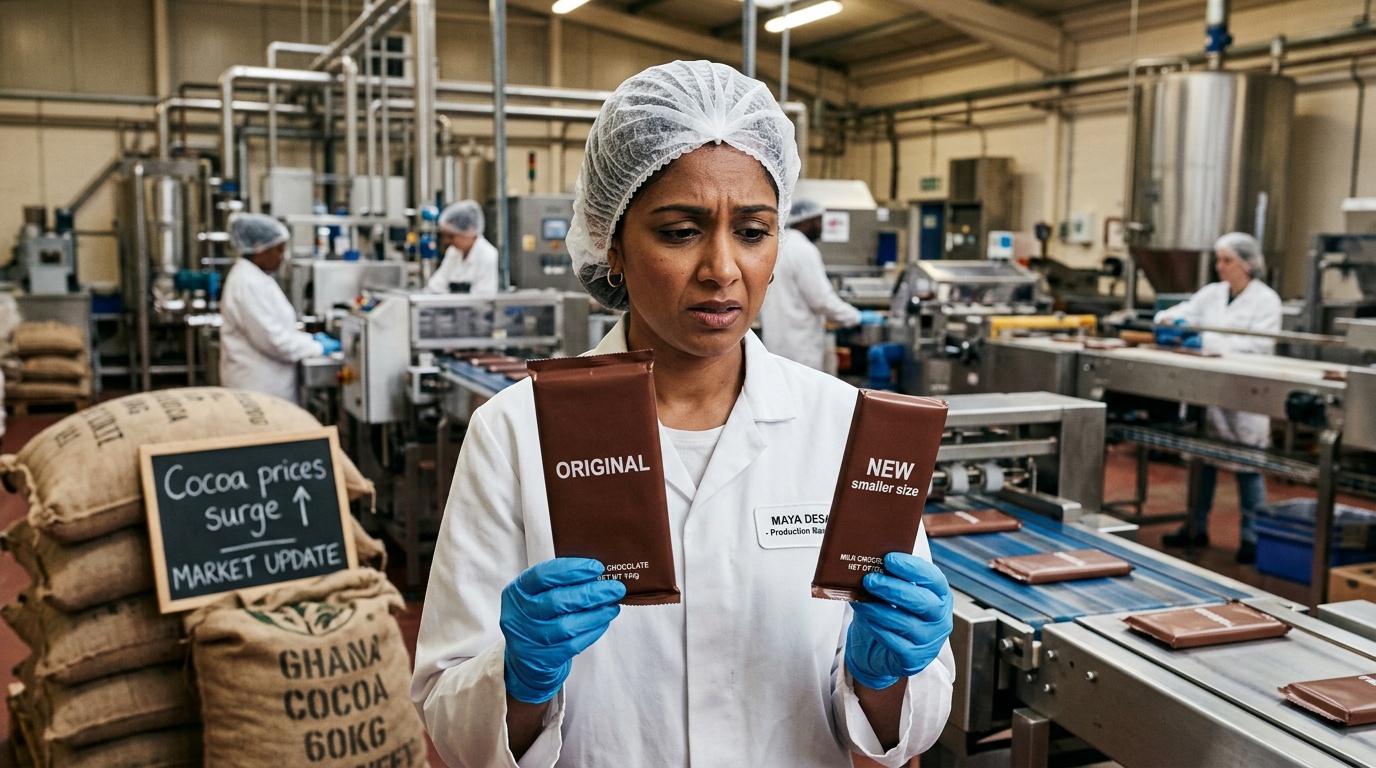
Cocoa prices have surged to record levels, reshaping strategies across the global chocolate industry. Futures markets signaled the shock early in 2024, when New York contracts vaulted past $10,000 per ton. That rally extended a multi-year climb driven by tight supply and rising risk. Chocolate makers faced rapid cost inflation, thinning margins, and uneasy consumers. The ripple effects now touch bar sizes, recipes, and retail assortments worldwide.
What Is Driving the Cocoa Price Spike?
Supply stress sits at the heart of the surge. West Africa produces about 60 percent of global cocoa. Poor harvests in Ivory Coast and Ghana tightened availability during the 2023 and 2024 seasons. Weather volatility, crop disease, and aging trees compounded output pressures. Markets reacted as deficits widened and inventories thinned further.
Weather Shocks and Crop Disease
Erratic rainfall and heat stressed cocoa trees during key flowering periods. El Niño conditions brought hotter, drier weather to critical zones. Heavy rains also created fungal pressure and post-harvest bottlenecks. Cocoa swollen shoot virus continued to damage yields and kill trees. Farms struggled to recover quickly, given long maturation cycles for new plantings.
Structural Challenges in West African Production
Many farms rely on aging trees with declining productivity. Access to high-quality seedlings and inputs remains uneven and costly. Smallholders face credit constraints that limit fertilizer and pesticide use. Extension services often cannot reach remote growers consistently. These structural issues reduce resilience when weather turns adverse.
Policy and Market Dynamics Amplify Tightness
Government farmgate pricing systems can slow supply responses. Export marketing rules sometimes delay flows when prices jump. Currency swings in producing countries influence farm incentives and input costs. Traders and processors faced higher financing needs as prices rose. That financial strain tightened physical availability and risk appetite.
How Chocolate Makers Are Responding
Manufacturers moved quickly to protect profitability and brand equity. They adjusted pricing, portion sizes, ingredient mixes, and promotional calendars. Companies leaned on hedging programs, though coverage windows vary. Messaging shifted to emphasize quality, provenance, and value. Each lever aimed to balance costs with consumer acceptance.
Shrinkflation and Package Redesign
Smaller bars and thinner slabs appeared across shelves as costs escalated. Brands trimmed a few grams while holding price points steady. Multipacks saw reduced count numbers or smaller individual pieces. Some companies redesigned molds to preserve perceived footprint and bite. Packaging emphasized portion control and calorie guidance to soften reactions.
Recipe Reformulation and Ingredient Substitution
Rising cocoa costs encouraged creative recipe shifts. Manufacturers increased milk solids, wafers, and nut inclusions to stretch cocoa mass. Fillings like caramel, fruit, and nougat replaced some chocolate volume. Dark chocolate lines faced the hardest reformulation trade-offs. Premium bars protected cocoa percentages, while mainstream lines adjusted blends thoughtfully.
Producers also evaluated cocoa butter and cocoa powder ratios. Some turned to higher-yield cocoa liquor blends to maintain texture. Clean label commitments limited aggressive use of processing aids. Any change required careful sensory testing to protect signature taste. Rollouts occurred gradually to avoid disrupting loyal customers.
Hedging, Sourcing, and Supply Agreements
Risk managers extended hedges where liquidity allowed, despite elevated margins. Forward contracts with suppliers secured volume during peak tightness. Processors prioritized origins with reliable certification and traceability. Single-origin lines navigated scarcity with limited runs and higher prices. Firms diversified sourcing beyond West Africa where feasible and prudent.
Some manufacturers accelerated investments in farmer support programs. Training on pruning, soil health, and disease control targeted near-term yield resilience. Seedling distribution and replanting initiatives addressed long-term productivity gaps. These steps aimed to stabilize supply while advancing sustainability pledges. Partnerships with cooperatives deepened relationships at the community level.
Impacts on Consumers and Retailers
Shoppers faced higher shelf prices and smaller packages. Promotional depth thinned as costs rose and inventory tightened. Premium bars held ground better than economy options in many markets. Gift boxes and seasonal assortments saw more selective curation. Retailers leaned on private label to offer value alternatives.
Impulse purchases remained sensitive to headline price moves. Merchandisers adjusted placement to sustain conversion at checkouts. Online channels highlighted limited editions and provenance stories. Subscription snack boxes rotated toward mixes with lower cocoa intensity. Cross-category bundles paired chocolate with tea, coffee, or nuts to maintain basket value.
Sustainability and Farmer Livelihoods Under the Spotlight
Record prices revived debate about farmer incomes and value distribution. Many smallholders still captured a small share of final retail value. Farmgate price mechanisms shaped how windfalls reached rural communities. Living income programs sought to improve household resilience sustainably. Certification premiums supported community projects and environmental safeguards.
Deforestation rules introduced new compliance demands for supply chains. Traceability to farm plots became essential for market access, especially in Europe. Companies invested in mapping, satellite monitoring, and data systems. These tools also helped identify disease hotspots and agronomic needs. Stronger transparency aimed to reduce risk and build trust.
Operational Challenges for Processors and Confectioners
Volatile prices complicated working capital planning across the chain. Collateral requirements rose with futures values and basis risk. Smaller manufacturers struggled more with margin calls and financing. Some delayed launches or paused lower-margin lines. Capital projects faced tougher hurdles under uncertain input costs.
Quality control gained urgency during reformulation efforts. Texture, melt, and snap required precise fat and crystal management. Manufacturing teams recalibrated tempering curves when changing cocoa butter levels. Shelf-life testing expanded to catch unforeseen stability shifts. Rigid trials protected brand reputation during rapid adjustments.
Outlook for Prices and Supply
Near-term relief depends on weather and disease management in key origins. Main-crop and mid-crop performance will drive balance sheets significantly. Replanting programs need time to lift baseline yields. Inventories remain thin after consecutive deficit seasons. That backdrop supports continued price sensitivity to any disruption.
Demand growth shows uneven patterns across regions and price tiers. Premium segments remain resilient, supported by gifting and indulgence trends. Value segments face more elasticity as household budgets tighten. Manufacturers will refine price pack architectures to suit each channel. Mix management will matter as much as absolute volume.
Longer term, productivity gains offer the most durable path to stability. Improved planting material can significantly raise yields per hectare. Better agronomy training strengthens resilience against climate volatility. Farm diversification can reduce household reliance on a single crop. Collaboration across governments, buyers, and financiers will shape outcomes.
What to Watch Next
Monitor rainfall patterns and disease reports from West Africa. Port arrival data will offer timely clues on crop size. Government announcements on farmgate prices can shift farmer incentives. Futures spreads and certified stock levels signal tightness or relief. Processor earnings calls will reveal hedging positions and reformulation progress.
Consumer sentiment bears close attention as holidays approach. Seasonal demand intensifies pressure on supply and promotions. Retailers may lock plans earlier to secure allocations. Brands will test limited runs to gauge willingness to trade up. Shopper feedback will refine pack sizes and recipe strategies quickly.
The Bottom Line for Chocolate Lovers
Cocoa’s extraordinary rally reshaped the chocolate aisle in visible ways. Bars may be smaller, recipes slightly different, and prices higher. Manufacturers are working to preserve taste and experience despite headwinds. Farmer support and sustainability programs remain essential for long-term supply health. The path forward requires discipline, transparency, and continued innovation.
Chocolate has weathered commodity cycles before, though this surge stands out. A careful blend of agronomy, finance, and product design will help. Consumers will continue to reward authentic quality and clear communication. Producers that invest at the farm level can build future resilience. That alignment offers the best chance to stabilize prices over time.