

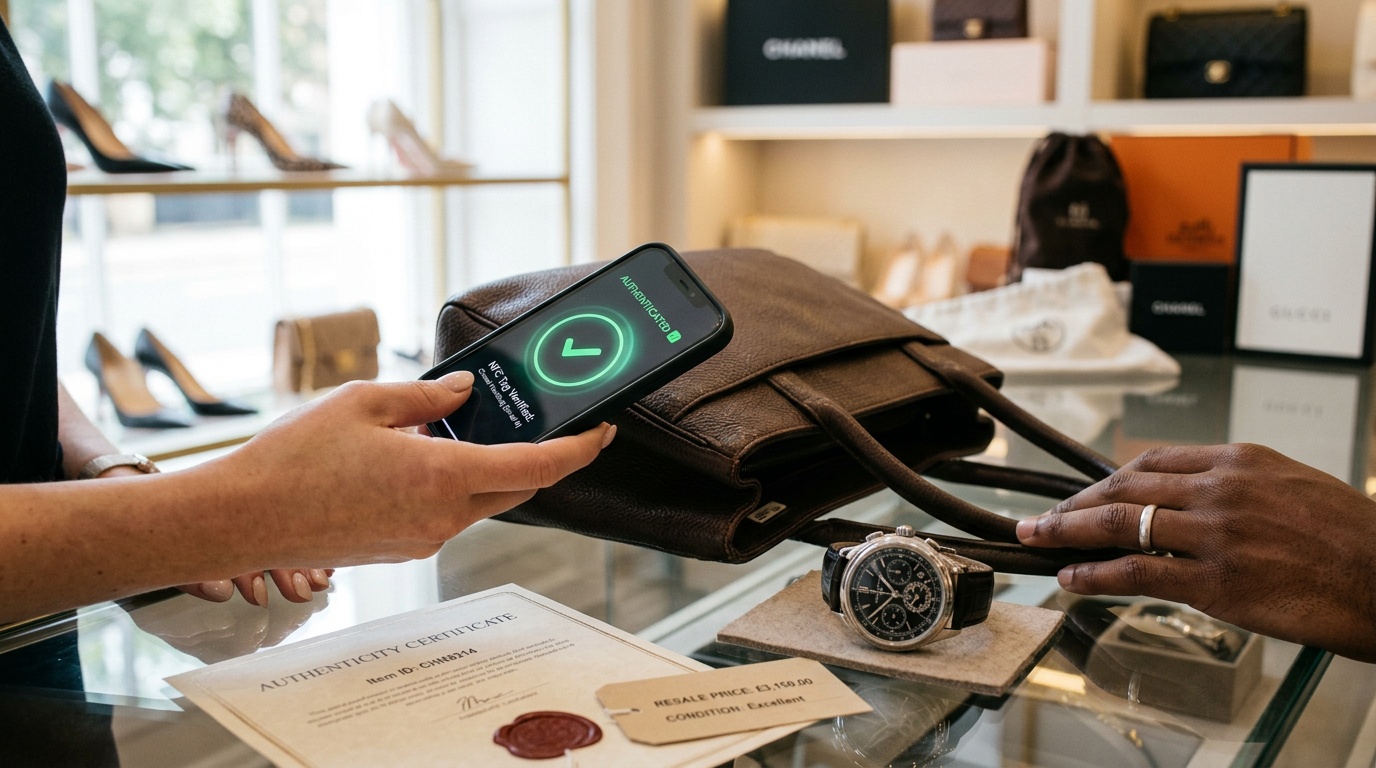
Resale demand for luxury goods has exploded, reshaping strategies across the industry. Buyers want verified provenance alongside price and condition. Platforms have professionalized authentication at scale, raising expectations for certainty. Against this backdrop, brands are embedding NFC chips to defend trust.
Resale Momentum Rewrites the Luxury Playbook
Analysts report the secondhand segment growing faster than primary luxury sales. Bain & Company has highlighted this outperformance across recent market studies. Broader apparel resale is also accelerating, according to multiple industry reports. As volumes rise, authentication becomes a competitive necessity, not a nice-to-have.
Why Authentication Moved to the Front Line
Counterfeits erode brand equity and undermine consumer confidence. Traditional checks rely on expert eyes, paperwork, and serial numbers. These methods struggle against sophisticated fakes and fragmented ownership histories. Digital identities, anchored by NFC chips, promise faster, stronger proof at scale.
How NFC Chips Authenticate Luxury Goods
NFC is a short-range wireless technology built into most smartphones. A tap reads a tiny chip embedded in the product. Secure chips generate cryptographic proofs that resist copying. Brands link each chip to a unique digital certificate stored in a trusted database.
The system typically uses challenge-response or signed tokens. Modern chips, like secure NFC tags, can produce dynamic codes each tap. This thwarts simple cloning and replay attacks. Cloud services then match the response to product records and ownership events.
Adoption Accelerates Across Categories and Houses
Luxury groups have piloted and scaled digital identities across bags, footwear, and apparel. Early deployments also appeared in watches and jewelry cards. The Aura Blockchain Consortium, founded by leading groups, supports shared provenance infrastructure. Other providers, including Certilogo and Arianee, power brand programs using NFC and QR.
Several brands have experimented with embedded chips in limited lines. Others began with scannable cards or labels before moving on-product. Sneakers and streetwear saw rapid experimentation with digital tags. These efforts reflect a broader push toward item-level identification across inventories.
Watches, Jewelry, and High-Ticket Goods
High-value categories face intense counterfeiting and complex provenance. Some watchmakers issue digital passports linked to serials and service records. NFC-enabled warranty cards or packaging support handoffs during resale. These mechanisms streamline verification during trade-ins and marketplace listings.
Handbags and Leather Goods
Handbags benefit from discreet tags sewn into linings or hardware. Chips can survive ordinary use without affecting aesthetics. Resale partners can authenticate faster during intake and pricing. Consumers gain a simple tap to confirm legitimacy before purchasing.
Sneakers, Streetwear, and Hype Collaborations
Limited releases and fast flips created fertile ground for embedded IDs. Brands and marketplaces have tested tamper-evident tags and NFC seals. These solutions help prove origin and detect returns fraud. They also enable post-purchase experiences, like drop alerts and care guidance.
Digital Passports and Blockchain Link Physical and Virtual
An NFC tap can reveal a digital passport with rich metadata. Provenance entries may include materials, origin, service, and repairs. Some programs anchor records on blockchains for additional transparency and durability. Others use enterprise databases with strong access controls and auditing.
The passport persists as items change hands. Ownership transfers can be recorded with consent, creating a traceable lifecycle. Resellers can ingest passport data to speed listing approval. Over time, secondary market liquidity can improve through verified histories.
Consumer Experience Improves with a Simple Tap
Shoppers use a phone tap to view authenticity status instantly. They can also access care instructions and warranty details. Some brands add perks, like repair booking and styling content. These services encourage engagement beyond the initial purchase and resale.
Costs and Manufacturing Considerations
Embedding secure NFC adds material and process costs. Chip prices vary by security level and volume commitments. Placement must balance durability, read performance, and discretion. Manufacturing teams collaborate with tag vendors to integrate without compromising craftsmanship.
Risks, Attacks, and Practical Limitations
No authentication method is perfectly tamper-proof. Attackers may transplant chips into counterfeits or attempt relay attacks. Secure attachment and tamper-evident design reduce those risks. Back-end analytics also flag impossible travel or suspicious scanning patterns.
Batteryless NFC tags rely on close-range reads. Metal hardware and dense materials can attenuate signals if mispositioned. Reader experience also varies across smartphone models. Brands test placements extensively to ensure reliable tap performance.
Standards and Interoperability Shape the Ecosystem
Most luxury tags use ISO-compliant NFC technologies. Vendors implement security features defined by the NFC Forum and chipmakers. GS1 standards guide product identifiers and data structures. Interoperability helps marketplaces, recyclers, and service centers read items consistently.
Regulation and Privacy Enter the Conversation
European policy is advancing digital product passports for textiles. These rules encourage transparent, machine-readable product data at scale. Brands must manage personal data carefully under privacy laws. Many programs avoid personal data on tags and use consented apps for transfers.
Circularity and Sustainability Benefits
Authenticity unlocks higher recovery values and reuse. Traceability supports responsible sourcing disclosures and repair documentation. Verified materials data aids recycling and refurbishment decisions downstream. This transparency strengthens circular business models in luxury.
Marketplaces and Resale Platforms Adapt Quickly
Resale leaders integrate digital IDs into intake workflows. Trusted chips reduce manual inspection time and dispute rates. Some platforms issue new NFC seals after expert checks. These steps build buyer confidence and speed transaction cycles.
What Success Looks Like for Brands
Winning strategies pair secure hardware with strong data governance. Teams align product design, IT, legal, and after-sales services. Programs emphasize consumer value beyond authentication alone. That approach turns chips into ongoing service channels, not just anti-counterfeit tools.
Future Outlook: Phones Become Provenance Portals
Smartphones will keep evolving as universal readers. Better tap experiences will normalize provenance checks at point of sale. Digital passports will connect to repair networks and insurance. As adoption spreads, friction in resale should continue to fall.
Tips for Buyers and Sellers Navigating NFC Authentication
- Always tap the embedded chip, not only packaging cards or hangtags.
- Verify the app or web domain belongs to the brand or a trusted partner.
- Cross-check serials and photos against the digital passport when available.
- Beware of items whose chips fail repeatedly from normal reading distances.
- Request provenance screenshots during negotiation, including last successful verification timestamp.
- Use platforms that integrate brand digital IDs for intake and listing.
- Keep receipts and service records aligned with the digital passport data.
- Ask how ownership transfer works, and confirm any privacy settings.
- Do not share private links or codes from unfamiliar messages.
- Report suspected cloning to the brand or marketplace for investigation.
Authentication is becoming a shared responsibility across brands, platforms, and consumers. Embedded NFC chips make verification accessible with a phone tap. Digital passports then carry that trust across multiple owners. Together, these tools strengthen confidence as luxury resale continues to surge.
