

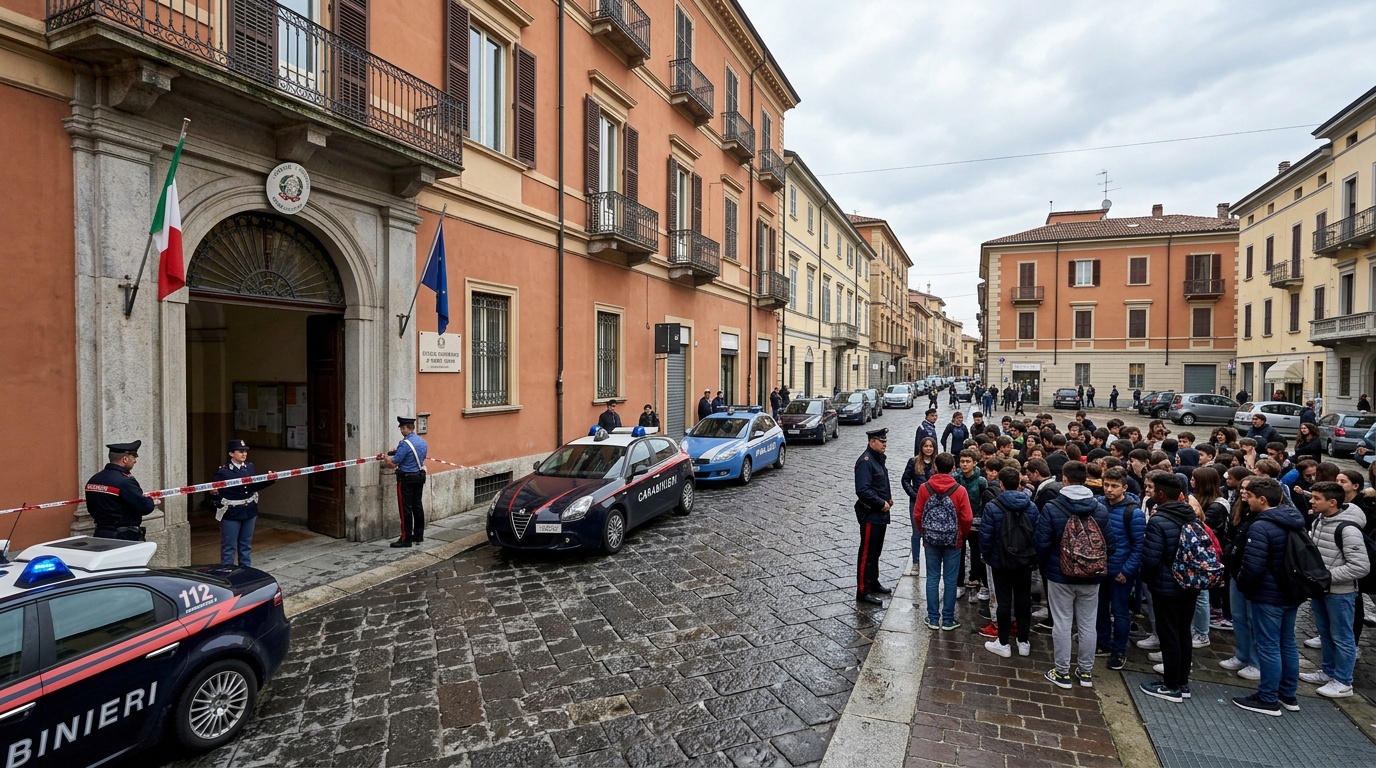
Authorities assess the nationwide threat
Italian authorities are investigating a wave of bomb threats that targeted thousands of schools across the country. The warnings prompted police, education officials, and local governments to review security procedures. School leaders also faced immediate decisions about evacuations, closures, and communication with families. Investigators must now determine whether one person, a coordinated group, or copycats issued the threats.
Reports describe thousands of schools as targets, although a listed target does not necessarily indicate an evacuation. Police assess every credible warning because officials cannot safely dismiss a threat without conducting checks. However, authorities also consider wording, timing, delivery methods, and similarities between messages. Those details help investigators separate coordinated activity from unrelated incidents.
The investigation covers both public safety and possible criminal offenses. Officers must protect students while preserving digital and physical evidence. Prosecutors can direct investigative work and authorize additional measures under Italian law. This dual approach shapes the response from the first warning onward.
Schools follow local safety procedures
Italian school principals hold important responsibilities for safety within their buildings. They can activate emergency plans when a threat creates a potential danger. Staff members may guide students toward designated assembly points while police inspect classrooms and shared spaces. Officials can also restrict access until specialists complete their assessment.
Evacuation decisions depend on the available information and advice from emergency services. A specific warning may receive a different response from a vague mass message. Police can examine entrances, storage areas, vehicles, and suspicious packages. Bomb disposal specialists may attend when officers identify an object requiring expert inspection.
Families often receive updates through school websites, electronic registers, messaging systems, or municipal channels. Clear instructions help prevent crowds from gathering near an active security operation. Parents should follow official directions rather than approaching a school during police checks. That cooperation allows emergency teams to work without additional obstacles.
Prefectures coordinate provincial responses
Italy’s prefectures connect national authorities with provincial institutions during serious public safety incidents. A prefect can coordinate police forces, municipalities, emergency services, and other state offices. This structure supports consistent decisions when threats affect several communities simultaneously. It also helps officials compare information arriving from different school districts.
The State Police and Carabinieri can both participate in checks and investigative work. Local police may manage traffic, secure surrounding streets, or support evacuations. The Interior Ministry oversees national public order policy and can circulate guidance. Coordination becomes especially important when messages cross provincial or regional boundaries.
Investigators trace the messages
Investigators will examine how the threats reached schools and whether the senders used common infrastructure. Digital evidence can include account records, timestamps, internet addresses, routing information, and attached files. Officers may compare spelling, formatting, and repeated phrases across different messages. Matching features can reveal automation or a shared source.
Italy’s Postal and Communications Police specializes in cybercrime and online investigations. Its officers can support efforts to identify accounts, devices, or networks connected with threatening communications. Prosecutors may seek information from service providers through appropriate legal procedures. International cooperation could become necessary if evidence leads outside Italy.
Senders sometimes use anonymizing services, compromised accounts, or false identities to hide their location. Those methods can complicate an investigation, but they do not guarantee anonymity. Account activity, payment records, device data, and operational mistakes may expose a user. Investigators usually combine several evidence sources before identifying a suspect.
Authorities must also test whether later threats copied earlier messages. Heavy publicity can encourage imitation by individuals seeking attention or disruption. Copycat activity may expand an incident without proving a single nationwide organization. Therefore, investigators compare each case before linking it to the wider series.
Disruption extends beyond security checks
Bomb threats can interrupt lessons even when police discover no explosive device. Evacuations consume teaching time and can postpone examinations, meals, transport, and extracurricular activities. Municipalities may need temporary gathering areas or additional buses. Staff members must also account for every student during changing conditions.
The psychological effects can last longer than the immediate disruption. Younger students may struggle to understand why adults ordered a sudden evacuation. Teachers and families can reduce anxiety by explaining events calmly and avoiding speculation. Schools may offer counseling when students or employees experience continuing distress.
Repeated false alarms also place pressure on public resources. Police must examine each report while maintaining coverage for other emergencies. Specialist deployments can require additional personnel, equipment, and travel. That burden explains why authorities treat hoax threats as serious conduct.
Potential criminal consequences
Italian prosecutors can consider several offenses, depending on the evidence and the disruption caused. Article 658 of Italy’s Criminal Code addresses alarms created by announcing nonexistent disasters, accidents, or dangers. Other provisions may apply when conduct interrupts public services or includes intimidation. Prosecutors determine the appropriate allegations after examining each incident.
A suspect’s age could affect the legal process. Italy uses specialized juvenile justice procedures for alleged offenders who were minors during an offense. Courts still examine responsibility, evidence, and harm in those cases. However, juvenile proceedings emphasize age, development, and rehabilitation alongside accountability.
Schools and public bodies may also document financial losses and operational damage. Such records can help establish the scale and consequences of disruption. Investigators may request attendance records, closure notices, security footage, and internal communications. Careful documentation strengthens the factual timeline available to prosecutors.
Officials seek accurate public communication
Authorities must balance transparency with the need to protect investigative details. Publishing every feature of a threat could help copycats reproduce it. Conversely, delayed information can allow rumors to spread through community groups and social media. Regular, verified updates offer the safest balance during a developing inquiry.
Officials generally ask people to report suspicious messages rather than forwarding them widely. Recipients should preserve the original content, including headers, attachments, and screenshots. They should avoid clicking unfamiliar links or opening unexpected files. Immediate danger requires contact with emergency services through Italy’s 112 number.
Social media users should also distinguish confirmed information from unverified claims. An online post may repeat an old warning or misidentify an affected school. Sharing inaccurate lists can increase fear and overwhelm school offices. Official police, municipal, prefectural, and school channels provide more reliable guidance.
The investigation moves toward attribution
The central questions concern authorship, coordination, intent, and technical origin. Investigators will seek links between the messages and any earlier threats. They will also examine whether the campaign aimed primarily to frighten communities or disrupt education. Evidence, rather than the volume of online speculation, will determine those conclusions.
Meanwhile, schools will continue reviewing emergency plans and communication procedures. Administrators can use the disruption to identify weaknesses in evacuation routes or family notification systems. Police may recommend practical changes after completing local assessments. These measures cannot prevent every threat, but they can improve readiness.
The wave demonstrates how a single communication campaign can affect large public systems. It also shows why officials must combine rapid protection with patient technical investigation. Authorities have not completed that work while inquiries remain active. Until they establish responsibility, verified updates and measured responses remain essential.
