

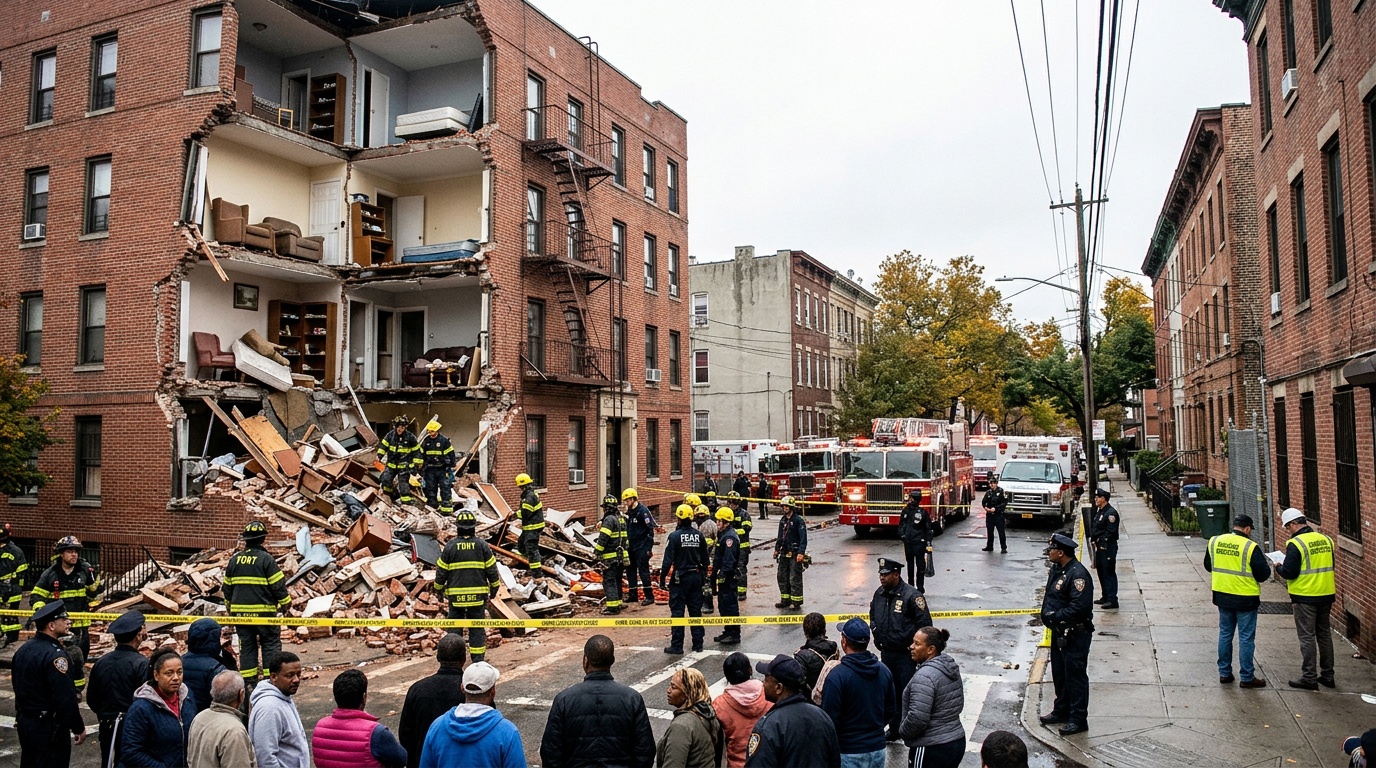
A collapse at a Brooklyn apartment building sent firefighters, police officers, paramedics, and utility crews into an urgent response. Teams searched damaged areas, cleared nearby homes, and monitored unstable walls for movement. The event also triggered questions about maintenance, construction, inspections, and the building’s condition before the failure. Those questions now frame a safety review that may continue long after the emergency ends.
Authorities treated the location as both a rescue scene and a serious structural hazard. That distinction shaped every decision around access, equipment, evacuations, and street closures. Officials avoided assigning a final cause during the initial operation. Engineers need physical evidence, building records, and witness accounts before reaching reliable conclusions. Meanwhile, displaced residents faced immediate questions about shelter, medication, pets, and personal belongings.
Emergency crews secure the collapse zone
Firefighters established a controlled perimeter around the damaged building and kept bystanders away from unstable areas. Crews assessed floors, walls, stairways, utility lines, and neighboring structures. They also watched for falling bricks, shifting debris, fire, and leaking gas. Police officers managed traffic and preserved access for emergency vehicles. Paramedics remained available to treat residents, workers, or rescuers.
Utility crews may shut gas and electricity when damaged lines create additional dangers. Water service can also complicate operations when broken pipes flood basements or weaken debris. Responders coordinate these shutdowns through the incident commander. That system reduces conflicting instructions and tracks personnel entering dangerous areas. Clear accountability remains essential because conditions can change without warning.
Search teams balance speed with safety
Collapse searches require careful movement because rescuers can disturb unsupported material. Teams first identify survivable spaces beneath floors, furniture, beams, or other structural elements. They may use listening devices, cameras, drones, or specially trained dogs when conditions allow. Rescuers also call for silence while checking for voices or tapping sounds. These methods help teams examine areas that remain difficult to reach.
Specialists can install temporary supports before entering unstable sections. They may remove debris in stages instead of clearing everything immediately. Each removed piece can alter the remaining load and create another collapse risk. Structural engineers advise commanders about walls, floors, and adjoining properties. Once teams complete urgent searches, the operation gradually shifts toward stabilization and investigation.
Evacuations create immediate housing needs
Officials may evacuate more than the visibly damaged building. Shared walls, connected roofs, falling masonry, or underground damage can threaten neighboring properties. Residents often leave quickly and carry only essential items. Emergency managers then help identify temporary shelter and basic services. Community organizations may provide clothing, food, transportation, translation, and assistance replacing important documents.
New York City agencies can coordinate support with the American Red Cross and local service organizations. Property owners remain responsible for required repairs and safe building conditions. However, emergency access rules may prevent tenants from retrieving possessions immediately. Fire or building officials must approve any supervised return. These restrictions protect residents from hazards that may remain hidden after the visible collapse.
Building inspectors begin the safety review
The New York City Department of Buildings examines structural failures and enforces construction safety requirements. Inspectors document damaged components, nearby work, open violations, permits, and previous complaints. They can order emergency stabilization, protective fencing, repairs, or demolition. The department can also issue vacate orders when occupancy presents an immediate danger. Such orders usually remain until inspectors confirm safe conditions.
Investigators must determine which component failed first and why. Possible factors can include deterioration, overloading, fire damage, water intrusion, excavation, impact, or unauthorized alterations. Listing those possibilities does not identify the cause of this collapse. Engineers must compare each theory against physical evidence. Laboratory testing may also reveal concrete strength, steel condition, corrosion, or material defects.
Records can reveal important warning signs
Investigators often review architectural plans, repair histories, inspection reports, photographs, and contractor records. They may examine recent renovations inside apartments or commercial spaces. Removed walls, altered beams, roof equipment, and added loads can affect structural performance. Nearby excavation can matter when work disturbs soil or foundations. Investigators must verify whether any such activity occurred before connecting it to the failure.
Public complaints and violations can provide useful timelines, but they do not prove causation alone. A complaint may remain unsubstantiated after inspection. A violation may concern an issue unrelated to structural stability. Investigators therefore compare records with damage patterns and witness statements. This process helps separate relevant evidence from coincidental building history.
Rules vary with building size and construction
New York City applies different inspection requirements according to height, use, age, and construction type. The Facade Inspection and Safety Program covers exterior walls on buildings taller than six stories. That program focuses on facade conditions rather than every internal structural component. Smaller buildings still face maintenance, construction, fire, and housing requirements. Owners must keep all buildings in safe condition.
A building’s age does not establish that it was unsafe. Many older structures remain sound because owners maintain them and complete timely repairs. However, aging materials can require closer attention to corrosion, cracking, settlement, and repeated water exposure. Engineers consider those conditions alongside design details and later modifications. The broader review should focus on evidence rather than assumptions about age.
Neighbors watch for hazards after the collapse
The incident also raises concern among residents of nearby buildings. Warning signs can include new cracks, leaning walls, sagging floors, falling masonry, or doors that suddenly jam. Residents should report immediate dangers through emergency services and avoid damaged areas. They can submit nonemergency building concerns through New York City’s 311 system. Photographs and dates can help inspectors understand changing conditions.
Tenants should not enter a restricted structure without official permission. Dust, broken glass, exposed wiring, and weakened stairs can remain dangerous. Residents should also avoid moving barricades or crossing marked collapse zones. Property managers must communicate repair plans and access restrictions clearly. Regular updates can reduce confusion while engineers complete inspections and stabilization work.
Recovery depends on engineering findings
The next phase will depend on the extent of damage and the review’s conclusions. Engineers may recommend repairs, partial demolition, or complete removal of an unsafe structure. Contractors must follow approved plans and protect workers, pedestrians, and neighboring properties. City inspectors can monitor that work and issue additional enforcement actions. Complex stabilization may require extended street or sidewalk closures.
Residents will seek clear answers about cause, responsibility, and possible return dates. Those answers may emerge at different times because rescue, enforcement, and engineering reviews serve separate purposes. A preliminary assessment can identify immediate hazards without establishing the complete failure sequence. The final analysis requires careful documentation and technical review. Until then, rescue priorities and public safety remain central to Brooklyn’s response.
