

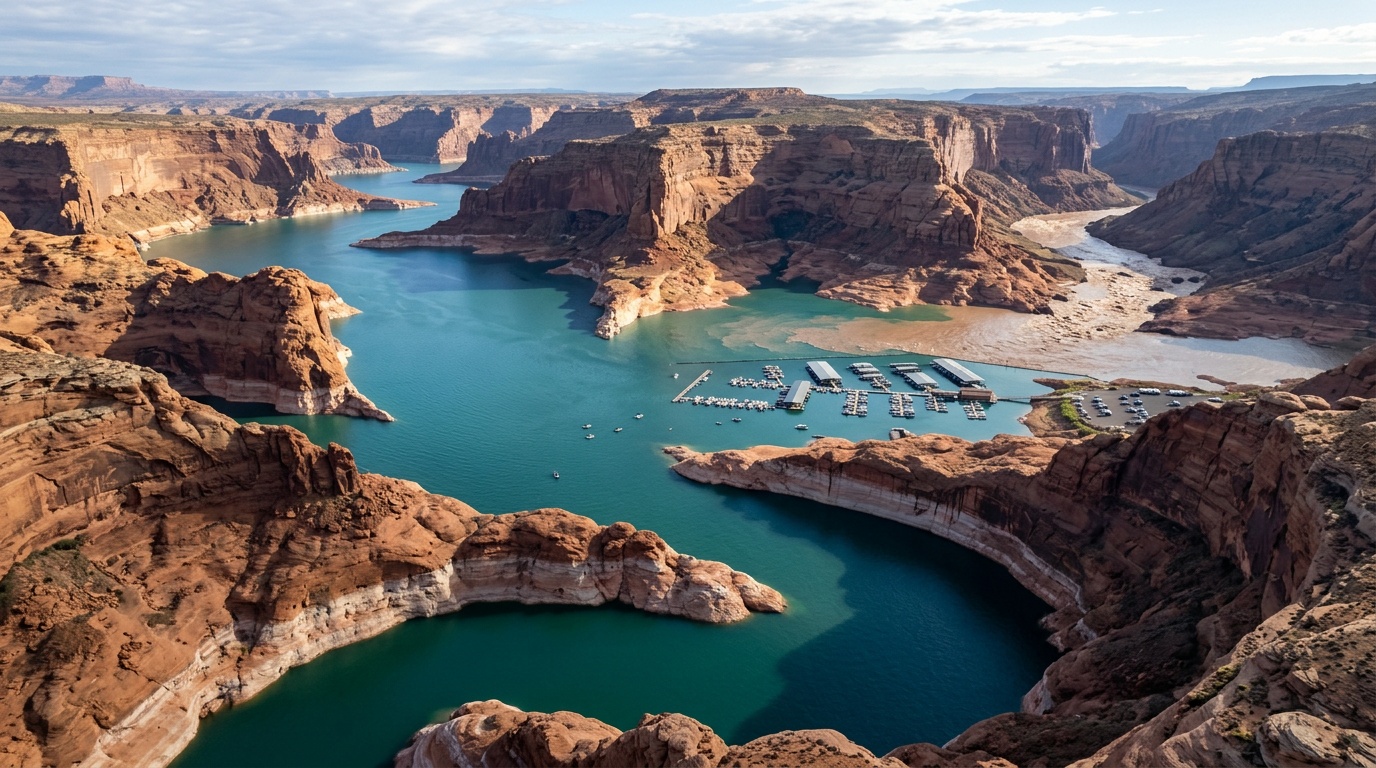
Lake Powell has risen about 20 feet after floodwaters surged through the upper Colorado River system. The gain offers welcome breathing room for a reservoir battered by prolonged drought. It also improves operating conditions at Glen Canyon Dam, at least temporarily. However, the rise does not erase the basin’s substantial water deficit. Managers still face difficult choices as warming, demand, and variable runoff reshape the river.
The reservoir straddles Utah and Arizona and stores Colorado River water behind Glen Canyon Dam. It supports hydropower generation, recreation, and regulated water deliveries across the Southwest. Water passing through Powell eventually flows toward Lake Mead, hundreds of river miles downstream. Consequently, a major change at Powell carries regional importance. Communities, tribes, farms, businesses, and ecosystems all depend on decisions involving these reservoirs.
Putting the 20-foot rise into context
Reservoir gauges measure elevation above sea level, rather than water depth across the entire lake. Therefore, a 20-foot rise does not mean every location became exactly 20 feet deeper. Powell’s steep canyons, broad bays, and sloping shorelines create significant local differences. The rising surface also spreads across more land as water reaches higher elevations. That changing shape affects how much storage accompanies each vertical foot.
Lake Powell can hold about 24.3 million acre-feet at its full elevation near 3,700 feet. One acre-foot equals approximately 325,851 gallons, enough to cover one acre with one foot of water. Storage gains depend on the reservoir’s elevation-area relationship. A foot gained at one elevation may store more water than a foot gained lower down. Federal tables convert measured elevation into estimated storage volumes.
Snowmelt and runoff drove the increase
The surge followed substantial runoff from mountain watersheds feeding the upper Colorado River. Winter snow stores water across Colorado, Wyoming, Utah, and New Mexico. Warmer spring temperatures release that water into streams and major tributaries. Storms can accelerate melting and produce unusually strong flows. Those flows then move through the Colorado, Green, and San Juan river systems toward Powell.
The term “floodwaters” describes unusually high flows, but it does not always indicate widespread destructive flooding. Some tributaries may leave their banks while others remain within normal channels. Powell captures much of this runoff and reduces downstream flow fluctuations. That storage function protects some communities while preserving water for later releases. However, floods can also carry sediment, debris, and pollutants into the reservoir.
How water managers track the surge
The Bureau of Reclamation monitors Powell’s elevation, inflow, releases, evaporation, and storage. Automated gauges provide frequent readings, although wind and waves can cause small short-term changes. Officials compare those readings with forecasts from the Colorado Basin River Forecast Center. Snowpack measurements also help estimate seasonal runoff. Forecasts change as temperatures, storms, soil moisture, and water use develop.
Reclamation publishes operating projections through its monthly 24-Month Study. That document estimates reservoir levels under expected inflow and release conditions. Managers use those projections when planning releases from Glen Canyon Dam. Federal rules, environmental requirements, and interstate agreements also shape operations. The 20-foot increase provides more flexibility, but managers cannot treat every new gallon as available water.
Immediate benefits for Glen Canyon Dam
Higher water improves the pressure needed to drive Glen Canyon Dam’s hydroelectric turbines. The dam’s minimum power pool sits near elevation 3,490 feet. Approaching that threshold raises concerns about reduced generation and equipment performance. A 20-foot gain creates additional distance from that critical operating level. Greater hydropower production can support the regional electrical grid and generate revenue for river programs.
Rising water also improves access at some marinas, boat ramps, and recreation areas. Low levels previously left ramps stranded above the shoreline. Operators extended roads, docks, and utility lines as the reservoir retreated. A rapid rise can restore access, but it can also complicate shoreline operations. Floating debris, submerged obstacles, unstable banks, and changing currents create hazards for visitors.
Lake Mead receives an indirect benefit
Lake Powell and Lake Mead function as the Colorado River’s two largest storage reservoirs. Water released through Glen Canyon Dam crosses the Grand Canyon before entering Lake Mead. However, Powell’s rising level does not immediately produce an equal rise at Mead. Release schedules determine how much water continues downstream. Managers must balance storage, hydropower, delivery obligations, and environmental needs between both reservoirs.
Lake Mead supplies water to Arizona, California, Nevada, Mexico, and several tribal communities. It also supports hydropower at Hoover Dam. Strong upper-basin runoff can improve Mead’s outlook when releases from Powell increase. Conversely, retaining additional water at Powell may delay that benefit. The two reservoirs therefore require coordinated management rather than separate reactions to changing weather.
Relief does not equal recovery
The Colorado River Basin has experienced prolonged drought since 2000, alongside rising temperatures. Warmer conditions increase evaporation from soils, plants, rivers, and reservoirs. They can also reduce the runoff produced by a given snowpack. Dry soils absorb early snowmelt before that water reaches major streams. Consequently, impressive mountain snowfall does not always create equally impressive reservoir gains.
One strong runoff period cannot replace decades of depleted storage. Powell remains below full pool, despite the visually dramatic 20-foot increase. Future dry winters could quickly reverse part of the gain. Evaporation and required downstream releases continue throughout the year. Long-term stability requires water use that reflects the river’s reduced and increasingly uncertain supply.
Environmental effects remain complicated
Floodwater can benefit river habitats by moving sediment, reconnecting side channels, and supporting wetlands. Yet Glen Canyon Dam traps most incoming sediment inside Lake Powell. Controlled releases can rebuild some sandbars downstream, but managers must carefully design those high-flow experiments. Rapid reservoir changes may also affect fish habitat and shoreline vegetation. Native and nonnative species can respond differently to altered temperatures and flows.
Rising water also covers newly exposed land that developed plants during low-water years. Decomposing vegetation may temporarily affect local water chemistry. Sediment carried by tributaries can form deltas that influence navigation and storage capacity. Meanwhile, archaeological and cultural sites face erosion, exposure, or inundation. Tribal nations continue seeking stronger roles in decisions affecting these landscapes and waters.
What happens after the rise
Managers will watch summer temperatures, remaining snowpack, monsoon storms, releases, and regional water demand. They will also revise forecasts as measured conditions replace earlier estimates. Negotiations over new Colorado River operating rules will influence future reservoir management. Current debates include conservation, shortage sharing, tribal rights, and protection of critical infrastructure. Any durable agreement must address both wet periods and severe droughts.
The 20-foot rise demonstrates how quickly substantial runoff can change Powell’s appearance and operating outlook. It provides valuable storage, stronger hydropower conditions, and limited protection against another dry period. Still, the increase represents temporary relief rather than a complete recovery. The Southwest’s reservoirs remain vulnerable to warming and heavy demand. Their future depends on conservation, flexible rules, accurate forecasting, and sustained cooperation.
