

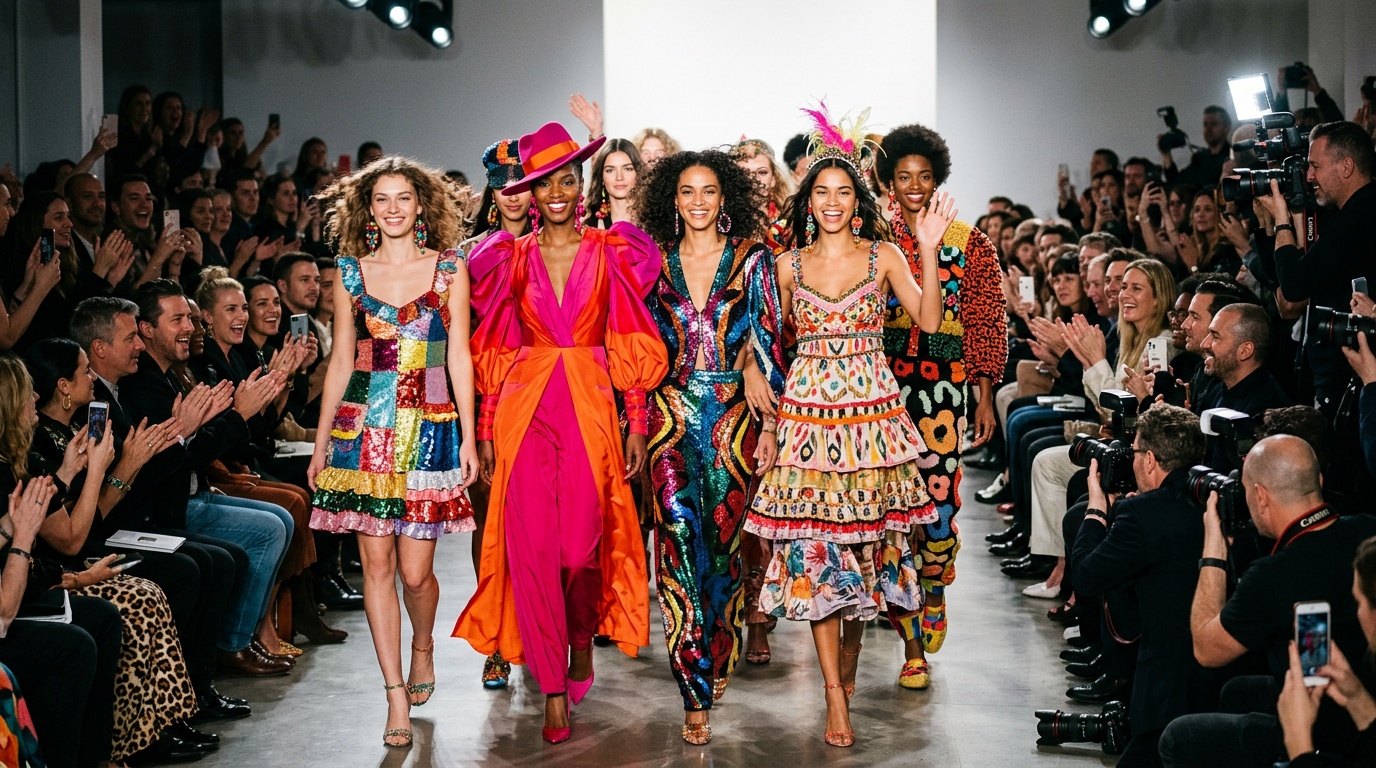
A buoyant final note
New York Fashion Week ended on a buoyant note, with expressive clothes driving the season’s strongest conversation. Designers embraced saturated color, shine, pattern, and volume instead of relying only on restraint. Their collections framed dressing as an emotional act and a practical source of confidence. The result felt celebratory, but it rarely depended on costumes or novelty alone. Wearable separates and familiar silhouettes kept the optimism connected to everyday wardrobes.
The week gathered editors, buyers, stylists, celebrities, and digital creators at venues across New York City. The Council of Fashion Designers of America maintains the official calendar for the industry’s main seasonal showcase. Independent designers often schedule related events outside that calendar, widening the week’s geographic and creative reach. Brands used runway shows, appointments, dinners, and installations to address different audiences. As the schedule closed, joyful dressing emerged as a useful link between those varied formats.
The visual language of joy
Color provided the quickest route from minimalist basics to a more visibly optimistic wardrobe. Designers combined bright red, pink, orange, green, blue, and yellow across dresses, tailoring, and sportswear. Some looks used one dominant shade, allowing clean shapes to carry unusual intensity. Others placed contrasting hues together, creating graphic effects without complicated construction. These choices gave simple garments a clear identity from the runway’s farthest seats.
Bold color does not require a head-to-toe commitment, and the collections repeatedly supported flexible styling. A vivid coat can animate neutral separates, while a bright shoe can update familiar tailoring. Layering also lets wearers control how much color enters a workplace or evening outfit. That versatility matters because consumers often seek pieces that serve several settings. The strong palette then led naturally toward texture, another tool for creating emotional impact.
Texture makes movement visible
Designers used sequins, metallic fabrics, fringe, and sheer layers to make motion visible. When models walked, those surfaces changed under lights and produced a dynamic runway image. Shine appeared on evening pieces, but it also refreshed skirts, knits, and accessories. This wider placement made decorative elements feel less restricted to formal occasions. It also supported the broader idea that pleasure belongs in ordinary dressing.
Tactile contrasts deepened that effect and prevented cheerful clothes from looking one-dimensional. Designers placed soft knits beside glossy leather, crisp cotton, or fluid satin. Transparent fabrics revealed deliberate layers, adding depth while preserving the underlying outfit’s structure. Ruffles and pleats created shadow, while embroidery gave flat surfaces a handcrafted character. From texture, the joyful theme moved naturally toward silhouette and playful proportion.
Proportion gives familiar clothes new energy
Volume appeared through broad shoulders, full skirts, rounded sleeves, and trousers with generous legs. Those shapes claimed physical space, which strengthened the collections’ confident mood. At the same time, shorter hems and fitted layers balanced larger outer pieces. That contrast kept dramatic proportions readable and helped stylists define the body. A strong silhouette can communicate immediately, even when viewers encounter it on a small screen.
Designers also reconsidered familiar wardrobe categories rather than abandoning them. A classic shirt gained impact through scale, color, or an unexpected fabric. Tailored jackets appeared with relaxed trousers, transparent skirts, or playful footwear. Knitwear moved beyond quiet layering through pattern, surface interest, and exaggerated shape. These adjustments connected experimentation with New York’s established tradition of practical American sportswear.
Styling completes the argument
Accessories concentrated the theme in objects that customers can adopt without replacing an entire wardrobe. Statement earrings, colorful bags, decorated shoes, and sculptural belts gave neutral outfits a lift. Hosiery and socks also offered visible color at a relatively approachable scale. On the runway, stylists often repeated shades across several accessories to create cohesion. Those details showed how exuberance can come from coordination rather than excess.
Beauty direction and casting strengthened the clothes’ emotional message. Makeup, hair, music, lighting, and model movement shaped how audiences interpreted each collection. A brisk walk could make fringe energetic, while softer pacing emphasized drape and delicacy. Outside venues, attendees extended the conversation through personal outfits photographed for street-style coverage. That public display carried runway ideas into the city and toward social platforms.
Practicality anchors the celebration
Despite the spectacle, New York fashion retained its longstanding focus on clothes that function. Many expressive ideas appeared on separates, outerwear, and knitwear rather than elaborate gowns. Pockets, flat shoes, adjustable layers, and roomy bags reflected the routines of active wearers. Tailoring supplied structure, while stretch and generous cuts protected movement. This balance allowed the collections to celebrate fashion without treating comfort as an afterthought.
Joyful dressing can also work through repetition, because reliable garments become more useful with distinctive styling. A bright sweater can return across seasons when its fabric and construction remain durable. A patterned skirt can shift between casual and formal settings through shoes and outerwear. Such flexibility supports cost-conscious shoppers and reduces dependence on one-occasion purchases. From practical wardrobes, the conversation inevitably turned toward the market awaiting these collections.
Who gets to share the joy
Joy also depends on who receives permission to participate in fashion’s public image. Broader casting across race, age, gender identity, and body type can make expressive clothing feel more relevant. New York’s runways have expanded representation unevenly, and progress varies widely among brands and seasons. Accessible sizing and adaptive design remain separate challenges because runway visibility does not ensure product availability. When companies connect inclusive images with inclusive products, celebration becomes more than a visual theme.
The runway meets a complicated market
Fashion week functions as both a cultural event and a business platform. Designers present collections months before many pieces reach stores, giving buyers and editors time to respond. Orders, media coverage, celebrity placements, and social engagement can influence a collection’s commercial path. However, visibility does not guarantee sales, especially when households face pressure from higher living costs. Brands must convert the runway’s emotional appeal into products with convincing quality, fit, and price.
Social media has increased the value of immediate visual impact, but viral images can oversimplify a collection. Strong shows still need coherent design, reliable production, and delivery schedules. Environmental concerns add another test, since decoration and mixed materials can complicate recycling. Responsible sourcing, durable construction, repair options, and transparent production can make expressive fashion more credible. Joy therefore carries greater weight when designers pair it with accountability and lasting usefulness.
What the joyful turn signals
The week’s exuberance did not establish one mandatory look, and that freedom formed part of its appeal. Joyful dressing ranged from a single bright accessory to a fully patterned, voluminous ensemble. It welcomed personal interpretation instead of replacing one rigid uniform with another. As New York Fashion Week wrapped up, that openness offered a persuasive answer to fashion fatigue. Clothes could remain functional and commercially grounded while still delivering surprise, character, and genuine pleasure.
