

A puzzle preserved for generations
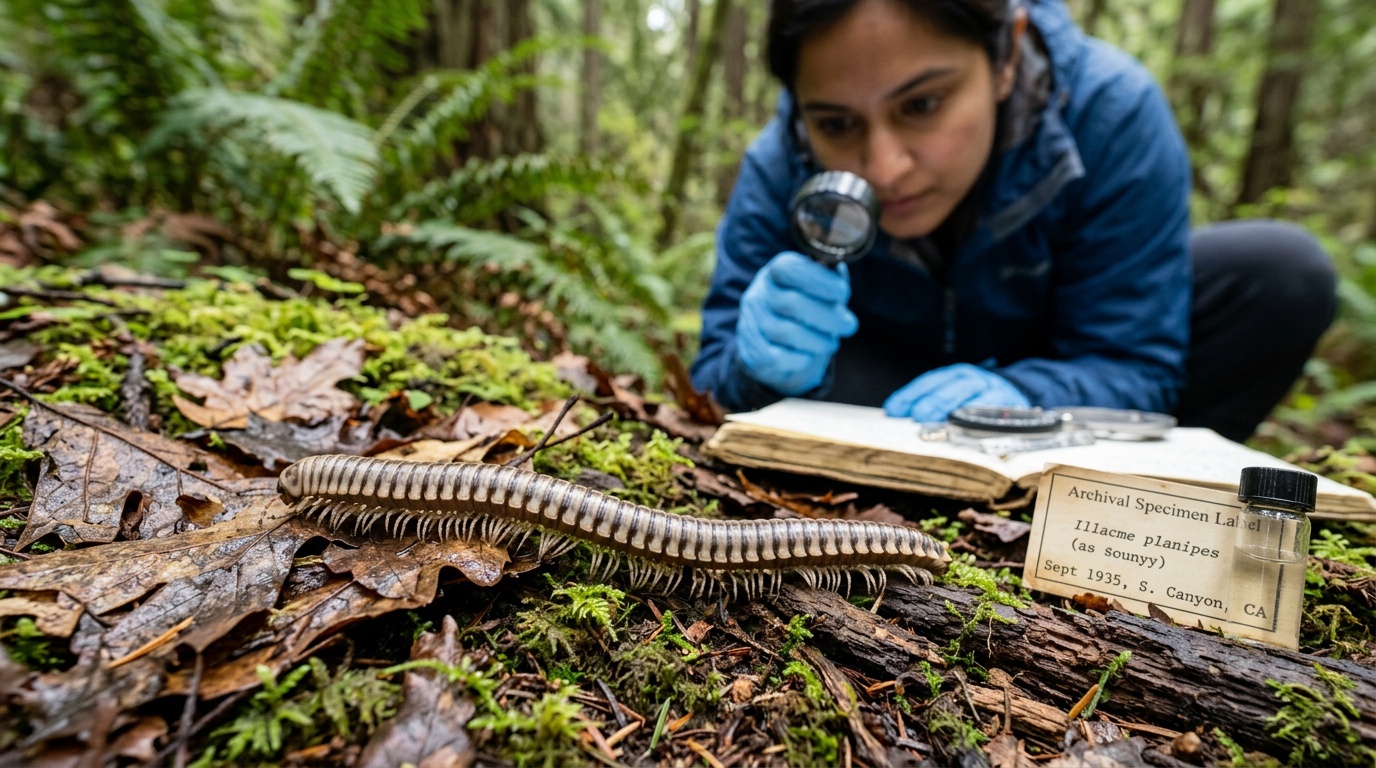
A mysterious millipede challenged scientists for nearly 90 years after collectors first encountered it. Early researchers preserved specimens but could not confidently determine their exact identity. The animal displayed features that complicated comparisons with recognized millipede groups. Modern scientists finally resolved the mystery through renewed taxonomic investigation.
The long delay reflects the careful nature of species identification rather than scientific neglect. Taxonomists need suitable specimens, detailed records, and reliable comparisons before reaching conclusions. Missing information can leave an animal without a secure scientific placement. This millipede waited decades for researchers to assemble that evidence.
Discovery does not guarantee identification
Scientists distinguish between finding an organism and identifying it formally. A collector can discover an unfamiliar animal without proving that it represents a separate species. Researchers must compare its physical characteristics with published descriptions and preserved specimens. They also examine natural variation within closely related populations.
Older collections often contain specimens that scientists could not classify when they arrived. Some animals lacked important body parts or came from poorly documented locations. Others resembled known species but displayed unusual combinations of traits. Those uncertainties can keep a specimen under study for many decades.
Millipede anatomy provides essential clues
Body segments and defensive structures
Millipedes belong to the arthropod class Diplopoda and possess segmented bodies protected by hard external skeletons. Most trunk segments carry two pairs of legs. Their name suggests one thousand legs, although most species possess far fewer. Scientists compare segment shapes, leg structures, antennae, and surface textures during identification.
Researchers also study pores connected to chemical defenses along the body. Many millipedes release unpleasant or toxic substances when predators threaten them. The position of these pores can help distinguish related groups. Color patterns may offer clues, although preservation often changes natural colors over time.
Reproductive anatomy can settle difficult cases
Male reproductive structures provide some of the strongest evidence for classifying many millipedes. Modified legs called gonopods transfer sperm during mating. Their shapes differ substantially among species, even when external bodies appear nearly identical. Taxonomists therefore examine gonopods with microscopes and detailed illustrations.
A collection containing only females or immature animals may prevent immediate identification. Juveniles lack fully developed reproductive structures and may have fewer body segments. Researchers sometimes must locate additional adults before making a confident decision. That requirement often explains long gaps between discovery and recognition.
Museum collections keep unanswered questions alive
Natural history museums preserve specimens as permanent scientific evidence. Curators protect them from insects, moisture, light, and damaging temperature changes. Labels record collection dates, locations, collectors, and available habitat information. Together, the specimen and its label create an irreplaceable historical record.
Scientists regularly revisit museum drawers when new questions or techniques emerge. A specimen that once seemed impossible to classify may later become understandable. Researchers can compare it with newly collected animals or revised descriptions. Museums therefore function as active research centers rather than static displays.
Historical collections also document environments that have changed or disappeared. Farming, development, mining, and climate change can transform a species’ original habitat. An old specimen may provide the only evidence of a former population. Consequently, resolving its identity can carry immediate conservation value.
Modern tools strengthen traditional taxonomy
Microscopy and digital imaging
Modern microscopes reveal tiny ridges, hairs, joints, and reproductive structures with exceptional clarity. Researchers can photograph these features from several angles. Imaging software combines separate photographs into sharply focused composite images. These records allow specialists worldwide to inspect important characteristics without handling fragile material.
Some researchers use scanning electron microscopy for extremely small surface details. Others employ micro-computed tomography to examine internal structures without cutting specimens. Three-dimensional models can reveal anatomy hidden beneath hardened tissue. However, scientists still connect every image with direct biological interpretation.
DNA evidence offers another comparison
Genetic analysis can show relationships that outward appearance alone may obscure. Scientists compare selected DNA sequences from possible relatives and confirmed reference specimens. Similar sequences can support a proposed relationship, while substantial differences may reveal separate lineages. DNA evidence works best alongside anatomy and geographic information.
Old specimens do not always provide usable genetic material. Preservation chemicals, humidity, heat, and time can fragment DNA. Researchers must also avoid consuming rare material during testing. For these reasons, traditional anatomical study remains central to millipede taxonomy.
Scientific names require published evidence
Recognizing a distinct millipede requires more than announcing an unusual appearance. Taxonomists must provide diagnostic characteristics that separate it from close relatives. They review earlier scientific literature and check existing names for possible matches. This process prevents researchers from naming the same species twice.
Formal descriptions follow rules maintained by the International Code of Zoological Nomenclature. Researchers designate a type specimen that anchors the species name. They deposit that specimen in an accessible scientific collection. Future scientists can then test the original conclusion against physical evidence.
Millipedes perform important ecological work
Most millipedes feed on decaying leaves, wood, and other plant material. Their feeding breaks debris into smaller pieces that microbes can process. This activity supports nutrient cycling and soil formation. Millipedes also provide food for birds, reptiles, amphibians, mammals, and invertebrate predators.
Many species depend on narrow combinations of moisture, temperature, soil, and vegetation. Some occupy only individual caves, mountain ranges, forests, or islands. Limited distributions make them vulnerable to sudden environmental change. Correct identification helps scientists recognize these restricted populations and assess possible threats.
Why the mystery lasted so long
Millipede taxonomy includes significant gaps because the world contains thousands of described species and many undiscovered ones. These animals often remain hidden beneath logs, stones, bark, and leaf litter. Their secretive habits make systematic surveys difficult. Tropical regions may hold especially large numbers of undocumented species.
Taxonomic expertise also requires years of specialized training. Relatively few researchers focus on particular millipede families or regions. A specimen may wait until the appropriate specialist examines it. Funding often favors larger or more familiar animals, which can lengthen that wait.
A resolution with wider scientific value
The identification closes one historical question, but it also creates new research opportunities. Scientists can now investigate the millipede’s habitat, distribution, behavior, and closest relatives. Field surveys may uncover living populations or related species. Each discovery can clarify how the wider group evolved and spread.
The case also demonstrates why museums preserve unidentified material indefinitely. Researchers cannot predict which future tools or discoveries will unlock a specimen’s identity. Careful curation allowed this mystery to survive long enough for resolution. Without that protection, scientists might have lost the necessary evidence.
Nearly nine decades may appear unusually long, yet taxonomy frequently operates across generations. One scientist collects an animal, another preserves it, and later specialists complete the work. Their combined efforts transform an obscure specimen into reliable biological knowledge. The millipede’s identification shows how patient science can answer enduring questions.
