

A surprise reversal in July
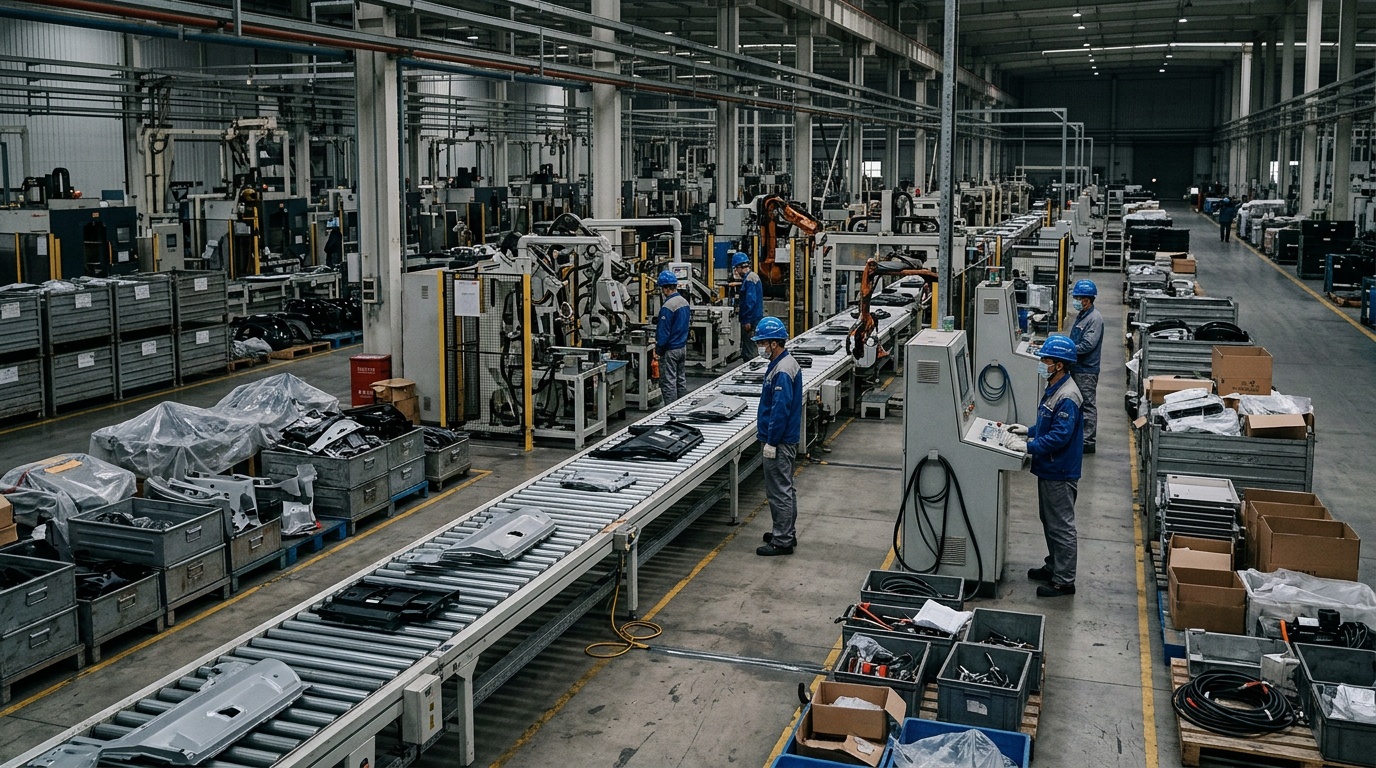
China’s official factory gauge slipped into contraction in July 2022, reversing June’s brief rebound. The National Bureau of Statistics reported a manufacturing purchasing managers’ index of 49.0. That reading fell from 50.2 in June and missed the 50.4 consensus forecast. Any figure below 50 signals contraction, while a figure above 50 indicates expansion. July’s result marked the third contraction within four months, highlighting the recovery’s fragile foundation.
Factories had restarted after Shanghai lifted a two-month lockdown and transport links improved nationwide. However, renewed coronavirus outbreaks quickly disrupted production and weakened consumer and business confidence. Officials imposed local controls under the zero-Covid policy, creating uncertainty for manufacturers and suppliers. A deepening property downturn also reduced demand for steel, cement, appliances, and construction equipment. Together, those pressures erased much of the momentum visible during June’s reopening surge.
What the survey measured
The official PMI surveys purchasing managers at large and state-linked companies across China’s manufacturing sector. It combines responses on production, orders, employment, inventories, supplier deliveries, and other operating conditions. The headline index offers a timely direction signal, but it does not measure output volumes. A reading below 50 therefore shows deterioration from the previous month, not an absolute collapse. Seasonal adjustments help comparison, although lockdowns and sudden restrictions complicated normal patterns during the pandemic.
The July report showed production dropping below the threshold, after factories had accelerated activity in June. The production subindex fell to 49.8, compared with 52.8 in the previous month. New orders declined to 48.5, showing that weak demand extended beyond temporary supply interruptions. The divergence mattered because companies can clear backlogs briefly, even when future business remains scarce. Falling orders therefore suggested manufacturers faced a difficult third quarter without stronger domestic spending.
Pressure spread across company sizes
Large manufacturers recorded a PMI of 49.8, slipping beneath the expansion line despite better financing access. Medium-sized companies posted 48.5, while small enterprises registered an even weaker 47.9 reading. Smaller businesses often carry thinner cash buffers, weaker bargaining power, and fewer options for alternative suppliers. Lockdowns can therefore raise their costs rapidly, especially when logistics networks close or customers delay payments. The broad weakness showed that reopening alone could not restore a stable industrial recovery.
Raw material costs had surged after Russia’s invasion of Ukraine, squeezing margins for many Chinese producers. By July, some commodity prices had eased, but weaker demand limited the benefit for factories. Exporters also watched overseas orders closely as major central banks raised interest rates against inflation. Slower global consumption threatened electronics, furniture, machinery, textiles, and other important Chinese export categories. Those external risks compounded domestic strains, leaving managers cautious about hiring and investment.
Services grew, but momentum weakened
China’s non-manufacturing PMI remained expansionary at 53.8 in July, although it declined from 54.7 in June. The measure covers services and construction, which followed different paths during the reopening. The services activity index reached 52.8, reflecting improved mobility after several cities relaxed restrictions. Yet renewed outbreaks threatened restaurants, tourism, retail, and transport businesses that depend on physical traffic. Construction performed more strongly, supported by government efforts to accelerate infrastructure projects.
The construction index rose to 59.2, up from 56.6 in June and well above the threshold. Local governments increased special bond issuance to finance roads, railways, utilities, and other public works. Policymakers hoped infrastructure spending would offset property weakness and generate demand for industrial materials. However, public projects could not fully replace housing activity, which supports extensive supply chains. The composite PMI, covering manufacturing and services, fell to 52.5 from 54.1, confirming slower overall growth.
Property troubles amplified factory weakness
China’s property sector was already struggling with developer defaults, stalled projects, and falling homebuyer confidence. Regulators had restricted excessive borrowing through the “three red lines” policy introduced in 2020. The resulting funding squeeze exposed heavily indebted developers and delayed apartment construction across many cities. That slowdown reduced orders for building materials, household fixtures, furniture, and heavy machinery. It also weakened land sales, an essential revenue source for local governments financing stimulus.
Mortgage boycotts emerged at some unfinished housing projects during July, adding pressure on officials and banks. Buyers withheld payments because developers had failed to complete homes purchased before construction finished. Authorities encouraged banks to support reasonable financing needs and help developers deliver presold homes. Still, confidence remained difficult to repair while sales declined and project delays persisted. Manufacturers linked to housing consequently faced structural weakness, rather than a brief pandemic interruption.
Beijing faced a difficult policy balance
The July contraction increased pressure on Beijing to support growth without encouraging another debt surge. China had targeted economic growth of around 5.5 percent for 2022, an increasingly difficult objective. The economy expanded only 0.4 percent annually during the second quarter, as lockdowns hit Shanghai. Officials accelerated fiscal support, tax rebates, and infrastructure investment while maintaining a relatively supportive monetary stance. However, repeated restrictions reduced stimulus effectiveness because households saved more and companies postponed expansion.
The People’s Bank of China faced constraints that differed from those confronting Western central banks. Falling growth favored easier credit, but capital outflow risks limited aggressive interest rate reductions. A weaker renminbi could increase imported costs and intensify pressure as the dollar strengthened. Meanwhile, broad lending alone could not make cautious families buy homes or revive blocked supply chains. Targeted measures therefore offered more control, although they provided less dramatic support for headline growth.
Why the two factory gauges differed
A separate private survey later painted a somewhat brighter picture of manufacturing conditions in July. The Caixin manufacturing PMI measured 50.4, down from 51.7 in June but still indicating expansion. Caixin and S&P Global survey more private, smaller, and export-oriented manufacturers than the official poll. Different company samples and collection methods can produce contrasting signals, especially during uneven recoveries. Both surveys nevertheless showed momentum slowing after June’s reopening bounce, reinforcing concerns about sustainability.
Analysts should not treat either index as a complete account of Chinese industry. Official output data, exports, electricity use, freight volumes, and corporate profits provide valuable confirmation. Later releases showed that pandemic controls and property stress continued shaping the economy through 2022. China ultimately grew 3.0 percent that year, far below the official target. That result reflected lockdowns, real estate weakness, and softer global demand rather than manufacturing alone.
The broader message from July
July’s PMI captured a recovery that remained vulnerable to health restrictions, weak confidence, and property stress. Factories needed reliable demand, predictable logistics, and healthier balance sheets to sustain production gains over the following months and years. The contraction showed that reopening could produce a bounce, but durable growth required wider stability.
