

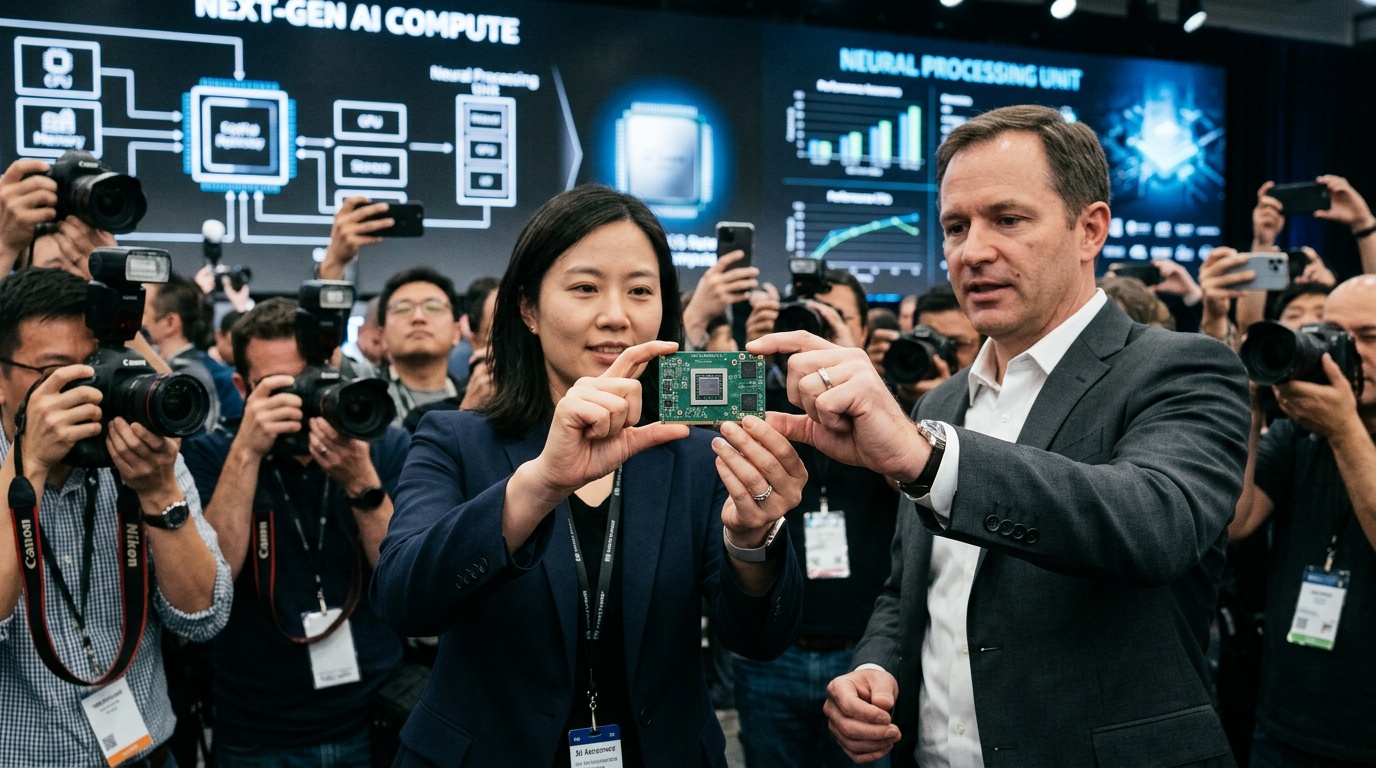
A major chipmaker announced a next‑generation AI processor designed to run advanced models directly on devices. The company emphasized significant efficiency gains across compute, memory, and power management. It positioned the platform for phones, laptops, wearables, vehicles, and edge equipment. Those targets set the context for the processor’s architectural direction and software strategy.
What the Announcement Includes
The processor integrates dedicated AI acceleration alongside CPU and GPU subsystems. The firm highlighted higher performance within tight thermal and battery constraints. It framed the design as enabling richer offline experiences with lower latency and stronger privacy. That promise supports broader industry momentum toward on‑device intelligence.
Architectural Advances That Matter
The accelerator adds specialized cores optimized for neural inference workloads. It supports lower‑precision arithmetic to increase throughput and reduce energy consumption. The design targets dense and sparse operations to handle diverse model structures efficiently. These compute blocks form the foundation for meaningful efficiency gains.
The memory hierarchy received significant attention in the design. Larger on‑chip buffers aim to reduce external memory traffic. Compression and smart prefetching seek to bolster bandwidth utilization under sustained load. Those choices align closely with typical bottlenecks in modern on‑device models.
Smarter Power and Thermal Management
The processor employs granular power gating and dynamic voltage scaling. It adjusts power domains based on workload intensity and latency goals. The scheduler steers tasks across CPU, GPU, and NPU for optimal energy usage. Such coordination supports stable performance within constrained thermals.
Software and Developer Tools
The release includes a software stack with compilers, runtime libraries, and optimization tools. The workflow accepts common model formats from leading frameworks. Tooling supports quantization, pruning, and graph optimizations suited for on‑device targets. These tools aim to shorten deployment cycles for developers.
The company described features for on‑device personalization. It supports techniques that adapt models without sending private data to servers. Lightweight fine‑tuning and caching improve relevance for individual users. That capability directly connects efficiency improvements with practical user benefits.
Performance Claims and Efficiency Metrics
The firm emphasized efficiency over raw peak performance numbers. It highlighted metrics like inferences per watt and tokens per joule. These figures reflect real limits in mobile and edge environments. That framing encourages comparisons grounded in sustained, usable performance.
The company acknowledged differences between burst and sustained workloads. Thermal constraints can cap long‑running model execution. The design focuses on predictable performance under typical duty cycles. This focus supports consistent experiences across different device categories.
Privacy, Latency, and Reliability Benefits
Running models locally reduces dependence on network connectivity. It strengthens data privacy by keeping sensitive inputs on the device. It also improves latency, enabling snappier interactive experiences. These advantages reinforce the appeal of efficient on‑device inference.
Use Cases Across Consumer Devices
Smartphones can deliver richer assistants, translation, and image enhancements without cloud round‑trips. Laptops gain faster creative tools and coding helpers while untethered. Wearables can analyze health signals more frequently within battery budgets. These scenarios benefit from meaningful efficiency improvements.
Home devices also stand to gain from local intelligence. Cameras can filter events on‑device before recording. Routers can prioritize traffic using local inference for quality improvements. These applications require consistent, low‑power processing pipelines.
Automotive and Industrial Edge Opportunities
Vehicles require deterministic latency for driver assistance features. On‑device compute reduces dependency on inconsistent connectivity. The processor’s efficiency supports always‑on perception and voice capabilities. These features demand predictable performance within strict thermal envelopes.
Industrial, retail, and healthcare deployments also rely on edge processing. Facilities can process sensor streams without moving sensitive data externally. Lower power draw reduces operating costs at scale. These benefits align with industry goals around uptime and security.
Ecosystem and Competitive Context
The announcement lands within an active competitive landscape. Multiple providers are integrating NPUs across phones, PCs, and edge systems. Software ecosystems increasingly target heterogeneous acceleration. That convergence raises expectations for compatibility and portability.
Developers now expect streamlined model conversion and consistent runtime behavior. They also expect transparent power and performance reporting. Platform vendors must deliver robust tooling and documentation. Those factors often determine real adoption beyond headline specifications.
Challenges and Open Questions
On‑device models continue to expand rapidly in size. Memory capacity and bandwidth remain key constraints for deployment. Compression and quantization help, but not universally. Developers will watch how this platform handles larger multimodal workloads.
Software compatibility also matters greatly for adoption. Users need stable drivers, predictable APIs, and long‑term support. Compatibility with mainstream frameworks reduces integration friction. These issues can outweigh theoretical hardware advantages.
Manufacturing and Supply Considerations
Production capacity and yields affect availability across device segments. Packaging approaches influence thermals and memory proximity. Supply chain resilience impacts launch timing and pricing. These realities shape how quickly the market sees devices with this chip.
Partners also need reference designs and validation support. Clear design guides accelerate integration for OEMs. Early developer kits can seed software readiness. Those steps help translate a launch into real deployments.
Environmental Impact and Sustainability
Efficiency gains can reduce energy consumption at scale. Lower power draw in billions of devices compounds environmental benefits. On‑device processing can also reduce data center usage. These improvements support broader sustainability goals across the industry.
Transparent lifecycle reporting strengthens these claims. Metrics should cover manufacturing, device usage, and end‑of‑life handling. Customers increasingly demand such disclosures during procurement. Clear reporting builds trust in efficiency narratives.
What to Watch Next
Independent benchmarks will test the company’s efficiency claims. Reviewers will examine latency, battery impact, and sustained throughput. Real applications will reveal toolchain maturity and compatibility. These results will shape developer and buyer perceptions.
Upcoming devices will also confirm thermal behavior. Form factors vary widely across phones, tablets, and laptops. Integration details can change real‑world performance significantly. Those observations will determine how broadly the processor succeeds.
Why This Launch Matters
The processor targets a clear industry shift toward local intelligence. It aims to bring advanced models closer to users. Efficiency gains can unlock new applications across many categories. These trends reinforce investment in on‑device AI ecosystems.
The company’s claims will face rigorous validation. Developers will assess tooling, documentation, and reliability. Customers will measure experiences against marketing promises. Those evaluations will determine long‑term impact and adoption.
If the platform delivers sustained efficiency, it can redefine mobile and edge capabilities. Users could gain faster, more private experiences. Enterprises could reduce operating costs and latency risks. That outcome would strengthen momentum behind on‑device AI.
The launch sets ambitious expectations for future devices and software. It raises the bar for power‑aware model deployment. It also challenges competitors to match practical efficiency claims. That competitive pressure could accelerate progress across the ecosystem.
