

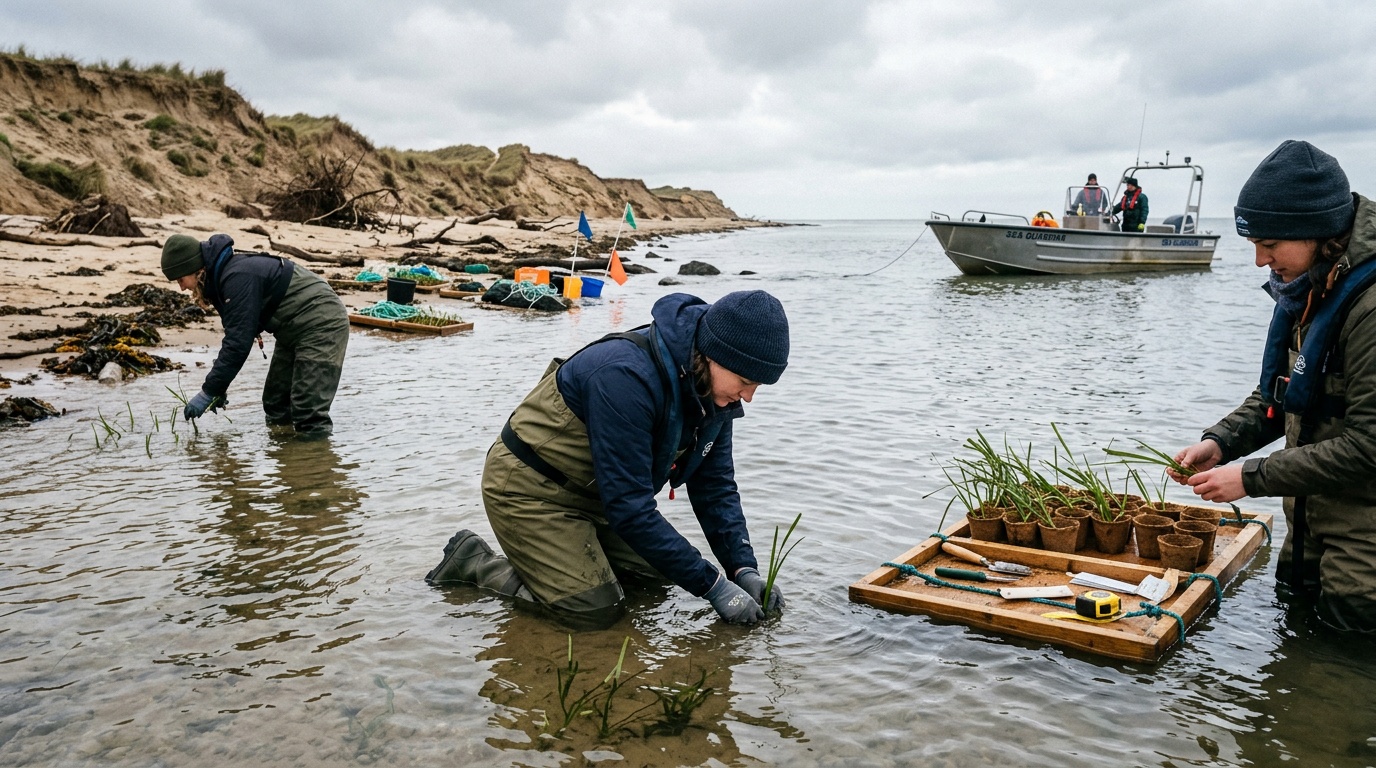
Marine conservationists have launched a project to rebuild seagrass meadows along a coastline battered by severe storms. The effort combines habitat mapping, planting, water-quality work, and long-term community monitoring. Teams will focus first on sheltered areas where surviving plants can support natural recovery. Exposed sites may require sediment stabilization before new shoots can establish.
Seagrass is a flowering marine plant, not seaweed, and it grows in shallow, sunlit water. Its roots and underground stems bind seabed sediments, while its leaves slow waves and currents. Healthy meadows shelter juvenile fish, crabs, mollusks, and other wildlife. They also capture carbon in plants and sediment, although storage rates vary between locations. Restoration therefore supports biodiversity, coastal resilience, fisheries, and climate goals.
Storms Leave Complex Damage
Storm waves damage meadows through several pathways. They tear leaves, expose roots, shift sand, and bury plants beneath deposited sediment. Heavy rainfall can lower salinity and carry mud, nutrients, sewage, or debris into nearshore water. Cloudy water then blocks sunlight, limiting the photosynthesis that seagrass needs for growth. Some plants survive impacts but decline during prolonged turbidity.
Damage rarely follows a line along the shore. Headlands, bays, river mouths, and artificial structures alter wave energy and sediment movement. One bay may retain healthy fragments, while a neighboring cove loses every shoot. Conservationists must identify these patterns before choosing restoration sites. Otherwise, new plants could face the same pressures that destroyed the former meadow.
Mapping the Recovery Zone
Survey teams begin by comparing post-storm conditions with maps, aerial images, and observations. Divers and snorkelers record meadow boundaries, shoot density, leaf condition, and signs of burial. Boats can carry sonar systems that map seabed depth and texture across areas. Drones help document shallow patches when water clarity, weather, and regulations allow flights.
Scientists measure light, temperature, salinity, dissolved oxygen, nutrients, and suspended sediment. These readings reveal whether plants receive enough light and whether runoff continues to impair water quality. Sediment samples show grain size, organic content, and chemical conditions around buried roots. Together, these data guide site selection and create a baseline for comparisons. Teams can then separate storm damage from pressures including dredging, anchoring, and chronic pollution.
Choosing Plants Without Weakening Donors
Restoration crews can use seeds, seedlings, plugs, or sections of established turf. Each method carries different costs, risks, and seasonal requirements. Seeds support genetic diversity, but germination and survival can be unpredictable. Transplants create immediate cover, yet collection may damage healthy donor meadows. Managers therefore limit harvesting and spread collection across areas.
Genetic diversity matters because varied populations may respond differently to heat, disease, and changing salinity. Teams should match source plants with local environmental conditions without relying on a single clone. Many projects favor nearby donors, provided those meadows remain healthy and protected. Nurseries can multiply plants or hold collected material before field installation. Strict biosecurity reduces the risk of moving invasive species, pathogens, or organisms between sites.
Preparing Sites for Planting
Crews often remove storm debris that could crush plants or shade the seabed. They must avoid disturbing surviving shoots or releasing contaminated sediment during cleanup. Where currents remain strong, practitioners may test biodegradable anchors, protective frames, or temporary sediment controls. These tools require careful design because loose materials can become marine litter. Permits usually govern seabed disturbance, plant collection, navigation, and work near protected species.
Restoration timing can strongly influence survival. Crews generally avoid extreme heat, rough seasonal weather, and periods of heavy river discharge. Planting during favorable growth windows gives roots time to spread before stressful conditions return. Weather forecasts and tide tables also shape daily schedules. Teams should postpone work when visibility, waves, or currents threaten divers and volunteers. Safety planning remains essential throughout field operations.
Planting in Carefully Spaced Plots
Workers usually place shoots or plugs in marked plots, using spacing suited to the species and site. Close spacing may encourage patch development, but it requires more donor material and labor. Wider spacing covers more seabed but leaves individual plants exposed for longer. Some teams install experimental treatments beside standard plots. This design helps them compare anchors, planting densities, or sediment stabilization methods.
Crews record each plot’s position and photograph it from fixed angles. Clear records allow monitors to distinguish planted shoots from natural recruits. Markers must remain visible without creating hazards for boats or wildlife. Field leaders also document planting depth, handling time, water conditions, and unexpected damage. Consistent methods make results more useful for future restoration projects.
Reducing Pressures Beyond the Meadow
Planting alone cannot restore a meadow when poor water quality or repeated disturbance continues. Project partners may work with authorities to control runoff, repair wastewater systems, and reduce sediment entering bays. Farmers and land managers can maintain vegetated buffers that trap soil before storms wash it downstream. Construction sites need effective erosion controls, especially during wet seasons. These measures benefit both planted areas and surviving natural beds.
Boating rules can also protect fragile recovery zones. Clearly marked channels, no-anchor areas, and environmentally suitable moorings reduce propeller scars and anchor damage. Education helps boaters understand why apparently empty shallows may contain young plants. Managers should enforce restrictions fairly and review them as the meadow expands. Restoration works best when agencies address the original causes of decline.
Monitoring Recovery and Setbacks
Monitoring begins immediately after planting and continues across multiple growing seasons. Teams count surviving shoots, estimate cover, measure leaf length, and track patch expansion. They also inspect plants for grazing, disease, burial, erosion, and anchor failure. Repeated photographs provide a visual record, while mapped quadrats support consistent measurements. Storms may erase markers, so crews need backup coordinates and clear data systems.
Ecological success involves more than plant survival. Researchers can sample fish and invertebrates, measure sediment stability, and assess changes in water clarity. Carbon measurements require careful sampling because buried carbon varies across depth, habitat, and sediment type. Teams should report failures alongside gains, since unsuccessful plots reveal important site limitations. Transparent results help funders and managers adjust methods without overstating early progress. Meaningful recovery may take years rather than months.
Community Knowledge and Participation
Fishers, coastal residents, boat operators, and Indigenous communities often hold detailed knowledge about local waters. Their observations can identify former meadow locations, unusual currents, seasonal wildlife, and recurring pollution sources. Early consultation also helps project leaders understand access needs, cultural values, and concerns about restrictions. Paid local roles can build skills while supporting repeated surveys and maintenance.
Volunteer planting days can expand participation, but trained supervisors must protect people and habitat. Organizers should explain realistic timelines and avoid promising instant shoreline protection or fishery gains. Schools can monitor simple indicators, share photographs, and learn how land activities affect coastal ecosystems. Regular public updates maintain trust when storms damage plots or results remain mixed. Community stewardship gives restoration a stronger foundation after initial funding ends.
