

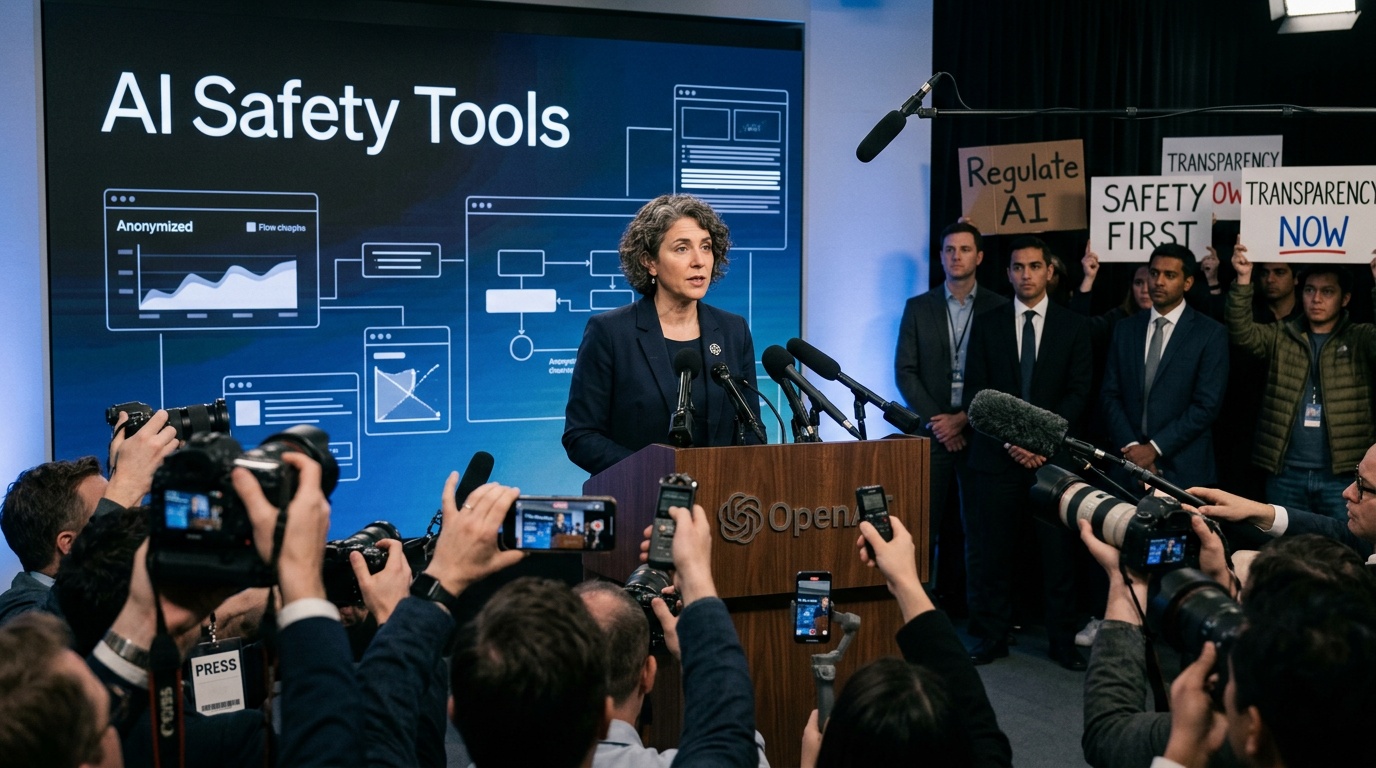
OpenAI has introduced new safety tools while governments continue debating how artificial intelligence should be regulated. The announcement reflects growing attention on responsible AI development across industries. Companies, researchers, and policymakers increasingly expect stronger safeguards alongside more capable AI systems. OpenAI says its latest tools aim to improve transparency, testing, and risk management before advanced models reach broader audiences.
The release arrives during a period of rapid AI adoption. Businesses now use AI for customer service, software development, research assistance, and creative work. Public agencies also explore AI applications for administration and public services. Those expanding uses have increased pressure for reliable safety practices that reduce harmful outcomes while supporting innovation.
Why AI safety remains a central issue
AI systems can generate valuable insights and automate repetitive tasks. They can also produce inaccurate information, biased outputs, or unsafe recommendations. Developers therefore continue improving evaluation methods before releasing increasingly capable models. Safety research attempts to identify weaknesses early and reduce predictable risks through careful testing.
Many experts believe technical safeguards should evolve alongside model capabilities. Better monitoring, stronger evaluations, and clearer documentation can help organizations understand system limitations. Those measures may also improve public confidence when AI tools are deployed in sensitive environments. As a result, safety discussions remain closely linked with future AI development.
Key features of the new safety tools
OpenAI has described several tools designed to strengthen the evaluation process for AI models. These efforts focus on identifying potential problems before public deployment. Developers can use structured testing methods to measure performance across different scenarios. Consistent evaluations make it easier to compare results over time.
The company has also emphasized improved monitoring during development and deployment. Monitoring can help identify unexpected behavior after a model becomes available. Engineers may then investigate issues and implement updates when appropriate. Continuous observation supports ongoing improvements rather than one-time testing alone.
Another important area involves documentation and reporting. Clear documentation helps developers understand how evaluations were performed. It can also explain known limitations and intended use cases. Better documentation encourages more informed decisions by organizations adopting AI technologies.
Independent testing and external collaboration
Many AI companies increasingly work with outside experts to examine model behavior. Independent researchers often identify issues that internal teams may overlook. External reviews provide additional perspectives during safety assessments. This collaborative approach has become more common across the AI industry.
Academic institutions, nonprofit organizations, and security specialists frequently contribute valuable expertise. Their findings can improve future testing procedures and technical safeguards. Open collaboration also encourages broader discussion about acceptable risk levels. Different viewpoints help create more balanced approaches to AI governance.
Red teaming plays an important role
Red teaming involves intentionally challenging AI systems with difficult or adversarial prompts. Testers search for unsafe behavior, policy violations, or unexpected responses. Those exercises can reveal vulnerabilities before public release. Developers then use the findings to strengthen safeguards and reduce future risks.
How regulation discussions continue worldwide
Governments across several regions continue considering new AI regulations. Some proposals emphasize transparency, accountability, and consumer protection. Others focus on national security, privacy, or critical infrastructure. Although approaches differ, policymakers generally recognize AI’s growing economic and social influence.
The European Union has adopted the AI Act, which establishes requirements for different categories of AI systems. Other countries continue developing their own regulatory frameworks. National priorities often shape those policies according to local legal traditions and economic goals. Consequently, organizations operating internationally may face different compliance requirements.
Balancing innovation with oversight
Technology companies frequently argue that innovation benefits from flexible regulatory environments. Researchers also note that excessive restrictions could slow scientific progress. At the same time, many policymakers seek safeguards that address foreseeable harms. Finding an appropriate balance remains an ongoing challenge.
Supporters of measured regulation often advocate risk-based approaches instead of universal restrictions. Higher-risk applications may receive stronger oversight than lower-risk tools. That strategy attempts to match regulatory requirements with potential societal impact. It also recognizes that AI systems serve many different purposes.
Business implications of stronger safety practices
Organizations increasingly evaluate AI vendors according to safety and governance standards. Reliable documentation can support procurement decisions and internal compliance efforts. Businesses also seek predictable deployment processes that reduce operational uncertainty. Stronger safety practices may therefore become competitive advantages.
Enterprise customers often require clear information about data handling and model behavior. They may also request evidence of security testing and ongoing monitoring. Meeting those expectations can improve confidence during adoption. Consequently, AI providers continue investing in governance and risk management capabilities.
Developers face evolving expectations
Software developers increasingly integrate AI features into existing products. They must consider performance alongside reliability, privacy, and safety. Careful implementation reduces the likelihood of unintended consequences. Responsible development therefore extends beyond model creators alone.
Training, internal policies, and regular audits also contribute to better outcomes. Organizations often establish review processes before launching AI-powered services. Those reviews can examine technical, legal, and ethical considerations together. Cross-functional collaboration supports more comprehensive decision-making.
Public trust remains essential
Public acceptance depends partly on whether AI systems demonstrate consistent and understandable behavior. Users generally value accurate information and transparent explanations of limitations. Clear communication helps set realistic expectations for AI capabilities. Trust develops gradually through reliable performance and responsible governance.
Companies also benefit from responding to feedback after products launch. Reports from users can reveal issues that structured testing did not identify. Continuous improvement supports safer and more effective AI systems. Ongoing engagement therefore remains an important part of responsible deployment.
Future directions for AI safety
AI safety research continues advancing alongside improvements in model capabilities. Researchers explore stronger evaluation methods, better interpretability techniques, and more reliable monitoring systems. Those efforts seek to improve understanding of complex AI behavior. Progress in these areas could strengthen future development practices.
International cooperation may also become increasingly important. AI technologies often cross national borders through digital services and global businesses. Shared technical standards could improve consistency across different markets. However, governments may continue adopting distinct legal approaches that reflect domestic priorities.
Looking ahead
OpenAI’s latest safety tools highlight the industry’s continued focus on responsible AI development. The broader regulatory debate shows no sign of slowing. Companies, governments, researchers, and civil society will likely continue shaping future standards together. Effective safety measures and thoughtful oversight may help support beneficial AI innovation while addressing meaningful risks.
