

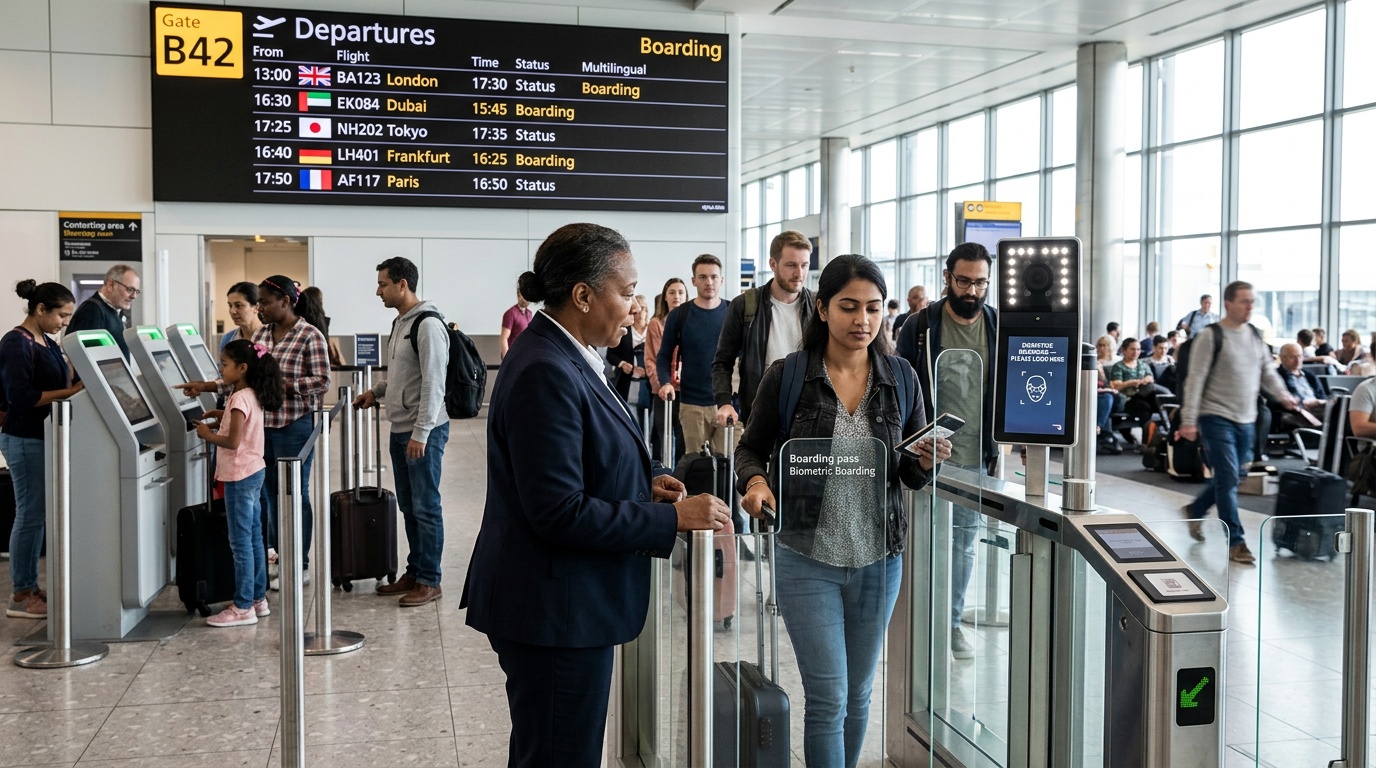
A major airline has expanded biometric boarding trials across several international airports. The program aims to speed passenger processing while improving identity verification. Travelers can choose facial recognition instead of presenting boarding passes during boarding. The expansion reflects growing airline interest in digital travel technologies. Airport operators and government agencies also support many of these initiatives. Each organization seeks faster passenger movement without reducing security standards.
Biometric boarding compares a live facial image with an existing travel document photo. The matching process usually takes only a few seconds. Successful verification allows passengers to continue boarding without additional document checks. Traditional identification methods remain available for travelers who prefer them. This approach helps accommodate different privacy preferences and regulatory requirements.
How biometric boarding works
Biometric boarding relies on facial recognition software connected to secure airline and airport systems. Cameras capture a passenger’s facial image at the boarding gate. The software compares that image with a stored reference photograph. Reference images often come from passports, visas, or government travel databases. The system then confirms whether both images belong to the same person.
Airline staff usually receive a confirmation message within moments. Passengers can then proceed through the boarding gate without scanning paper documents. Manual verification remains available whenever automated matching cannot confirm an identity. Staff members continue monitoring the boarding process throughout each flight. Human oversight remains an important part of airport security procedures.
Airports included in the expanded trials
The expanded trials include several international airports with high passenger volumes. Large hub airports often serve as testing locations because they handle complex operations. These facilities provide opportunities to evaluate biometric systems under busy conditions. International flights also require extensive identity verification before departure. Therefore, airport operators can measure operational improvements more effectively.
Each participating airport may use slightly different equipment and operating procedures. Local regulations influence how biometric technology is deployed. Government border agencies also determine acceptable identity verification methods. Consequently, implementation varies between countries and airports. Airlines must adapt their systems to meet local legal requirements.
Goals behind the expansion
Airlines continue searching for ways to reduce boarding times and improve passenger experiences. Faster boarding can help flights depart on schedule. Even small time savings become meaningful across hundreds of daily departures. Efficient boarding also reduces congestion around airport gates. As a result, passengers may experience shorter queues before entering aircraft.
Operational efficiency remains another important objective. Airlines manage tight schedules that depend on reliable turnaround times. Delays during boarding can affect aircraft utilization throughout the day. Biometric verification may reduce repetitive document inspections for eligible passengers. That efficiency allows staff to focus on passengers needing additional assistance.
Passenger experience during biometric boarding
Passengers usually encounter biometric boarding near the departure gate. Signs explain whether participation is voluntary or required under local procedures. Staff members answer questions before travelers approach the camera. Most systems provide visual or audio instructions during verification. The entire process generally finishes within several seconds.
Travelers who decline biometric verification typically receive manual identity checks. Airlines continue offering alternative boarding methods where regulations permit. This flexibility helps maintain accessibility for different passenger needs. Clear communication also reduces confusion before boarding begins. Consequently, gate operations often remain organized despite mixed verification methods.
Privacy and data protection considerations
Privacy remains one of the most discussed aspects of biometric technology. Airlines and airport operators must follow applicable data protection laws. These regulations govern how biometric information is collected, processed, stored, and deleted. Transparency helps passengers understand how their information will be handled. Many organizations publish privacy notices explaining these practices.
Data retention policies vary depending on local regulations and participating agencies. Some systems delete biometric data shortly after successful verification. Others rely on government-managed databases for identity matching. Security measures typically include encryption and restricted system access. Independent oversight may also apply under national privacy frameworks.
Security benefits and limitations
Biometric boarding can strengthen identity verification when combined with existing security procedures. Automated matching reduces reliance on visual comparisons by gate agents. Consistent verification may help identify identity mismatches before boarding. However, no security technology guarantees perfect performance. Human review remains necessary whenever automated systems produce uncertain results.
Lighting conditions, camera positioning, and image quality can influence facial recognition accuracy. Passengers may also experience occasional verification failures for various reasons. Staff members resolve these situations through manual document inspection. Therefore, biometric boarding complements traditional security measures instead of replacing them completely.
Role of government agencies
Government agencies often participate in biometric travel programs alongside airlines. Border authorities establish identity verification standards for international travel. Aviation regulators oversee compliance with safety and operational requirements. Privacy authorities may review data handling practices where applicable. Cooperation between these organizations supports consistent implementation across participating airports.
Technology supporting biometric boarding
Modern biometric systems combine cameras, software, and secure communication networks. Artificial intelligence assists with facial feature analysis during identity matching. System developers continually improve accuracy under different environmental conditions. Hardware also continues evolving with faster processing capabilities. These improvements support smoother passenger verification during peak travel periods.
Integration with airline reservation systems remains equally important. Boarding platforms must communicate securely with passenger manifests and travel records. Reliable connections help avoid unnecessary delays during verification. Technical redundancy also supports continued operations if individual components experience temporary issues.
Challenges during implementation
Expanding biometric boarding requires careful coordination between many organizations. Airlines, airports, technology providers, and governments must align operational processes. Equipment installation also requires planning around active airport operations. Staff training remains essential before new systems become fully operational. Successful implementation depends on consistent procedures across participating locations.
Public acceptance presents another important challenge. Some travelers welcome faster boarding and reduced document handling. Others express concerns about privacy and biometric data collection. Airlines respond by providing information about participation options and data practices. Open communication helps passengers make informed decisions.
Industry trends shaping biometric travel
Many airlines continue exploring digital identity solutions beyond boarding gates. Some airports already use biometrics during bag drop and security screening. Digital travel credentials are also receiving attention from international aviation organizations. These developments support broader efforts to modernize passenger journeys. However, widespread adoption depends on compatible regulations and technology standards.
International cooperation remains especially important because passengers cross national borders. Shared technical standards improve interoperability between airlines and airports. Consistent verification methods may simplify international travel over time. Nevertheless, countries retain authority over their own border control policies.
Future outlook
The expanded biometric boarding trials will provide valuable operational data for participating organizations. Airlines can evaluate boarding speed, system reliability, and passenger feedback. Airport operators may also identify opportunities for process improvements. Future expansion decisions will likely depend on those results. Regulatory approval will continue shaping deployment across additional locations.
Biometric boarding represents one part of the aviation industry’s ongoing digital transformation. Airlines continue balancing efficiency, security, and passenger privacy throughout technology adoption. Careful implementation remains essential for maintaining public trust. As additional trials proceed, stakeholders will monitor performance and compliance closely. Those findings will influence how biometric boarding develops across international air travel.
