

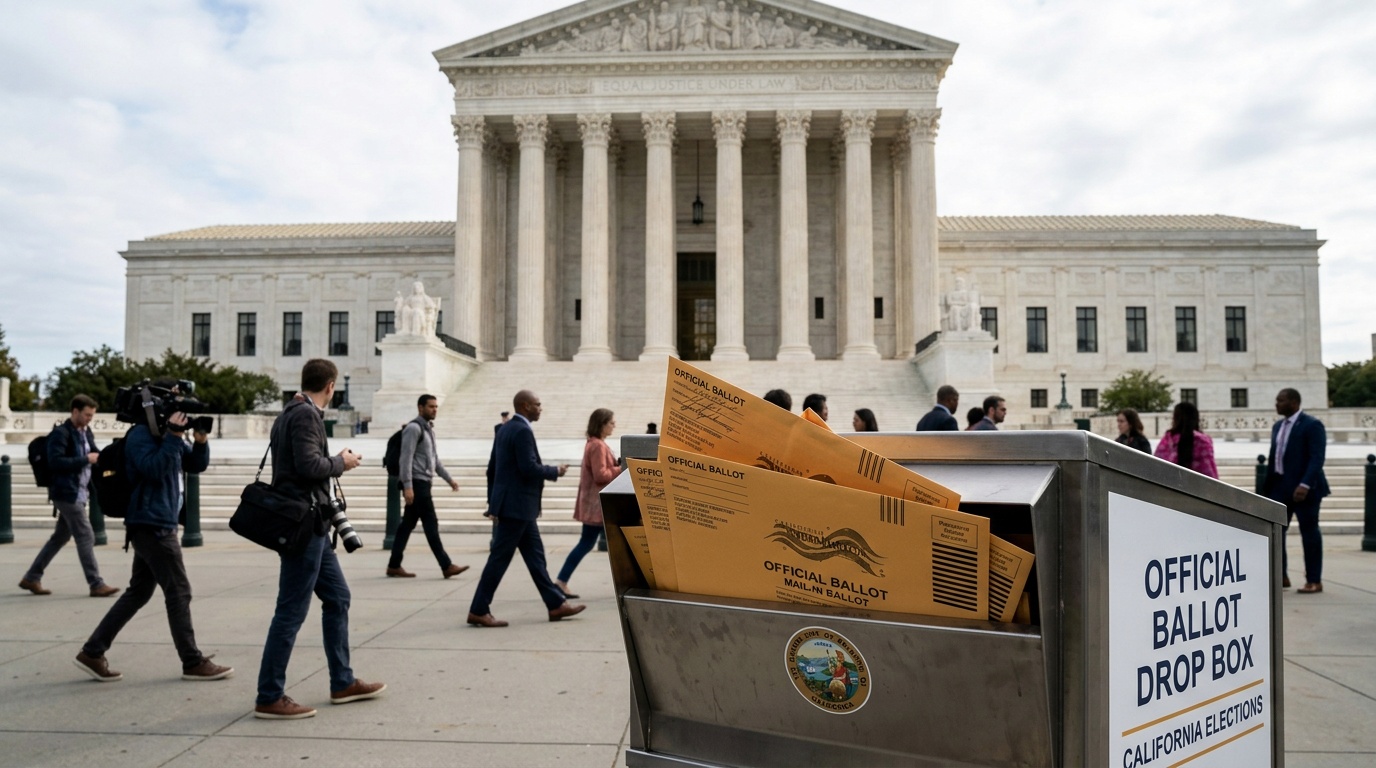
The Supreme Court leaves California’s rules unchanged
The Supreme Court rejected an emergency request to exclude thousands of California mail ballots before the midterm elections. The applicants targeted ballots arriving after Election Day under California’s established receipt deadline. The decision allowed election officials to continue processing those ballots under existing state law. It also avoided an immediate change during active voting and counting.
The court issued no broad opinion explaining its reasoning or resolving the underlying legal dispute. Emergency orders often provide little explanation, particularly when justices deny temporary relief. Therefore, the action did not formally approve every aspect of California’s system. It simply left the challenged rules operating during the election.
The result could affect close congressional, legislative, and statewide contests. California has millions of registered voters, and many choose mail ballots. Even a small percentage can represent thousands of votes across competitive districts. However, officials must still verify every ballot before adding it to certified totals.
California’s mail ballot deadline
California mails a ballot to every active registered voter before statewide elections. Voters may return ballots by mail, use official drop boxes, or deliver them personally. They may also vote at polling places or voting centers. Mailing a ballot does not prevent officials from applying verification requirements.
State law treats a mailed ballot as timely when voters send it by Election Day. County officials generally may accept that ballot for seven days afterward. A legible postmark can show when the Postal Service received the envelope. California law also addresses envelopes carrying missing or unreadable postmarks.
The receipt window accounts for transportation delays beyond a voter’s control. Postal routes, collection schedules, weekends, and regional disruptions can affect delivery times. Supporters say eligible voters should not lose ballots because mail service moved slowly. Critics argue that every ballot should reach officials by Election Day.
The dispute over federal Election Day
The applicants relied on federal statutes establishing a single day for federal elections. They argued that states cannot count votes received after that date. Under their interpretation, federal law requires completed delivery before Election Day ends. They sought emergency relief before California finished administering the election.
California defended a different interpretation of those federal statutes. The state argued that voters cast ballots when they timely place them into the mail. Later delivery represents an administrative step rather than additional voting. Several states use comparable receipt periods for properly submitted mail ballots.
The Constitution gives states significant authority over election procedures. Congress can regulate federal election rules through powers provided by the Constitution. Courts must determine whether federal law displaces a particular state procedure. That analysis often depends on statutory language, legal precedent, standing, and requested relief.
What the rejection means
The Supreme Court’s action preserved the legal position that existed before the emergency filing. County officials could continue accepting qualifying ballots during California’s statutory window. The order did not require officials to count invalid, late, or unverified ballots. Every accepted ballot still had to satisfy applicable state requirements.
The denial also did not settle the lawsuit’s ultimate merits. Challengers may continue pursuing claims through ordinary court proceedings when procedural options remain available. Future cases could present different evidence, legal theories, or deadlines. However, the court declined to disrupt this election through emergency intervention.
That distinction matters because emergency applications involve demanding legal standards. Applicants usually must show likely success and serious harm without immediate relief. Courts also consider public interests and possible disruption. A denial can reflect those factors without announcing a final interpretation of federal law.
Timing carries special importance
Courts generally approach last-minute election changes with caution. New rules can confuse voters, election workers, campaigns, and postal employees. They can also produce inconsistent practices among counties. Keeping established procedures in place can reduce administrative mistakes during a fast-moving canvass.
California counties prepare for the seven-day receipt period before each election. Officials publish instructions, train workers, and establish processing schedules around that deadline. Changing the rule shortly before voting ends could strand ballots mailed under official guidance. The Supreme Court’s rejection prevented that immediate disruption.
How officials review mailed ballots
Election workers do not automatically count every envelope arriving during the receipt window. They first confirm that the voter remains eligible and has not voted elsewhere. Workers also review the signature on the return envelope. State procedures require officials to protect ballot secrecy during processing.
When officials identify a missing or mismatched signature, California provides a correction process. Election offices contact affected voters and explain available steps. Eligible voters can submit documentation before the applicable cure deadline. Officials count the ballot only after the voter resolves the problem successfully.
Counties also secure ballots through documented custody procedures. Workers track incoming envelopes, store ballots in controlled locations, and record processing stages. Election observers may watch many parts of the operation. These safeguards apply whether a ballot arrives before or shortly after Election Day.
Results can change during the canvass
Election night totals never represent California’s final certified count. Counties continue processing timely mail ballots, provisional ballots, and corrected signature submissions. Consequently, reported margins can expand, narrow, or reverse during later updates. That movement reflects the counting schedule rather than newly cast votes.
Close races often remain uncalled while officials complete their reviews. News organizations may project winners using available results and statistical analysis. Those projections carry no legal authority. County canvasses and official certification determine the final totals under state law.
The disputed ballots could prove decisive in a closely divided congressional district. Their statewide significance depends on where voters live and how they voted. Officials cannot presume that late-arriving envelopes favor either party. They must evaluate each ballot under the same statutory standards.
A continuing national debate
States follow different deadlines for receiving mailed ballots. Some require arrival by Election Day, while others allow limited post-election receipt periods. Military and overseas voters may receive additional protections under federal or state law. These differences regularly produce lawsuits during competitive elections.
Supporters of receipt windows emphasize voter access and unpredictable postal delays. Opponents emphasize uniform deadlines, rapid results, and public confidence. Both concerns continue shaping legislation and litigation nationwide. Clear instructions remain essential regardless of which deadline a state adopts.
For this midterm election, California’s existing framework remains in force. Voters who followed state instructions will receive the review promised under that framework. County officials will continue counting, reporting, and auditing eligible ballots before certification. The Supreme Court’s rejection leaves that process undisturbed while broader legal questions continue.
