

A disputed transition reaches the throne
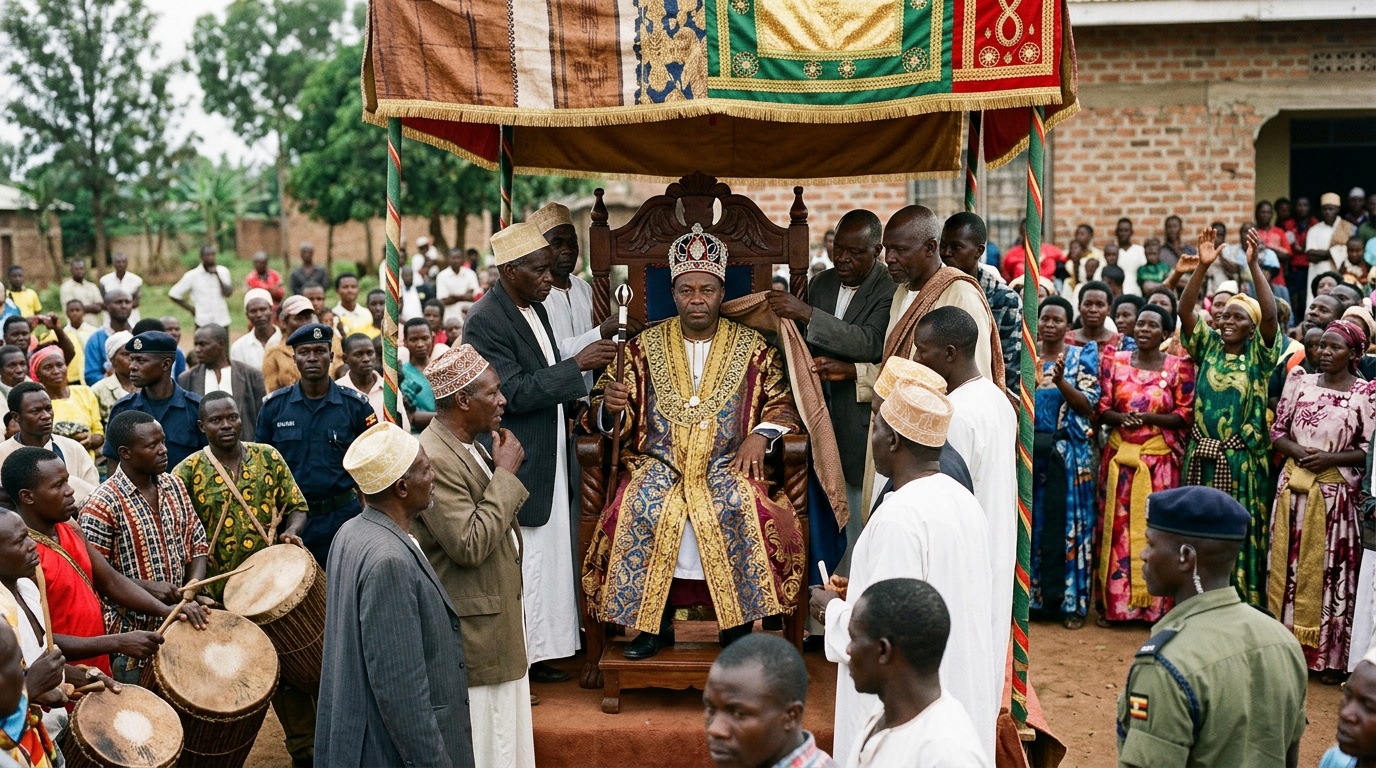
Uganda’s Bamasaaba community enthroned former television news anchor Jude Mike Mudoma as its cultural leader in October 2023. The ceremony took place at the Mutoto cultural grounds near Mbale in eastern Uganda. Mudoma received the title Umukuka III, making him the community’s third modern cultural leader.
Thousands of residents, clan representatives, religious leaders, and government officials attended the colorful gathering. Performers presented traditional music and dances while elders conducted rituals associated with Bamasaaba leadership. The occasion followed several years of disagreement over the institution’s succession process.
Mudoma’s enthronement gave the cultural institution a nationally recognized leader after a divisive leadership contest. However, the public ceremony did not automatically eliminate every objection from rival supporters. It instead established Mudoma as the leader recognized by Uganda’s government and the institution’s dominant governing structures.
Who are the Bamasaaba?
The Bamasaaba, commonly called the Bagisu, mainly inhabit districts surrounding Mount Elgon. Their communities include Mbale, Manafwa, Bududa, Sironko, Bulambuli, and Namisindwa. Closely related communities also live across Uganda’s border in western Kenya.
The cultural institution uses the name Inzu Ya Masaba, meaning the House of Masaba. Bamasaaba traditions identify Masaba as their founding ancestor. The Umukuka serves as the institution’s senior cultural figure and represents its communities during important national occasions.
News reports sometimes describe the institution as a kingdom, although its leadership differs from hereditary monarchies. Clan structures and agreed rotational arrangements influence the selection of an Umukuka. The position therefore depends upon consultations among elders, delegates, and institutional bodies.
A guardian of culture
The Umukuka lacks executive government powers but carries considerable symbolic influence. He promotes cultural preservation, community unity, education, health, and peaceful relations. He can also encourage dialogue whenever political or social disagreements divide the Bamasaaba.
One important responsibility involves protecting the community’s Imbalu circumcision tradition. Bamasaaba communities organize the public initiation season during even-numbered years. The ceremony marks a young man’s passage into adulthood and remains central to Bamasaaba identity.
That cultural importance made the succession dispute especially sensitive. Competing leadership claims threatened to divide clans and weaken preparations for major cultural events. Elders and government officials therefore repeatedly called for compromise.
The succession dispute
Mudoma succeeded Bob Mushikori, who became the second modern Umukuka in 2015. Mushikori’s leadership period concluded in 2020, creating an opening for another clan grouping. He died in January 2021 after leaving office.
Different factions then organized separate selection processes and supported competing candidates. One group chose Mudoma during a meeting involving clan delegates and cultural officials. Another faction backed John Amram Wagabyalire and challenged Mudoma’s selection.
Both sides questioned the procedures used by their opponents. They disagreed over delegate lists, clan representation, constitutional rules, and the authority of different cultural organs. These disagreements delayed a widely accepted transfer of leadership.
The rival claims also created uncertainty for public authorities. Uganda’s government registers cultural leaders before extending formal recognition and official privileges. Officials consequently sought consultations that could produce a lawful and peaceful outcome.
Government recognition eventually favored Mudoma, clearing the way for his installation. Supporters argued that the decision restored stability after prolonged institutional wrangling. Wagabyalire’s supporters maintained concerns about the selection process and its interpretation.
From broadcasting to cultural leadership
Before entering cultural leadership, Mudoma worked as a television journalist and news anchor. He appeared on Uganda Television, the state broadcaster that preceded the Uganda Broadcasting Corporation. His broadcasting career made him familiar to audiences beyond the Mount Elgon region.
Television journalism required clear communication, public confidence, and careful handling of sensitive subjects. Those skills later supported his efforts to present himself as a unifying cultural leader. His supporters also emphasized his experience in public service and community affairs.
Mudoma used his enthronement address to call for unity among the Bamasaaba. He urged competing groups to set aside personal disagreements and protect their shared heritage. He also highlighted education, economic development, and cultural preservation as important priorities.
The transition from television anchor to cultural leader attracted national attention. Yet Mudoma’s new position required more than public speaking and ceremonial appearances. He inherited an institution needing reconciliation, administrative order, and confidence from every clan.
Ceremony, symbols, and public participation
The Mutoto grounds carried strong historical meaning for the enthronement. Bamasaaba oral traditions connect the area with their ancestors and important cultural ceremonies. Mutoto also hosts activities associated with launching the Imbalu season.
During the installation, elders presented Mudoma with cultural instruments representing authority and responsibility. Traditional performances celebrated the community’s language, history, and clan identities. Guests also heard speeches about peace, development, and respect for lawful cultural processes.
The large attendance demonstrated continuing public interest in traditional leadership. Residents viewed the ceremony as both a cultural celebration and a possible turning point. Many hoped it would close the prolonged leadership contest.
National and local officials used the occasion to encourage reconciliation. They stressed that cultural institutions should unite citizens rather than deepen political or clan divisions. Their presence also confirmed the government’s acceptance of Mudoma’s leadership.
Traditional leaders under Ugandan law
Uganda’s Constitution recognizes traditional and cultural leaders where communities choose to maintain them. However, these leaders cannot exercise the powers of elected governments. The Constitution also restricts their involvement in partisan political activities.
Cultural leaders usually focus on customs, language, heritage, and social development. They may advise public officials, promote health campaigns, or support education programs. Their influence comes from community respect rather than direct control over state institutions.
Uganda restored several cultural institutions after President Yoweri Museveni’s government took power. Previous governments had abolished the country’s traditional kingdoms in 1967. The restored institutions now operate within constitutional limits and alongside elected administrations.
These arrangements sometimes generate disputes about recognition, succession, and territory. Cultural constitutions may also conflict with competing interpretations of tradition. Government mediation can therefore become decisive when internal negotiations fail.
Challenges facing Mudoma’s leadership
Mudoma’s immediate challenge involved rebuilding trust after the succession battle. Formal recognition gave him authority, but lasting legitimacy required broader acceptance. He needed to engage dissatisfied elders without reopening the disputed selection process.
The institution also faced practical concerns involving funding, administration, and cultural programming. Its leaders needed transparent systems for managing resources and organizing events. Clear procedures could reduce future disputes and strengthen confidence among clans.
Young Bamasaaba increasingly balance traditional expectations with urban life, formal education, and digital communication. Mudoma must therefore explain cultural practices to generations experiencing rapid social change. His broadcasting background may help him communicate through modern media.
Economic pressures present another serious concern across the Mount Elgon region. Communities face unemployment, land shortages, environmental degradation, and deadly landslides. A cultural leader cannot solve those problems alone, but he can mobilize attention and partnerships.
A symbolic resolution with lasting consequences
Mudoma’s enthronement marked an important institutional victory after years of rival claims. It restored a visible center of authority within Inzu Ya Masaba. The ceremony also allowed the community to celebrate its heritage before national and regional audiences.
Still, cultural unity depends upon continuing dialogue rather than one public event. Mudoma must persuade former opponents that the institution can represent them fairly. Inclusive leadership will determine whether old disagreements gradually lose their influence.
His unusual journey from television newsreader to Umukuka gives his reign a distinctive public character. It also reflects how Uganda’s cultural institutions combine historical traditions with modern professional experience. Mudoma now carries responsibility for turning official recognition into durable communal trust.
