

A Modest National Decline
AAA’s 2005 Thanksgiving forecast called for 37.3 million Americans to travel at least 50 miles from home. That total stood 0.4 percent below the comparable 2004 level. AAA therefore anticipated a slight dip, not a broad retreat from holiday travel.
The forecast covered the holiday period centered on Thursday, November 24. Millions still planned family visits, vacations, and seasonal gatherings. However, higher transportation costs forced many households to consider distance, timing, and travel mode more carefully.
Road Travel Drove the Decrease
AAA expected approximately 31.7 million people to travel by motor vehicle. That projection represented a 0.7 percent decline from the previous Thanksgiving. Because motorists formed the largest group, their reduction pulled the overall forecast lower.
Cars still carried more than four-fifths of all projected Thanksgiving travelers. Families often preferred driving because vehicles offered flexibility, luggage space, and convenient transportation after arrival. Those advantages remained important despite rising fuel expenses.
Gasoline Prices Pressured Household Budgets
Regular gasoline cost considerably more than it had during Thanksgiving 2004. National prices stood near $2.30 per gallon when AAA issued its forecast. Prices had declined from earlier peaks, but they remained unusually high for that period.
Higher pump prices affected more than the journey itself. Households also faced greater costs for commuting, shopping, and heating. Those recurring expenses reduced the money available for hotels, restaurants, entertainment, and longer holiday trips.
Hurricanes Disrupted Energy Markets
Hurricanes Katrina and Rita severely disrupted Gulf Coast energy operations during 2005. The storms damaged refineries, pipelines, offshore platforms, and distribution networks. Those disruptions pushed gasoline prices sharply higher during late summer and early autumn.
Fuel supplies improved before Thanksgiving, allowing prices to retreat from September’s extreme levels. Nevertheless, motorists still paid more than one year earlier. That difference influenced travel decisions, particularly among families planning long highway journeys.
Air Travel Continued Growing
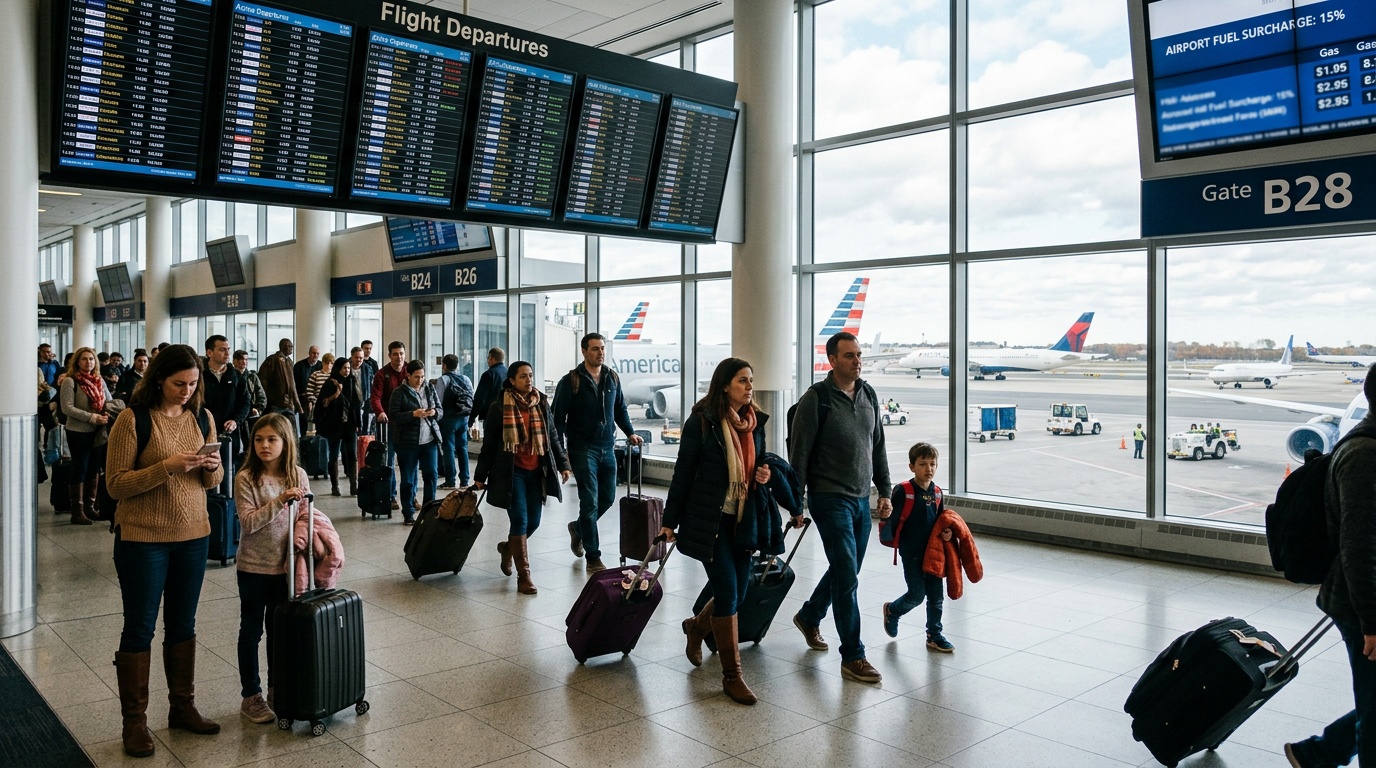
Air travel moved against the broader trend. AAA projected about 4.7 million Thanksgiving passengers, representing a 1.1 percent annual increase. Strong airline demand therefore softened the decline created by fewer automobile travelers.
Many passengers accepted higher fares because flying saved considerable time on longer routes. Limited vacation schedules also made quick transportation valuable. Others purchased tickets early, used loyalty rewards, or adjusted departure times to control costs.
Airfares Added Another Expense
AAA’s travel cost measurements showed higher average airfares on major domestic routes. The lowest round-trip fares averaged about 7 percent more than one year earlier. Fuel costs and strong holiday demand contributed to that increase.
However, an average increase did not affect every route equally. Competition, available seats, departure dates, and booking times produced substantial price differences. Travelers with flexible schedules could often avoid the most expensive flights.
Other Costs Compounded the Pressure
Travelers also encountered higher lodging and rental vehicle prices. AAA’s cost index showed average hotel rates rising by approximately 11 percent. Rental car rates increased by about 4 percent, adding pressure after travelers reached their destinations.
These expenses mattered because families rarely considered transportation costs alone. A complete trip could include meals, parking, tolls, attractions, and gifts. Even small increases across several categories could noticeably raise the final bill.
Families Adjusted Rather Than Canceled
The narrow decline suggested that most travelers protected their Thanksgiving plans. Families could shorten trips, share vehicles, stay with relatives, or reduce restaurant spending. Such adjustments allowed them to travel without absorbing every higher cost.
Some households likely replaced distant vacations with regional visits. Others shifted discretionary spending toward transportation and reduced purchases elsewhere. These choices reflected Thanksgiving’s social importance and the enduring appeal of family gatherings.
How AAA Produced the Forecast
AAA worked with travel industry researchers to estimate holiday movements. Analysts used household surveys, economic information, demographic trends, and historical behavior. Their forecast counted people traveling at least 50 miles from their primary residences.
The estimate measured travelers rather than individual vehicles or transportation departures. Four relatives sharing one car counted as four travelers. Consequently, the national total could not directly predict traffic volumes on every highway.
Forecasts Carry Natural Uncertainty
AAA released its projection before travelers completed their journeys. Weather, illness, mechanical problems, and unexpected price changes could alter final behavior. Survey responses also captured intentions, which sometimes differed from actual decisions.
The 0.4 percent change remained especially sensitive to those uncertainties. A small statistical revision could narrow or erase such a difference. Readers therefore needed to view the forecast as directional guidance, not a precise count.
Congestion Remained Likely
A slight national decline did not guarantee quiet roads or empty airports. Travelers often concentrated departures within several popular periods. Heavy traffic could still develop near cities, construction zones, airports, shopping districts, and major highway junctions.
Airports also faced intense demand around preferred departure windows. Security lines, checked baggage, and winter weather could create delays. Passengers benefited from arriving early and confirming schedules before leaving home.
Preparation Supported Safer Trips
Motorists could reduce problems by checking batteries, tires, lights, fluids, and windshield wipers. Proper tire pressure improved handling and fuel efficiency. Drivers also needed adequate rest, seat belt use, and complete attention.
Route planning helped families avoid predictable congestion and unnecessary fuel consumption. Smooth acceleration and steady speeds could also conserve gasoline. However, travelers needed to prioritize safe driving over small savings or ambitious arrival targets.
A Resilient Holiday Travel Market
AAA’s forecast ultimately described resilience under financial pressure. Gasoline, airfare, lodging, and rental costs increased, yet projected travel barely declined. Most Americans still treated Thanksgiving journeys as important household commitments.
The figures also revealed different responses among transportation groups. Motor travel weakened slightly, while airline travel continued growing. That contrast showed how distance, convenience, available time, and personal priorities shaped individual decisions.
Most importantly, the forecast placed the slight dip within a much larger movement of people. Tens of millions still planned holiday trips. Rising prices changed their calculations, but they did not remove Thanksgiving’s powerful draw.
