

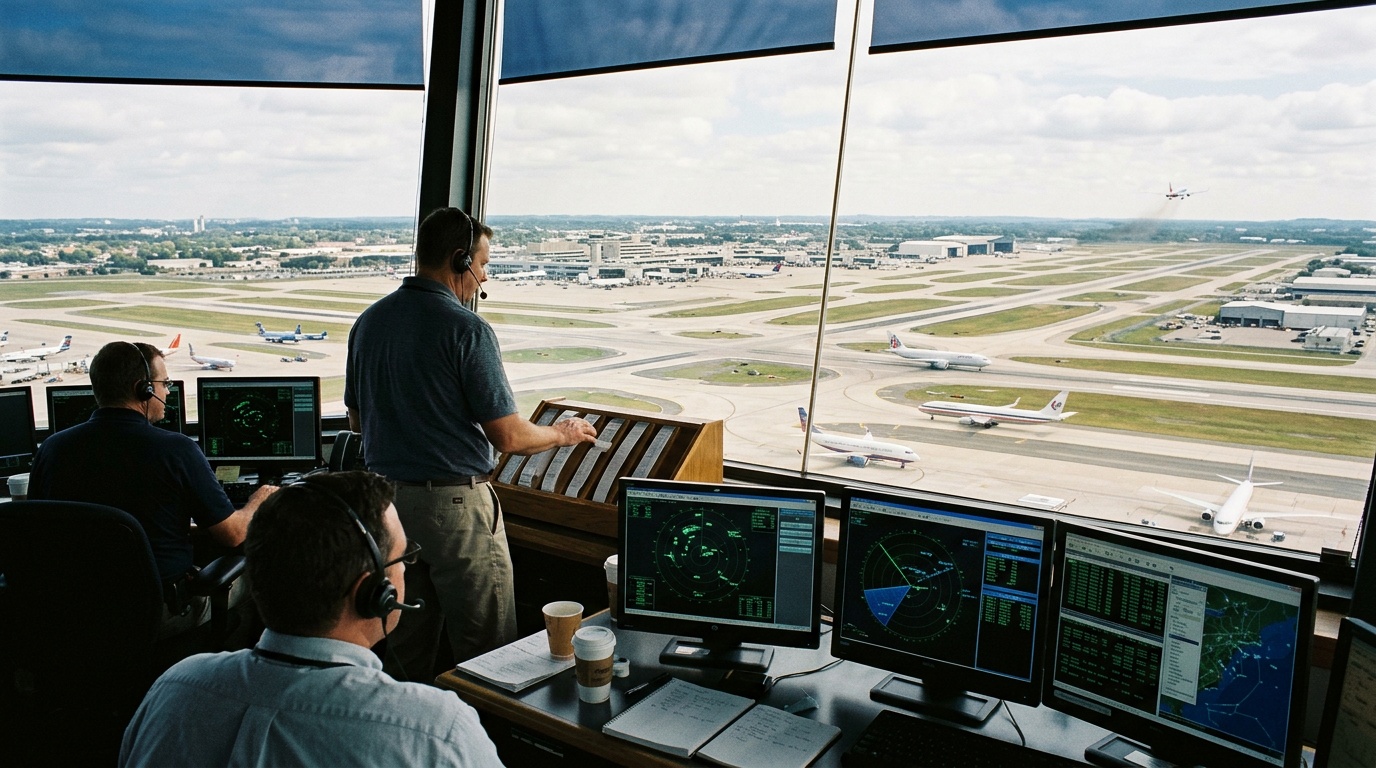
Congress is weighing a commitment that could approach $50 billion to modernize America’s air traffic control system. Lawmakers must decide how much money to provide and how quickly the Federal Aviation Administration can spend it. Supporters say stable funding would improve safety, reduce delays, and replace equipment that has exceeded its intended lifespan.
The debate extends beyond buying new radar screens or radios. Congress must address facilities, telecommunications, cybersecurity, staffing, training, and long-term maintenance. It must also protect daily operations while engineers install new systems across the country.
An Aging System Faces Growing Demands
The FAA manages one of the world’s largest and most complex airspace systems. Controllers direct commercial jets, cargo aircraft, private planes, helicopters, and military flights. Drones and commercial space launches have added further pressure.
Many facilities still depend on aging telecommunications lines, legacy software, and difficult-to-replace components. Some systems use specialized equipment that manufacturers no longer produce. Technicians sometimes obtain spare parts from retired equipment to keep active systems operating.
The FAA has modernized important parts of the network through its NextGen program. Satellite navigation, digital communications, and improved surveillance now support many flights. However, radar, voice switches, and older connections remain essential throughout the national system.
Recent Disruptions Increased Pressure
Several high-profile events have intensified congressional scrutiny. A damaged database file contributed to a nationwide pilot-alert system outage in January 2023. The FAA temporarily halted domestic departures while employees restored the system.
Telecommunications failures near Newark Liberty International Airport caused serious disruptions during 2025. Controllers briefly lost radar and radio connections, while staffing shortages worsened delays. Those failures highlighted the risks created by fragile connections and limited redundancy.
The January 2025 collision near Reagan National Airport also sharpened the safety debate. The crash killed 67 people aboard an airliner and Army helicopter. Investigators examined traffic procedures, staffing, route design, altitude information, and other factors.
No single event explains the modernization proposal. Together, however, these incidents strengthened demands for faster investment and clearer accountability. That urgency now shapes Congress’s consideration of a larger funding package.
What a Major Overhaul Could Include
A broad overhaul would replace telecommunications links connecting towers, radar facilities, and control centers. High-capacity fiber networks could provide faster service and stronger backup connections. Modern voice systems would also replace aging switches and analog equipment.
The plan could fund new radar units, weather instruments, automation platforms, and surface-monitoring technology. Congress may also support new control centers and extensive renovations at existing facilities. Many towers and centers require upgrades to power, cooling, security, and fire protection.
Officials want to standardize equipment across regions whenever possible. Standard systems could simplify maintenance, employee training, and software updates. They could also reduce the number of unique parts that technicians must stock.
However, standardization requires careful testing before national deployment. A defect in widely used software could disrupt numerous facilities simultaneously. The FAA would need backup systems and phased installation schedules to limit that danger.
Congress Must Determine the Funding Structure
The $50 billion figure represents a potential multiyear commitment rather than one simple equipment purchase. Final costs would depend on project scope, construction expenses, inflation, and procurement decisions. Congress could provide the money through several separate laws.
Annual appropriations normally support FAA operations, facilities, and equipment. The Airport and Airway Trust Fund also receives revenue from aviation-related taxes. Lawmakers could combine those sources with direct mandatory funding or supplemental appropriations.
A multiyear approach could help the FAA negotiate contracts and plan installations more efficiently. Contractors need predictable schedules before expanding factories or hiring specialized workers. Stop-and-start funding could raise costs and delay connected projects.
Still, Congress may resist providing the entire amount without performance safeguards. Lawmakers could release funds in stages after the FAA meets technical milestones. That approach would connect future spending with measurable progress.
Operating Costs Remain Separate
Modernization money cannot replace the FAA’s regular operating budget. Controllers, technicians, inspectors, and trainers require continuing salaries and support. New equipment also creates maintenance, licensing, cybersecurity, and replacement costs.
Congress must therefore distinguish construction spending from ongoing expenses. A new system can fail if agencies cannot maintain it properly. Long-term budget planning will matter as much as the initial investment.
Controller Staffing Remains a Central Challenge
Technology alone cannot solve the system’s problems. The FAA has struggled to maintain recommended controller staffing at several busy facilities. Mandatory overtime and demanding schedules can increase fatigue among an already stressed workforce.
Congress has supported additional hiring, but training takes considerable time. New controllers must complete academy instruction and facility-specific certification. Complex locations often require years of supervised training before controllers become fully certified.
Modern simulators could help trainees practice unusual traffic patterns and emergency situations. Improved training technology might also increase completion rates. Nevertheless, experienced instructors and on-the-job practice will remain necessary.
New systems will create another workforce challenge during the transition. Controllers and technicians must learn updated equipment while continuing daily operations. The FAA cannot pause the national airspace system for installation or training.
Procurement Reform Could Determine Success
The federal government has repeatedly struggled with large technology projects. Requirements can change after agencies sign contracts, while custom designs can become costly. Delays may leave new equipment outdated before deployment finishes.
Congress could require independent cost estimates, regular progress reports, and stronger testing standards. The Transportation Department’s inspector general and the Government Accountability Office would likely monitor major projects. Public reporting could help lawmakers identify delays before costs escalate.
The FAA must also coordinate many projects that depend on each other. A new radar cannot deliver full benefits without compatible displays, software, and communications. Program managers will need a unified schedule covering facilities and regions.
That coordination presents one of the overhaul’s greatest risks. Contractors may complete individual projects while the broader network remains unfinished. Congress may therefore judge success through systemwide results rather than equipment counts.
Safety and Cybersecurity Will Guide the Design
Air traffic systems require extremely high reliability because failures can create immediate operational risks. Designers must provide redundant power, communications, surveillance, and data services. Controllers also need dependable backup procedures when primary technology fails.
Modern digital networks can improve reliability, but they also create cybersecurity concerns. The FAA must protect equipment from intrusions, malicious software, and supply-chain weaknesses. Regular updates must occur without interrupting critical services.
Congress could require agencies and contractors to follow strict security standards. Officials may also demand domestic sourcing for sensitive components. However, tighter requirements could increase costs or limit available suppliers.
Travelers May Not See Immediate Changes
Passengers should not expect a $50 billion commitment to eliminate delays quickly. Weather, airline scheduling, airport capacity, and maintenance problems also disrupt flights. Air traffic technology addresses only part of that larger system.
Over time, better tools could help controllers manage traffic more efficiently. Improved routing could reduce fuel consumption and unnecessary flight time. Stronger surface surveillance could also help prevent runway conflicts.
Airlines could benefit from more predictable schedules and fewer equipment-related restrictions. Cargo carriers could gain similar advantages during overnight operations. General aviation users would also depend on reliable communications and weather information.
Lawmakers Face Difficult Trade-Offs
Airlines, labor unions, manufacturers, and airport groups broadly support modernization. They differ over funding priorities, project management, and oversight. Some favor rapid deployment, while others emphasize testing and workforce protections.
Congress must balance speed against the risks of rushed procurement. Delaying action could prolong dependence on vulnerable equipment. Moving too quickly could produce expensive systems that fail to work together.
Lawmakers must also decide whether emergency funding should bypass normal budget limits. Supporters view the system as critical national infrastructure. Fiscal conservatives may demand offsets, narrower projects, or stronger spending controls.
The final package may emerge through transportation legislation, budget measures, and annual appropriations. Committees will examine technical plans before releasing additional funds. That process could reshape the proposal’s total size and schedule.
A Long Transition Lies Ahead
Even generous funding cannot rebuild the system overnight. Engineers must design, test, certify, and install equipment while controllers continue directing traffic. Construction at active facilities will require careful sequencing.
Congress will ultimately measure progress through reliability, safety, capacity, and completed deployments. Fewer outages would provide a visible sign of improvement. Better staffing and stronger backup systems would offer additional evidence.
The $50 billion debate therefore concerns more than a collection of technology contracts. It tests whether Washington can manage a complex national infrastructure project. Effective oversight, steady funding, and realistic scheduling will determine the overhaul’s lasting value.
