

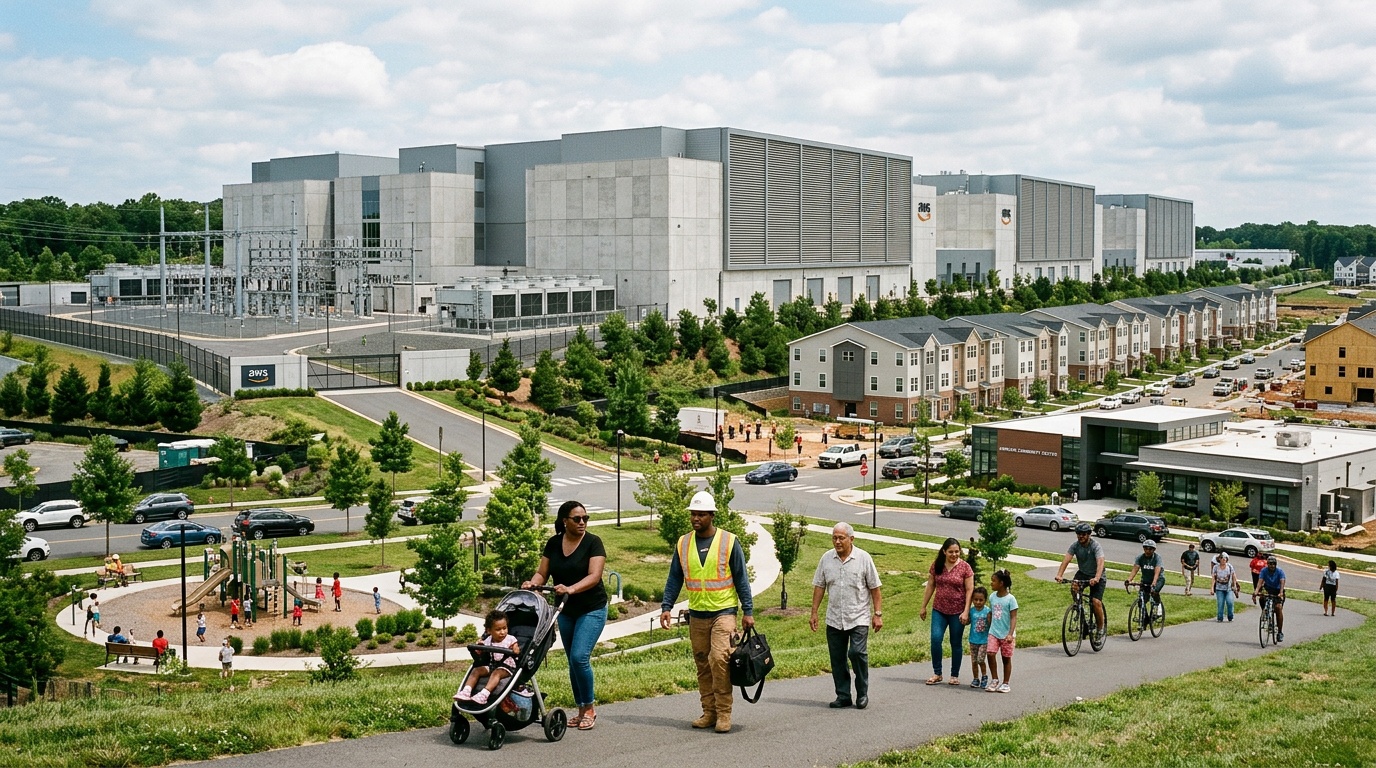
Amazon has launched a $1 billion initiative to support communities that host its expanding network of data centers. The commitment links Amazon Web Services growth with investments addressing local priorities around those facilities. Amazon says the initiative will support education, workforce development, environmental projects, and other community needs. The company plans to work with local organizations while developing and operating data center campuses.
The initiative arrives as cloud computing and artificial intelligence drive unprecedented demand for digital infrastructure. Businesses need more computing power for generative AI, online services, storage, analytics, and cybersecurity. AWS supplies that capacity through data centers containing servers, networking equipment, cooling systems, and backup power. These facilities create economic opportunities, but they also affect surrounding communities.
Connecting investment with local needs
Amazon intends the initiative to deliver benefits beyond construction spending and permanent technical jobs. Participating communities could receive support based on priorities identified through local engagement. Those priorities may include science education, technical training, conservation, infrastructure, and assistance for community organizations. Specific projects will differ because every data center location faces distinct economic and environmental conditions.
Local nonprofits, schools, governments, and community groups can provide essential knowledge during that process. They understand regional workforce gaps, environmental concerns, and barriers facing residents. Amazon can use that information when selecting programs and measuring their results. Meaningful consultation will remain important because corporate priorities do not always match community expectations.
The $1 billion commitment also gives Amazon a broader framework for existing community programs. AWS already supports educational initiatives, local grants, digital skills training, and science programs in several data center regions. The new initiative can connect those activities while expanding their potential reach. However, Amazon must still explain eligibility, timelines, and spending across individual locations.
Why data center communities matter
Data centers operate largely outside public view, although millions of people use their services daily. They support streaming platforms, government systems, financial services, online shopping, business software, and artificial intelligence applications. AWS groups facilities within geographic cloud regions to improve reliability and reduce service delays. Each region can include several separated availability zones containing one or more data centers.
These campuses require land, electricity, water, fiber connections, security, and transportation access. Construction can employ thousands of workers, while ongoing operations create engineering, maintenance, safety, and security positions. Data centers can also generate property tax revenue, depending on local laws and incentive agreements. Communities often weigh those benefits against pressure on utilities, roads, housing, and natural resources.
Consequently, residents increasingly expect technology companies to explain how new projects will affect local systems. Electricity use has attracted particular attention as artificial intelligence increases computing requirements. Water consumption can also concern communities where cooling systems compete with households, agriculture, or industry. Transparent planning can help residents evaluate promised benefits alongside measurable costs.
Education and workforce development
Training programs could help local workers compete for jobs created directly or indirectly by data center development. Relevant careers include electrical work, construction, network operations, equipment maintenance, logistics, and facility management. Many positions require specialized credentials rather than traditional four-year degrees. Partnerships with schools, colleges, unions, and employers can create practical routes into those careers.
Amazon has previously supported cloud skills courses and science, technology, engineering, and mathematics education. Community investment can extend that work to younger students and adults seeking career changes. Effective programs should connect instruction with recognized qualifications and realistic employment opportunities. They should also track completion rates, job placements, wages, and participant retention.
Education spending can produce benefits beyond Amazon’s immediate hiring requirements. Cloud skills apply across healthcare, manufacturing, finance, government, and small businesses. Electrical and mechanical training can also support construction, renewable energy, and advanced manufacturing. That broader relevance can strengthen a region even when technology demand changes.
Environmental and infrastructure pressures
Community support does not eliminate questions about energy use, emissions, water consumption, or land development. Amazon has pursued renewable energy purchases and efficiency improvements across its operations. However, rapid data center growth can increase total electricity demand despite more efficient equipment. Utilities may need additional generation, substations, transmission lines, and distribution upgrades.
Those upgrades raise important questions about costs and responsibility. Regulators must determine whether data center operators or ordinary customers should finance new infrastructure. Communities also need reliable information about projected demand and potential effects on electricity rates. A community fund cannot replace sound utility regulation or transparent permitting.
Water management requires similar attention because cooling technologies vary among facilities and climates. Some systems consume water to remove heat, while others rely more heavily on air cooling. Companies can reduce pressure through reclaimed water, efficient cooling designs, and careful site selection. Local reporting helps residents understand whether conservation claims produce actual improvements.
Accountability will shape the initiative
The initiative’s long-term value will depend on how Amazon distributes and monitors the money. Clear public criteria can show which communities qualify and how organizations obtain support. Regular reports can identify spending categories, project locations, recipients, and measurable outcomes. Independent evaluations could provide additional confidence that funded programs meet stated objectives.
Communities will also need opportunities to influence decisions throughout each data center’s operating life. Early meetings alone cannot address changing electricity demand, construction schedules, water conditions, or workforce needs. Ongoing advisory groups can provide feedback and identify emerging problems. Amazon can then adjust programs when evidence shows limited results.
Officials should examine community investments separately from tax incentives offered for data center projects. Grants may support valuable programs, but they do not replace taxes, environmental safeguards, or enforceable development agreements. Public agencies remain responsible for protecting residents and negotiating fair terms. Transparent accounting can prevent confusion between voluntary contributions and legal obligations.
A response to rapid digital growth
Amazon’s announcement reflects the growing social importance of physical infrastructure behind cloud services. Data centers now influence regional energy planning, economic development, education, and environmental policy. Their effects extend far beyond the websites and applications that customers see. Companies therefore face stronger demands to become responsible long-term neighbors.
The $1 billion initiative gives Amazon substantial resources for addressing some local concerns. Its success will require collaboration, detailed reporting, and programs shaped by community evidence. Residents will judge the effort through visible outcomes rather than the size of the announcement. Durable benefits could strengthen trust while helping host communities manage the opportunities and pressures created by data center growth.
