

A new climate question moves to center stage
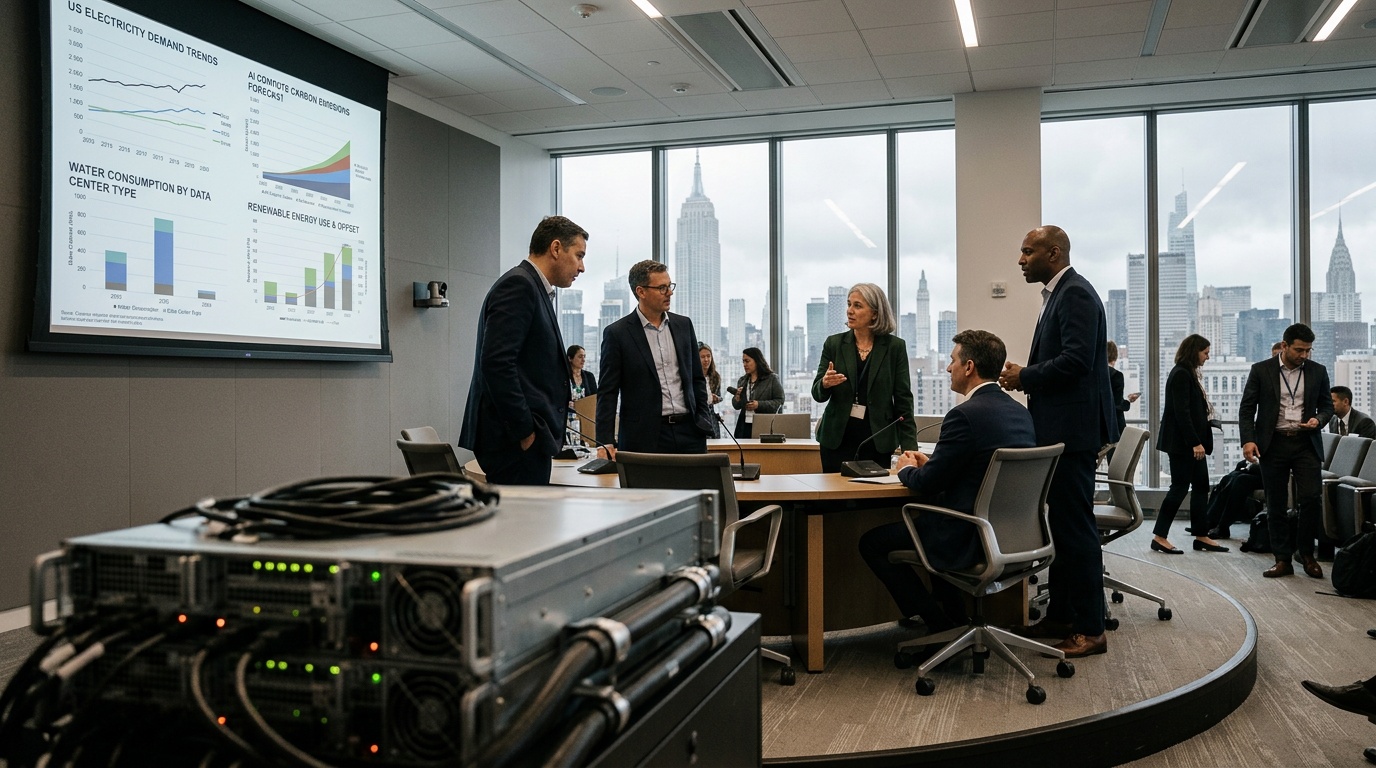
Climate Week NYC traditionally focuses on finance, clean energy, corporate targets, and diplomacy. The event runs alongside the United Nations General Assembly and gathers leaders from business, government, and civil society. Artificial intelligence now changes those conversations because its supporting infrastructure requires enormous physical resources. Data centers need electricity, water, land, transmission, chips, and backup power. Their expansion connects digital strategy directly with climate strategy.
That connection gives Climate Week participants a difficult test. AI can help model weather, optimize grids, discover materials, and measure emissions. Yet the computing behind those services can raise electricity demand and strain local infrastructure. Companies must therefore discuss AI as both a climate tool and a growing source of environmental pressure. This tension increasingly shapes panels, investor meetings, policy debates, and private negotiations citywide.
Why data center demand commands attention
The International Energy Agency estimated that data centers used about 415 terawatt-hours of electricity worldwide during 2024. It expects consumption to more than double by 2030, reaching roughly 945 terawatt-hours. AI represents the most important driver of that increase, although conventional cloud services also expand. These figures place computing beside major industrial sectors within energy planning. They also explain its larger Climate Week presence today.
United States projections make this urgent for Climate Week audiences. A Lawrence Berkeley National Laboratory report found American data centers consumed about 176 terawatt-hours during 2023. The report projected they could consume between 6.7 and 12 percent of national electricity use by 2028. Actual demand will depend on chip efficiency, construction schedules, utilization, and market conditions. However, utilities already revise forecasts around large computing loads.
From abstract emissions to physical infrastructure
Climate discussions once treated digital services as nearly weightless activities. AI data centers expose the servers, substations, cooling systems, and generators behind every model response. Developers often seek gigawatts of capacity within unusually short timelines. Grid operators must then compare those requests with available generation, transmission, and reliability needs. This shift turns corporate software decisions into questions about public infrastructure, regional planning, and shared costs.
Power sourcing sits at the center of corporate climate claims. Many technology companies buy renewable electricity through long-term contracts or purchase energy certificates. Those tools can finance clean projects, but annual accounting may hide hourly gaps between supply and consumption. A center can claim matched renewable energy while local gas plants serve its nighttime load. Climate Week debates increasingly emphasize location, timing, additionality, and verification.
The grid becomes part of the AI story
Data centers create concentrated demand rather than evenly distributed national growth. One campus can require as much power as a city, depending on its size and equipment. Connection queues may delay projects where transmission and generation remain limited. Utilities could build new gas plants if clean resources cannot arrive quickly enough. Consequently, AI growth may influence generation choices and regional emissions for several decades afterward.
That prospect elevates grid investment from a technical topic to a central climate priority. Faster permitting can help build transmission, solar farms, wind projects, storage, and enhanced geothermal systems. Poorly designed shortcuts, however, can weaken environmental review or exclude affected communities. Speakers and campaigners therefore distinguish faster clean infrastructure from indiscriminate approval. The climate agenda now links AI expansion with credible grid reform and accountability.
Water land and neighborhood impacts gain prominence
Electricity does not capture the full environmental footprint. Data centers use water directly for cooling and indirectly through power generation. Consumption varies greatly by climate, cooling design, workload, and electricity source. Operators may favor evaporative systems because they save energy, yet those systems can increase local water demand. Drought risk makes that tradeoff important, particularly where proposed developments compete for scarce supplies during dry periods.
Communities also face construction noise, diesel exhaust, land conversion, and pressure on electricity prices. Local governments may welcome tax revenue and jobs, although automated facilities employ fewer workers than many factories. Residents often ask who pays for substations, transmission upgrades, and new generation. These questions bring environmental justice groups into AI governance discussions. Climate Week provides a platform for connecting global pledges with neighborhood consequences.
Transparency remains a basic obstacle. Companies rarely publish facility-level data covering electricity use, water withdrawals, water consumption, backup generation, and hourly emissions. Aggregated sustainability reports can obscure which grids or watersheds carry new burdens. Better disclosure would help investors, regulators, utilities, and communities assess competing claims. It would also reveal whether efficiency gains reduce total impacts or merely enable additional computing demand elsewhere over time.
Corporate climate promises encounter a much harder operational reality
Leading technology companies have adopted ambitious goals for renewable energy, carbon neutrality, or carbon removal. Rapid AI investment makes those goals harder to meet. Several firms have reported rising emissions as they construct facilities and expand supply chains. The challenge extends beyond electricity because concrete, steel, semiconductors, and buildings carry embodied emissions. Climate Week scrutiny now tests whether corporate targets can withstand explosive demand growth.
Efficiency offers meaningful savings, but it cannot settle every concern. New chips can complete calculations with less energy, while software teams can design smaller models or avoid unnecessary queries. Operators can improve cooling, server utilization, and workload scheduling. However, cheaper computing may stimulate greater use, offsetting some efficiency gains through a rebound effect. Participants pair efficiency with absolute energy targets and emissions limits for accountability.
Policy choices move beyond voluntary pledges
Governments control many decisions that will determine AI’s climate footprint. Utility regulators decide how companies allocate infrastructure costs and manage large customer connections. Planning agencies review land, water, air pollution, and community effects. Legislatures can require energy reporting, efficiency standards, or clean power procurement. These policy levers turn broad Climate Week commitments into enforceable rules that shape actual projects and public outcomes for decades ahead.
Policymakers must also protect reliability and affordability. Special electricity tariffs can prevent households and smaller businesses from subsidizing costly grid expansions for data centers. Flexible connection agreements can reduce computing loads during stressed grid hours. Strong standards can limit diesel generators and encourage cleaner backup technologies. Each approach requires careful design because facilities need dependable power and communities need fair treatment from public regulators too.
AI can support climate action without escaping rigorous public scrutiny
The same computing boom that strains grids can strengthen climate solutions. AI systems can forecast renewable output, detect methane leaks, improve building controls, and analyze satellite imagery. Researchers can use models to study batteries, catalysts, weather, and adaptation options. Benefits still depend on data quality, deployment choices, and real operational changes. Promotional claims need evidence, not assumptions that digital innovation automatically produces environmental gains everywhere.
