

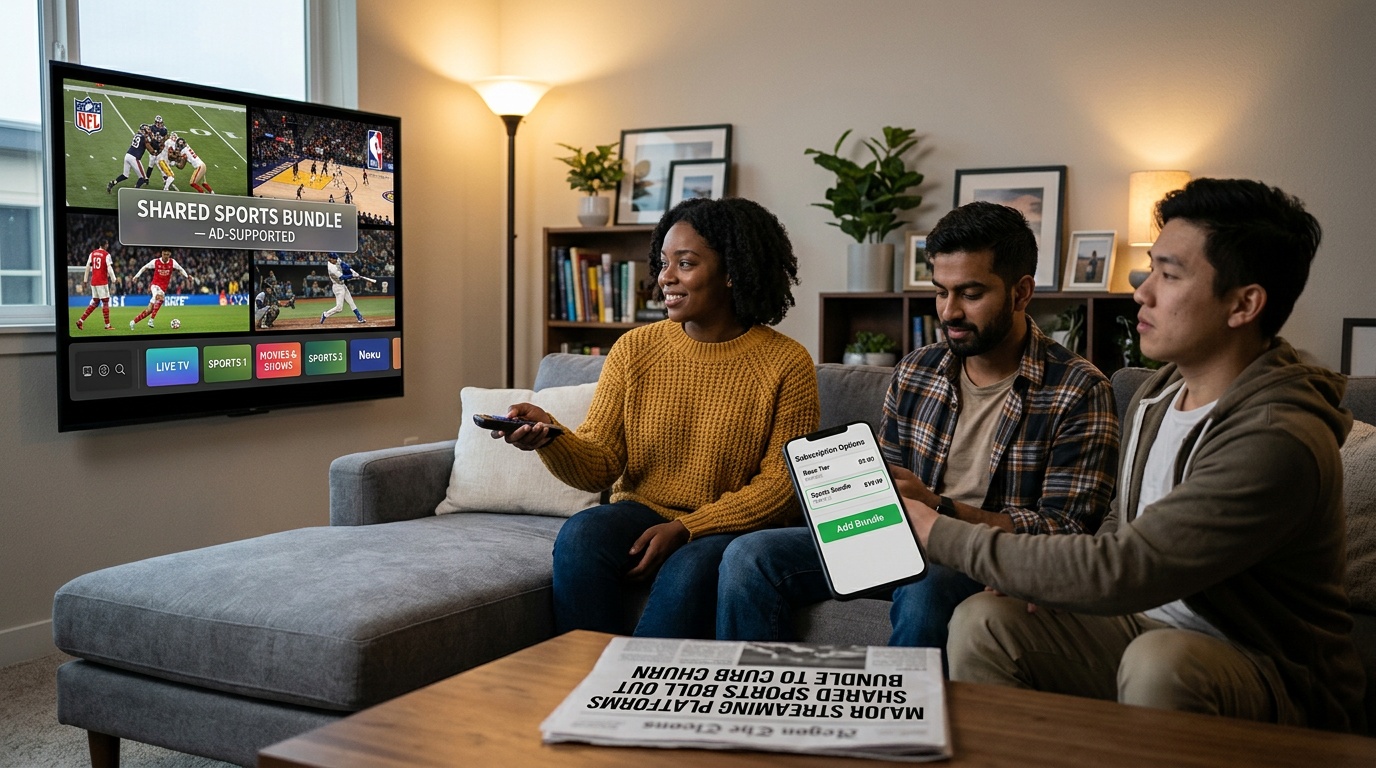
Streaming is entering a consolidation phase as growth slows and costs rise. Major platforms now promote a shared sports bundle to keep fickle fans subscribed. Executives see sports as the stickiest content in a crowded entertainment marketplace. Ad-supported tiers are expanding alongside the bundle to widen the funnel.
A proposed joint venture from ESPN, Fox, and Warner Bros. Discovery set the template. The group announced plans for a unified sports streaming service, called Venu Sports. The venture targets a launch alongside existing network apps, pending necessary approvals. It promises a simplified path to many marquee events in one subscription.
The package would aggregate ESPN channels, Fox Sports networks, and Turner sports programming. Viewers could access college football, NBA, MLB, NHL, soccer, and select combat sports. Not every league or game would appear due to complex rights structures. Regional sports networks and league pass products would still sit outside the bundle.
Rights fragmentation still shapes the viewing map, despite the bundle’s breadth. Local blackouts and exclusive digital deals will continue to affect availability. Amazon, Apple, and YouTube control several high-profile sports packages. Fans may still need multiple subscriptions to follow every team.
Why Platforms Are Bundling Sports Now
Subscriber churn remains the central pain point across mature streaming markets. Acquisition costs rise as free trials shrink and promotional windows narrow. Ad-supported tiers create a lower-priced entry while protecting premium tiers. A shared sports bundle adds retention by aligning with appointment viewing habits.
Meanwhile, nearly every major service now offers an ad-supported option with targeted capabilities. Netflix, Disney+, Hulu, Max, Peacock, and Paramount+ actively sell ad-supported plans. Prime Video introduced ads by default with an ad-free upgrade in 2024. Bundles can aggregate reach for advertisers and reduce wasteful frequency.
The Economics Behind the Strategy
Sports rights costs continue to rise faster than general entertainment budgets. Distributors need broader revenue streams to justify long-term commitments. A bundle can mimic pay-TV economics by blending subscription and advertising revenue. Higher average revenue per user offsets higher content and technology spending.
Additionally, live sports deliver appointment audiences and premium ad pricing for brands. Unified sales teams can package inventory across channels, events, and platforms. Privacy shifts push the industry toward clean rooms and modeled attribution. The bundle increases scale for measurement pilots and cross-platform guarantees.
What Viewers Gain and Where Tradeoffs Remain
Consumers gain a simpler destination for many tentpole games and studio shows. A single bill, shared search, and unified schedules reduce friction. Cross-promotion can alert fans to matchups they might otherwise miss. Price sensitivity persists, especially among households juggling several subscriptions.
Looking ahead, feature roadmaps emphasize multiview, alternate cameras, and real-time statistics. Watch parties and chat features add communal energy to big nights. Latency and stream stability remain critical for betting and social moments. Operations teams must provision capacity for record-breaking simultaneous audiences.
Advertising Quality and Measurement Improvements
On the advertising side, ad loads vary by service and sport, but live windows command attention. Viewers accept commercials during timeouts, but repetition frustrates audiences quickly. Frequency capping and creative rotation help maintain tolerance. Better targeting can align messages with fan interests and contexts.
To measure impact, marketers want deduplicated reach across devices, accounts, and distribution partners. Joint ventures can standardize tags, events, and verification workflows. Panels and device data combine to estimate outcomes with defensible confidence. Shared reporting reduces discrepancies and speeds makegoods after outages.
Distribution Partners and Retail Channels
Beyond streaming apps, telecom bundles are returning as acquisition engines for streamers. Wireless and broadband providers integrate streaming subscriptions into monthly bills. Student, military, and family plans broaden affordability without heavy discounting. Gift codes and prepaid cards also ease onboarding for cash-preferred households.
Likewise, retail aggregation simplifies discovery for mainstream audiences. Amazon Channels, Apple TV, Roku, and YouTube act as storefronts and billers. The sports bundle must choose where to sell natively versus wholesale. Distribution strategy affects margins, data access, and merchandising control.
Competitive Moves Shape the Wider Sports Landscape
Elsewhere, Amazon holds exclusive rights to Thursday Night Football in the United States. YouTube carries NFL Sunday Ticket for residential customers and bars. Peacock streamed an exclusive NFL playoff game to strong sign-up spikes. Paramount+ continues to stream UEFA club competitions in the United States.
Meanwhile, Apple’s MLS Season Pass centralizes a full league under one subscription. ESPN+ streams select NHL games and out-of-market MLB packages. Regional sports networks launched apps to reach cord-cutters directly. League-owned platforms experiment with alternative feeds and data overlays.
Betting, Commerce, and Interactivity
In parallel, sportsbooks pursue integrations, though regulations vary widely by state and market. Microbetting features appear in companion apps rather than primary streams today. ESPN partnered with Penn Entertainment to launch ESPN Bet in 2023. Commerce links for merchandise and tickets add incremental revenue without heavy intrusion.
Policy Considerations and Potential Scrutiny
Regulators assess whether joint distribution ventures could disadvantage competing distributors. Contracts with pay-TV partners often include most-favored-nation protections. Programmers must balance innovation with obligations under existing carriage terms. Litigation risk grows when lineups or pricing shift rapidly across markets.
How Success Will Be Measured
Ultimately, leaders will track churn reduction, viewing hours, and advertising yield. Bundle attach rates and tenure will indicate product-market fit. Sports calendars create peaks and troughs that complicate forecasting. Off-season shoulder programming can smooth engagement between tentpoles.
Risks That Could Slow Momentum
However, high-profile outages during playoffs would damage credibility and invite refunds. Escalating rights fees could push pricing beyond consumer tolerance. Password sharing and fraud may erode expected revenue gains. Confusing tiers could undermine the bundle’s simplicity message.
Outlook for the Next Phase
Looking forward, the shared sports bundle revives pay-TV logic for a streaming generation. Ad-supported tiers supply the economic ballast for sustainable growth. Expect continued experimentation with packaging, pricing, and distribution partners. Sports will anchor the strategy as platforms chase durable attention.
