

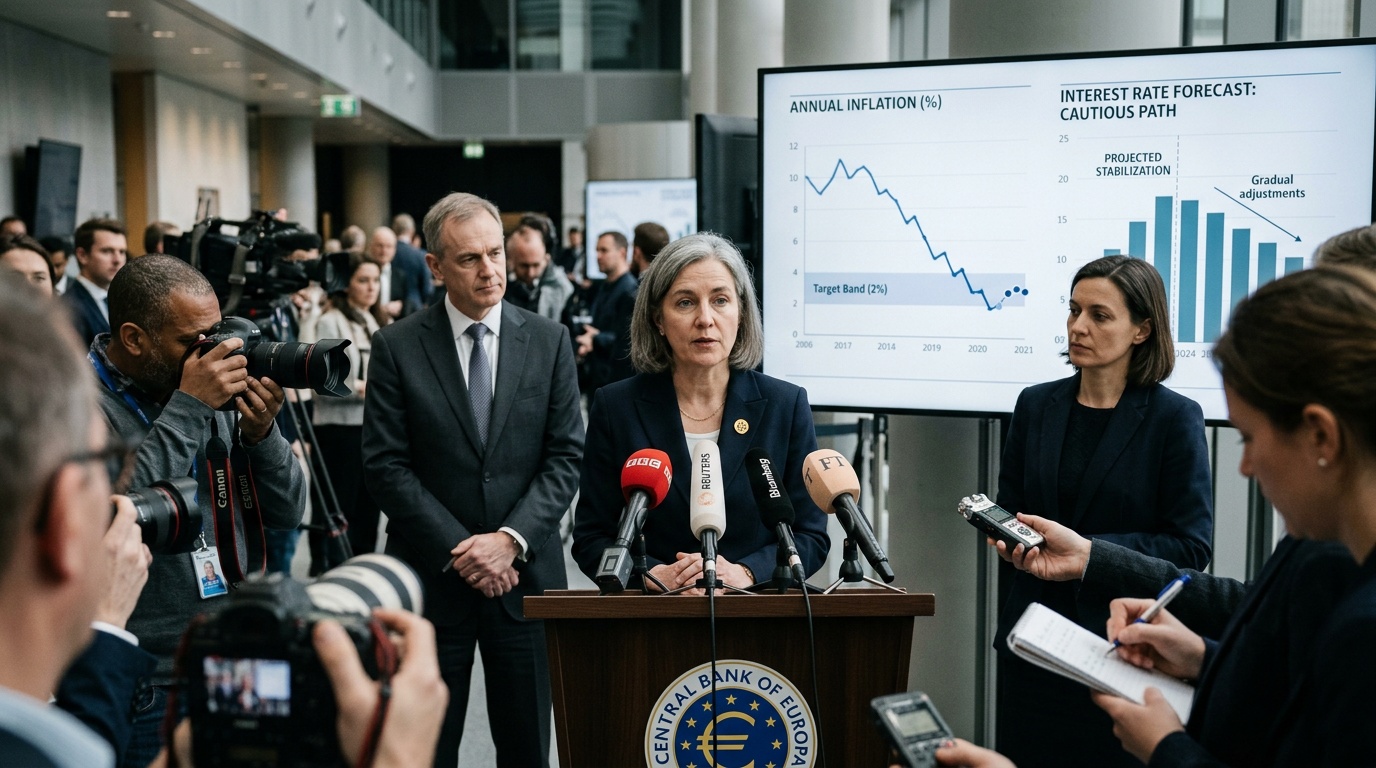
Understanding the Central Bank’s Cautious Approach
Central banks influence borrowing costs through interest rate decisions. Those decisions affect households, businesses, investors, and governments. Current signals suggest policymakers prefer a careful path before making further changes. Inflation pressures have eased, yet officials remain attentive to lingering risks. Their measured communication reflects uncertainty about future economic conditions. That balanced approach aims to support price stability without weakening economic activity unnecessarily.
Financial markets closely watch every policy statement and public speech. Even small wording changes can influence expectations for future rates. As inflation slows, investors often anticipate lower borrowing costs. However, central banks typically require convincing evidence before adjusting policy significantly. This careful stance helps preserve credibility while reducing the chance of policy mistakes.
Why Inflation Pressures Have Moderated
Inflation measures the pace of overall price increases across the economy. Several factors have contributed to slower inflation compared with earlier peaks. Supply chain disruptions have eased across many industries. Energy prices have become less volatile than previous periods. Improved availability of goods has also reduced pressure on consumer prices.
Higher interest rates have also cooled demand for some products and services. Borrowing became more expensive for consumers and businesses alike. That shift reduced spending growth across interest-sensitive sectors. Consequently, price increases have slowed in several important categories. Even so, some services continue showing stronger inflation than goods.
Different Inflation Measures Matter
Central banks rarely rely on a single inflation indicator. They examine headline inflation alongside core measures excluding volatile food and energy prices. Policymakers also review wage growth, business surveys, and inflation expectations. Together, these indicators provide a broader picture of underlying price trends. That comprehensive analysis supports more informed policy decisions.
Why Policymakers Remain Careful
Slowing inflation does not automatically guarantee lasting price stability. Unexpected events can quickly change economic conditions. Geopolitical tensions, weather disruptions, or commodity price swings may affect inflation again. Labor markets also remain important because wages influence service-sector costs. Therefore, central banks often emphasize patience before changing rates.
Officials also recognize that monetary policy works with considerable delays. Earlier rate increases continue influencing borrowing, investment, and consumer spending over time. Acting too quickly could produce unintended consequences. Waiting for additional evidence reduces uncertainty surrounding policy effectiveness. As a result, caution remains a defining feature of current guidance.
How Interest Rates Shape the Economy
Interest rates affect nearly every corner of economic activity. Higher rates increase borrowing costs for mortgages, business loans, and consumer credit. Lower rates generally encourage spending and investment. Those changes influence employment, production, and overall economic growth. Because of these broad effects, policymakers weigh each decision carefully.
Businesses often delay expansion when financing becomes more expensive. Households may postpone major purchases under similar conditions. Reduced demand can ease inflation by slowing price increases. However, excessive restraint could weaken economic momentum. Central banks therefore seek an appropriate balance between controlling inflation and supporting sustainable growth.
Effects on Financial Markets
Bond markets react quickly to changing expectations about future interest rates. Stock prices may also respond as investors reassess corporate earnings prospects. Currency values can shift because interest rate differences influence international capital flows. These market movements reflect changing expectations rather than guaranteed outcomes. Consequently, central bank communication receives significant attention.
Communication Plays a Key Role
Modern central banks place strong emphasis on transparent communication. Regular policy statements explain the reasoning behind important decisions. Press conferences provide additional context about economic conditions and future risks. This openness helps financial markets understand policymakers’ objectives. Better communication can reduce unnecessary volatility during periods of uncertainty.
Officials often avoid promising specific future rate changes. Instead, they describe how incoming economic data will influence decisions. This approach preserves flexibility when conditions evolve unexpectedly. Markets receive guidance while recognizing that future outcomes remain uncertain. That balance supports effective monetary policy implementation.
Economic Data Will Guide Future Decisions
Central banks continuously evaluate fresh economic information before each policy meeting. Inflation reports remain among the most closely watched releases. Employment data also provide valuable insight into labor market strength. Consumer spending, industrial production, and business investment add further perspective. Together, these indicators help shape future interest rate decisions.
Policymakers also monitor global economic developments. International trade patterns influence domestic growth and inflation. Financial conditions abroad can affect investment flows and exchange rates. Consequently, central banks consider both domestic and international factors. This wider perspective strengthens policy analysis.
Labor Markets Remain Important
Employment conditions influence both consumer confidence and inflation trends. Strong hiring supports household income and spending. Rapid wage growth may increase business costs under certain circumstances. Moderate wage growth can align with stable inflation over time. Policymakers therefore evaluate labor market data alongside price indicators.
Potential Benefits of a Measured Strategy
A gradual approach offers several potential advantages during changing economic conditions. It allows policymakers to observe how previous decisions affect the economy. Additional evidence may confirm that inflation continues moving toward policy objectives. Careful timing can reduce unnecessary market disruptions. Stability often supports consumer and business confidence.
A measured strategy may also reduce the risk of reversing policy unexpectedly. Frequent changes could create confusion among investors and businesses. Consistent decision-making supports credibility over longer periods. That credibility strengthens the effectiveness of monetary policy. Clear expectations also encourage more informed financial planning.
Challenges That Could Influence the Outlook
Economic forecasts always contain meaningful uncertainty. Commodity prices can rise unexpectedly because of global events. Weather-related disruptions may influence food production and transportation costs. Changes in fiscal policy could also affect demand across the economy. These developments may alter future inflation trends.
Global growth patterns present another important consideration. Slower international demand could reduce export opportunities for many businesses. Stronger foreign growth might increase demand for commodities and manufactured goods. Exchange rate movements could influence import prices as well. Policymakers monitor these developments carefully before adjusting interest rates.
Implications for Households and Businesses
Consumers often experience interest rate changes through mortgages, savings accounts, and personal loans. Businesses may see financing costs change for investment projects. Lower inflation can improve purchasing power when wages keep pace with prices. Stable inflation also supports longer-term financial planning. These effects highlight why monetary policy attracts widespread attention.
Companies frequently adjust hiring, pricing, and expansion plans based on borrowing conditions. Households may reconsider major purchases when financing costs change. Financial institutions also respond by adjusting lending standards and deposit rates. These interconnected decisions shape broader economic activity. Consequently, central bank guidance reaches far beyond financial markets.
Looking Ahead
Current signals indicate that central banks remain focused on balancing competing economic objectives. Inflation has eased compared with earlier periods, encouraging cautious optimism. Nevertheless, policymakers continue seeking stronger evidence before making substantial interest rate adjustments. Future decisions will depend on incoming economic data and evolving risks. This disciplined approach reflects the importance of maintaining both price stability and sustainable economic growth.
