

Powerful Storm Crosses New England
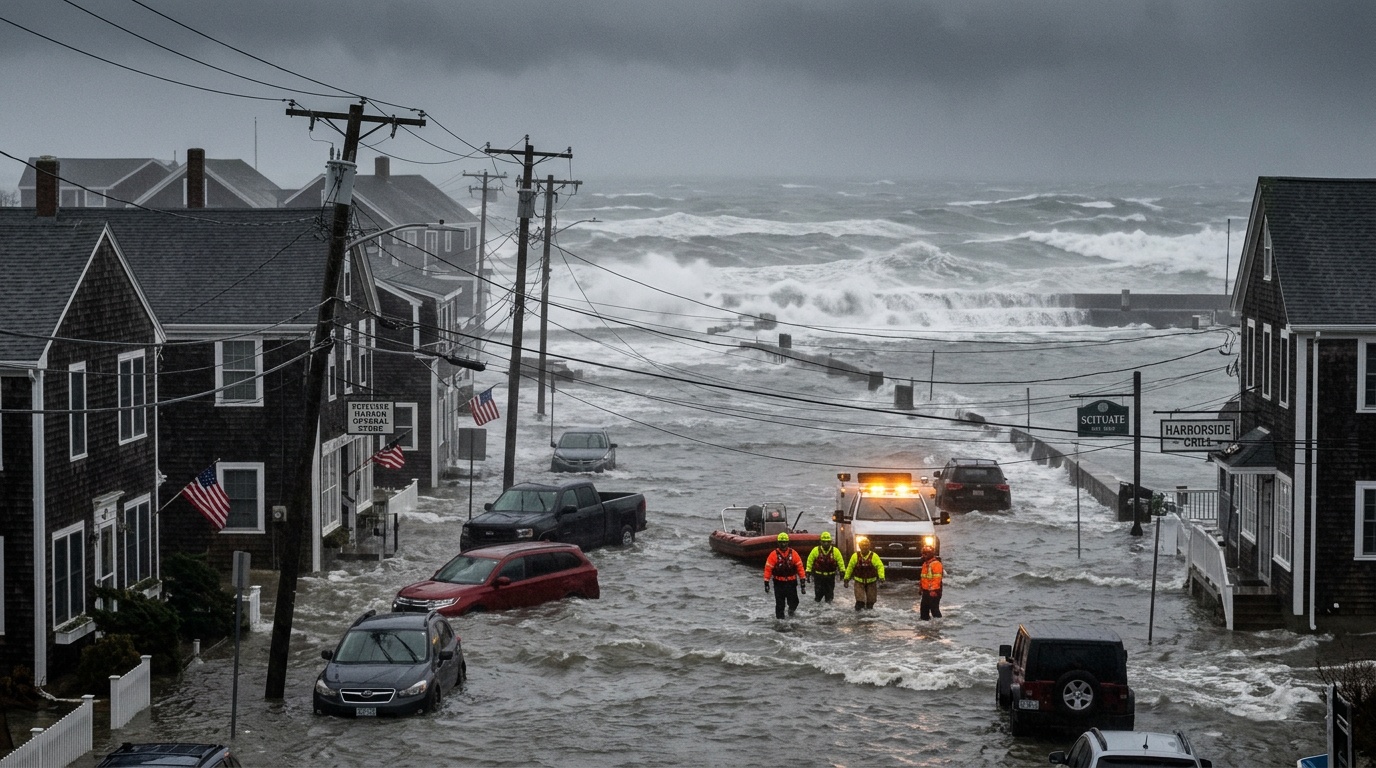
A powerful nor’easter moved across New England, bringing torrential rain, fierce winds, and dangerous flooding. The storm drew moisture northward while a strong pressure gradient tightened along the Atlantic coast. Forecasters warned that saturated ground and exposed shorelines would increase damage across several vulnerable states. Rain spread from Connecticut through Maine, soaking cities, mountain valleys, forests, and low-lying rural communities.
As the system strengthened, wind gusts toppled trees and interrupted electricity for many households regionwide. Utilities reported widespread failures as branches struck lines and weakened trees pulled down distribution equipment. The storm’s combined threats forced officials to address flooding, transportation problems, and prolonged blackouts simultaneously.
Heavy Rain Swells Regional Rivers
Hours of heavy rainfall quickly overwhelmed storm drains, roadside ditches, streams, and urban drainage systems. Water covered intersections and entered basements where pumps stopped working during widespread electrical service interruptions. Rivers responded rapidly because previous precipitation had left soils wet and unable to absorb runoff. Local authorities closed flooded roads, monitored bridges, and urged drivers to avoid moving water completely.
Meanwhile, runoff carried mud, branches, and debris toward nearby culverts, creating additional blockages downstream overnight. Even after rain weakened, larger waterways continued rising as upstream flows reached lower communities later. That delayed response extended flood risks beyond the storm’s most intense period in many watersheds.
Coastal Communities Face Rising Water
Along the coast, strong onshore winds pushed seawater toward harbors, beaches, marshes, and vulnerable neighborhoods. High surf battered seawalls and flooded low roads near bays, tidal rivers, and working waterfronts. Officials restricted access where waves threw rocks and driftwood across pavement, creating hazardous driving conditions. Some residents moved vehicles uphill before peak tide, reducing losses in frequently flooded parking areas.
Farther inland, however, river flooding posed a different threat to homes, farms, and nearby businesses. Emergency managers tracked tides closely because surge timing could worsen rainfall drainage around coastal outlets. Repeated coastal flooding also eroded dunes and weakened barriers that protect shorefront properties during storms.
Fierce Winds Damage Electrical Networks
Wind caused extensive infrastructure damage, especially where wet soil loosened roots around tall roadside trees. Falling trunks broke poles, severed wires, blocked streets, and damaged transformers serving multiple nearby neighborhoods. Utilities shut down some circuits deliberately when damaged equipment threatened firefighters, residents, or repair crews. Outages reached cities and remote towns, highlighting the storm’s wide footprint across New England communities.
Restoration became the next challenge as utilities assessed thousands of separate problems across damaged networks. Crews prioritize repairs protecting public safety, then restore substations, major lines, and neighborhood circuits sequentially. That sequence explains why some customers regain service quickly while isolated households wait considerably longer.
Crews Confront Dangerous Repair Conditions
Line workers faced gusty winds, flooded roads, fallen trees, and energized equipment throughout restoration efforts. Before repairs began, crews inspected damage and confirmed whether damaged lines still carried electrical current. Tree crews often cleared access first, allowing utility trucks to reach poles and transformers safely. Mutual assistance teams arrived from outside affected areas, expanding staffing for the difficult recovery effort.
Still, flooding slowed travel and forced workers to use alternate routes between scattered damage sites. Utilities also communicated estimated restoration times, although changing field conditions sometimes made forecasts uncertain initially. Careful procedures protected workers while communities pressed for faster progress during cold, dark nighttime conditions.
Residents Navigate Outages and Flooding
Families used flashlights, charged batteries, and generators while waiting for utility crews to restore electricity. Officials warned residents to always keep generators outdoors, far from doors, windows, and ventilation openings. Carbon monoxide can accumulate quickly without warning, causing severe illness or death inside enclosed spaces. People also avoided flooded basements when standing water could contact electrical panels or submerged appliances.
Beyond immediate safety, outages disrupted heating, medical devices, refrigerated food, internet service, and remote work. Neighbors checked older adults and shared charging access, warm meals, pumps, and storm information updates. Those informal networks supported households until shelters, utilities, and public services restored basic community stability.
Travel Disruptions Spread Across Region
Floodwater and debris closed numerous roads, complicating commutes, deliveries, school schedules, and delaying emergency responses. Transportation departments deployed barricades, cleared drains, removed trees, and inspected roads for hidden structural damage. Drivers encountered deep water where drainage systems failed or nearby streams overtopped their banks suddenly. Officials repeated a simple warning: motorists should turn around rather than enter any flooded roadway.
Rail and ferry operations also faced delays when wind, water, or debris threatened safe movement. Airports adjusted some schedules as crews managed gusts, low clouds, and difficult local ground conditions. Once winds eased, inspections guided reopening decisions, but isolated closures persisted near damaged infrastructure longer.
Emergency Agencies Coordinate Local Responses
Governors and local officials activated emergency teams as forecasts showed overlapping wind and flood threats. Dispatchers handled calls about downed wires, trapped vehicles, flooded buildings, and blocked access routes overnight. Firefighters conducted water rescues where conditions allowed, while police secured unsafe roads and nearby intersections. Shelters and warming centers offered power, food, information, and temporary refuge for locally displaced residents.
Coordination became especially important when communities lost communications or faced several emergencies at once overnight. State agencies shared resources with municipalities, while federal partners monitored requests for additional assistance closely. Clear public updates helped residents distinguish verified instructions from rumors circulating during widespread storm disruptions.
Geography Amplifies New England Hazards
Nor’easters develop along the East Coast and often strengthen over relatively warm Atlantic waters during winter. Their counterclockwise circulation can direct moist air inland while pulling colder air from northern areas. New England’s irregular coastline, steep terrain, and dense forests create different impacts across short distances. Mountains enhance precipitation, while river valleys channel runoff toward developed floodplains and historic town centers.
At the same time, coastal exposure leaves harbors vulnerable to surge, waves, and erosion damage. Wooded neighborhoods face separate dangers because trees can fall when saturated soil meets strong winds. These overlapping features help explain why one nor’easter can trigger many emergencies across multiple states.
Recovery Continues After Storm Departs
After skies cleared, communities began documenting losses, clearing debris, pumping basements, and reopening roads gradually. Property owners photographed damage before cleanup and contacted insurers about coverage, repairs, and temporary housing. Public works departments later inspected bridges, culverts, seawalls, and drainage systems for hidden structural problems. Utilities continued replacing poles and restringing wires after restoring service through temporary emergency field equipment.
Attention then shifted toward resilience, including tree management, stronger grids, and improved regional flood planning. Communities can reduce future losses by protecting wetlands, upgrading culverts, and limiting new floodplain development. The nor’easter ultimately showed how preparedness and coordinated recovery remain essential across weather-exposed New England.
