

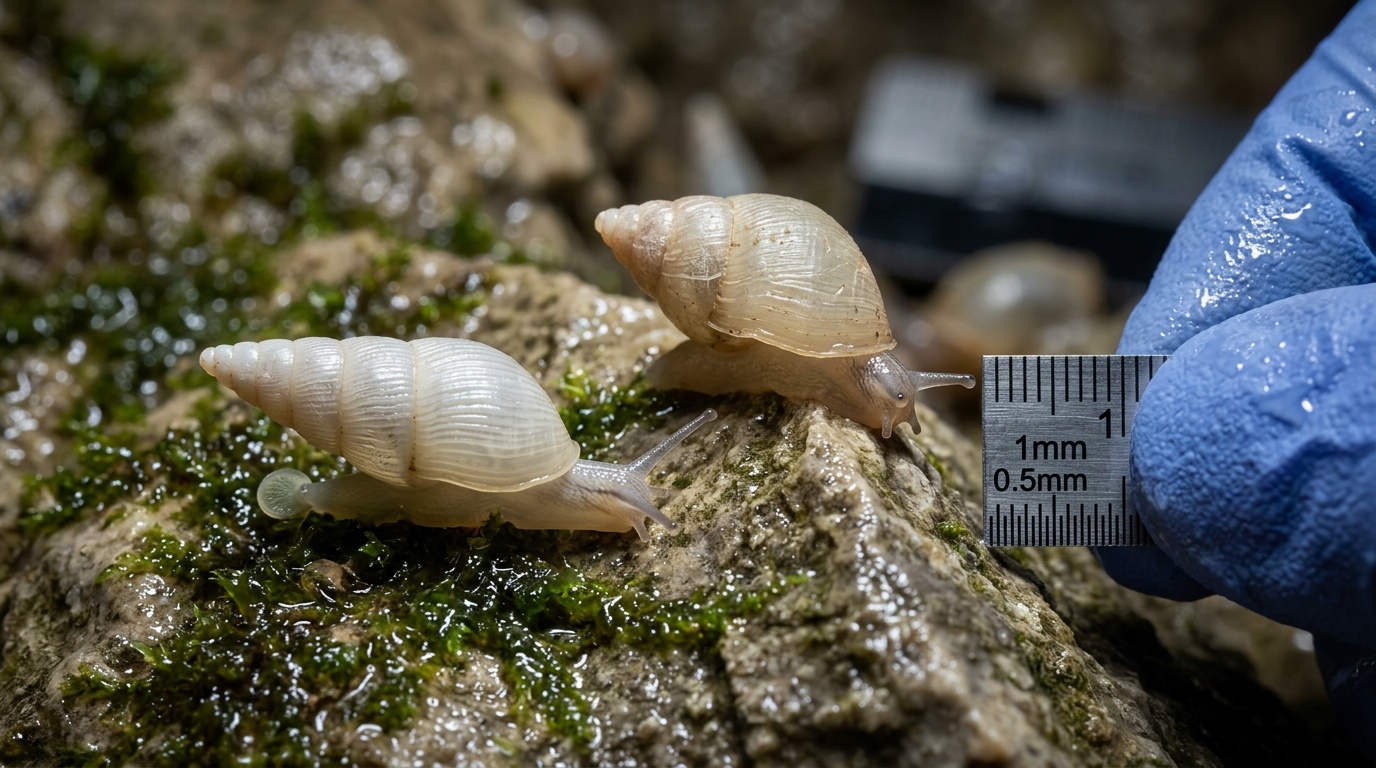
Scientists have identified two previously unknown tiny snail species in Montenegro, expanding knowledge of the Balkan country’s rich molluscan fauna. The finding demonstrates how minute animals can remain overlooked, even inside Europe’s comparatively well-documented landscapes. Small shells and restricted habitats often conceal snail diversity from casual observation. Careful fieldwork and taxonomic comparisons allowed researchers to recognize both animals as species new to science.
A significant zoological discovery
The discovery adds two distinct branches to the documented tree of life. Scientists use the term “new species” when an organism lacks any valid description in scientific literature. Local people or collectors might have encountered similar animals before formal recognition. However, taxonomy requires researchers to demonstrate consistent differences from every known relative. Researchers then publish descriptions that establish scientific names and defining characteristics.
The snails’ extremely small size probably contributed to their long scientific absence. Minute species can hide among sediment, vegetation, stones, soil, or narrow underground spaces. Their shells may resemble grains of sand without magnification. Scientists must therefore collect samples carefully and examine material under microscopes. This demanding process explains why researchers continue finding tiny invertebrates across familiar European regions.
Montenegro provides exceptional snail habitats
Montenegro occupies a biologically diverse position between the Adriatic coast and the mountainous Balkan interior. Its landscapes include limestone massifs, river valleys, forests, wetlands, springs, and extensive underground systems. These environments create numerous isolated ecological pockets. Snail populations can remain separated within those pockets for thousands of years. Isolation allows populations to develop distinctive shells, anatomy, behavior, and environmental requirements.
Much of Montenegro belongs to the Dinaric karst, a region shaped by water dissolving limestone. This process produces caves, fissures, sinkholes, underground channels, and powerful springs. Small snails can occupy highly localized habitats within this complicated terrain. Mountains and drainage boundaries limit their movement between suitable locations. Consequently, Montenegro supports many endemic organisms that occur nowhere else on Earth.
Isolation encourages hidden diversity
Snails generally move slowly and cannot cross dry or unsuitable terrain easily. A short geographical distance can therefore separate populations for long evolutionary periods. Each population may adapt to different moisture levels, temperatures, water chemistry, foods, or shelter. These pressures gradually produce recognizable biological differences. The two newly identified species offer another example of diversity developing across Montenegro’s fragmented landscapes.
Tiny species often occupy particularly narrow ranges, sometimes covering only one valley, spring, cave, or mountainside. Scientists describe this pattern as microendemism. Such limited distributions make discoveries scientifically valuable but create conservation concerns. Damage affecting one small site could threaten an entire species. That vulnerability makes accurate locality records and habitat assessments especially important.
How scientists distinguish tiny species
Recognizing a new snail species requires more than noticing an unusual shell. Researchers compare specimens with published descriptions, reference collections, photographs, and museum material. Under magnification, they study shell height, width, sculpture, color, whorl development, and aperture shape. They also examine internal features when suitable specimens remain available. Repeated differences help separate genuine species from ordinary individual variation.
Shell measurements provide important evidence because tiny differences can carry taxonomic meaning. However, age, nutrition, erosion, and environmental conditions can alter shell appearance. Scientists therefore examine multiple specimens whenever possible. They look for stable combinations of characteristics rather than relying on one feature. Modern researchers may also analyze DNA to test relationships, although genetic evidence does not replace detailed morphological work.
This comparison stage can take much longer than collecting the first specimen. Taxonomists must investigate similar species from Montenegro and neighboring countries. They also check whether earlier researchers already named the organism under another classification. Historical descriptions sometimes contain limited illustrations or incomplete measurements. Resolving those uncertainties prevents scientists from accidentally naming the same species twice.
Why tiny snails matter
Although small, snails perform useful ecological functions within their habitats. Many consume algae, fungi, decaying plants, bacterial films, or microscopic organic material. Their feeding helps recycle nutrients through aquatic and terrestrial food webs. In turn, insects, fish, amphibians, birds, and other animals may eat snails. Each species contributes to ecological relationships that researchers still only partly understand.
Some tiny snails also respond quickly to environmental disturbance. Changes in water quality, moisture, shade, sediment, or temperature can reduce their populations. Species with narrow habitat requirements provide valuable information about ecological conditions. Their presence may indicate stable microhabitats that support other specialized organisms. Their disappearance can signal degradation before larger animals show obvious effects.
Conservation starts with recognition
Scientists cannot assess a species properly until they know it exists. Formal descriptions give conservationists names that connect observations, databases, environmental surveys, and legal discussions. Researchers can then investigate population size, distribution, habitat quality, and potential threats. These studies determine whether a species remains secure or requires protection. The Montenegrin discovery therefore establishes an essential baseline for future monitoring.
Potential pressures include construction, water extraction, pollution, tourism, quarrying, and changing rainfall patterns. Not every newly described snail faces immediate danger. Nevertheless, tiny ranges can make species vulnerable to disturbances that appear minor at regional scales. Protecting surrounding vegetation and natural water movement can preserve entire communities. Scientists also need continued access for responsible, carefully managed research.
A broader lesson from small animals
The discovery shows that biodiversity exploration does not require travel to distant rainforests or unexplored oceans. Important species can remain hidden within small European habitats. Finding them requires specialist knowledge, patient sampling, museum collections, and sustained support for taxonomy. Montenegro’s rugged geography makes that work challenging, yet the same geography preserves unusual evolutionary lineages.
Further surveys will likely reveal additional snails and other overlooked invertebrates. Researchers must revisit known sites while examining habitats that previous surveys missed. Collaboration among local scientists, international specialists, museums, and conservation agencies will strengthen those efforts. The two tiny snails already demonstrate the value of looking closely. Their recognition expands scientific knowledge while emphasizing the importance of Montenegro’s smallest inhabitants.
