

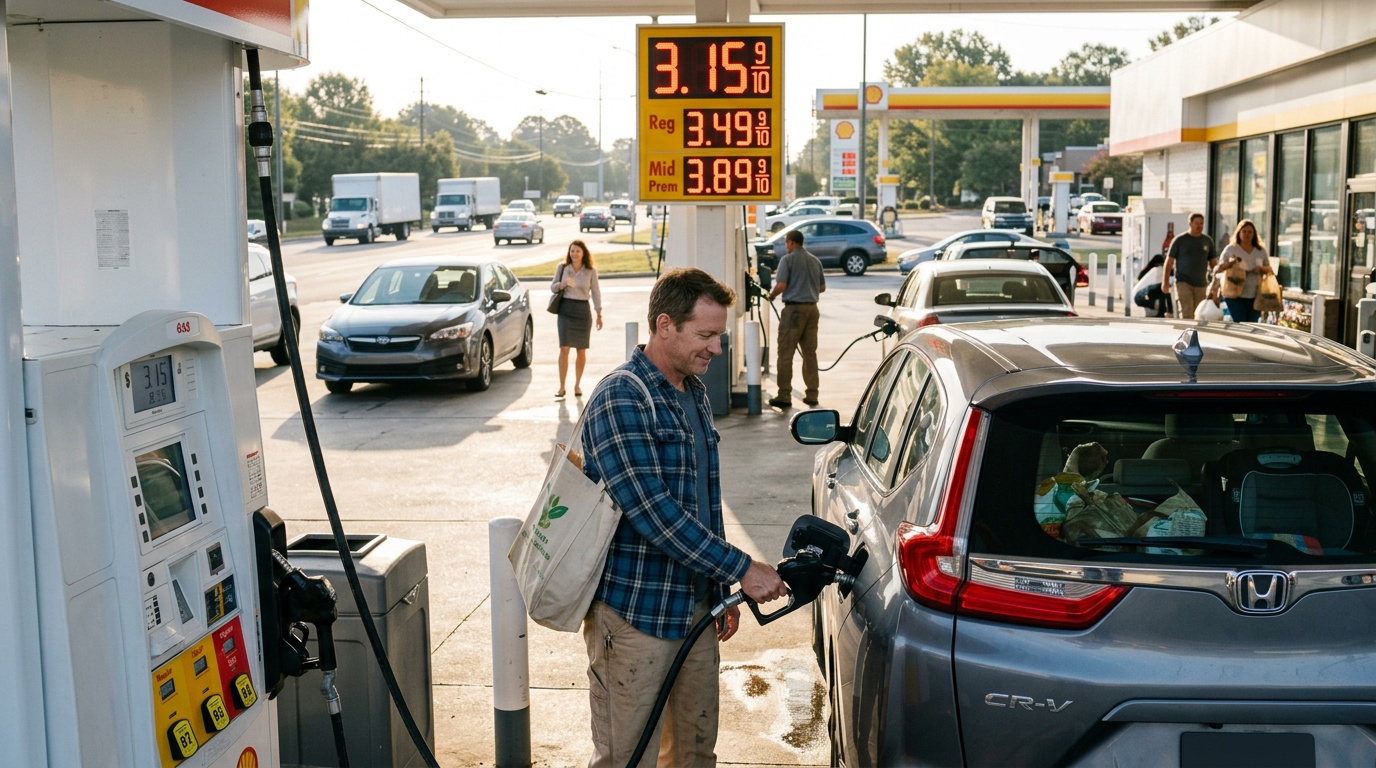
American consumers feel somewhat better when fuel bills shrink, because gasoline remains one of the most visible household expenses. Lower pump prices leave more cash for groceries, services, debt payments, and discretionary purchases. They also soften daily reminders of inflation, which can improve perceptions before broader price measures change. The confidence rebound therefore offers relief, although households still face expensive housing, credit, and essential services.
Why Gasoline Shapes Household Sentiment
Drivers see fuel prices on large roadside signs, making every increase unusually noticeable. Many workers must buy gasoline regardless of price, especially where public transportation remains limited. A decline functions like a modest tax cut by reducing the cost of routine travel. That savings can support restaurant visits, entertainment, or other purchases that families previously postponed. These direct effects help explain why fuel movements often influence confidence surveys quickly.
Gasoline also carries symbolic weight because consumers associate it with shipping costs and future inflation. When prices retreat, shoppers may expect less pressure on food and merchandise prices. Those expectations can lift mood even when actual store prices remain elevated. However, cheaper fuel cannot erase cumulative inflation that already raised household budgets. This distinction leads directly to what confidence indexes actually measure.
How Researchers Measure Confidence
The Conference Board surveys consumers about current business conditions, employment, income prospects, and expectations for the coming months. It combines those responses into a headline Consumer Confidence Index. Its Present Situation Index captures current assessments, while its Expectations Index looks ahead. An increase signals improving perceptions, not a measured rise in household spending. Analysts therefore compare the survey with retail sales, employment, and inflation data.
The University of Michigan runs a separate survey covering sentiment, current conditions, expectations, and inflation forecasts. Different questions, samples, and collection periods can produce contrasting monthly signals. Economists avoid treating either reading as a perfect forecast. Instead, they examine trends across several months and compare answers among age, income, and political groups. That broader approach provides context for the latest rebound.
Energy Relief Reaches Family Budgets
A household purchasing fifty gallons monthly saves ten dollars when the gallon price falls twenty cents. The amount may appear small, but repeated savings accumulate across commuting, school trips, and errands. Lower-income families often feel the difference more because fuel consumes a larger share of their income. Rural households can also benefit substantially because they generally drive farther. Consequently, falling gasoline prices can improve both cash flow and emotional comfort.
Businesses gain some relief as delivery fleets, contractors, and traveling employees spend less on fuel. Some firms may preserve margins, while competitive businesses may pass savings to customers. Airfares and freight charges depend on many factors, so consumers may not see immediate reductions. Still, lower energy expenses can slow cost growth throughout supply chains. The budget channel therefore reinforces the psychological boost measured by surveys.
Oil Markets Drive Pump Prices
Crude oil usually represents the largest component of a retail gasoline price. Refining costs, distribution expenses, marketing, and federal, state, and local taxes add the remainder. Oil prices respond to global demand, production decisions, wars, sanctions, inventories, and currency movements. Refinery outages or regional fuel specifications can create local differences, even when crude prices decline. Seasonal changes also matter because summer gasoline often costs more to produce.
Demand normally weakens after the summer driving season, which can pressure pump prices during autumn. Yet hurricanes can disrupt Gulf Coast refineries and temporarily reverse that pattern. Retail prices also adjust with delays as stations replace previously purchased fuel. For consumers, however, the posted price matters more than the underlying market explanation. With that mechanism established, the rebound’s wider economic meaning becomes clearer.
Confidence Can Support Consumer Spending
Consumer spending accounts for roughly two-thirds of United States economic activity, making household attitudes important. Confident consumers may feel more comfortable booking travel, replacing vehicles, or buying appliances. Those large purchases often require financing and a stable view of future income. Improved sentiment can therefore sustain demand when wage growth and employment remain supportive. Retailers watch these shifts closely while planning inventories, promotions, and staffing.
Nevertheless, survey optimism does not always translate into immediate purchases. Consumers may report relief at the pump while remaining cautious about rent, food, insurance, and medical bills. High interest rates can discourage mortgages, auto loans, and credit-card borrowing. Households may also rebuild savings instead of spending every dollar gained from cheaper gasoline. Thus, actual consumption data must confirm any confidence-driven acceleration.
Inflation Expectations Influence Federal Reserve Policy
Federal Reserve officials monitor inflation expectations because beliefs can shape wage demands, pricing decisions, and purchasing behavior. Falling gasoline prices often lower short-term expectations, given their visibility and frequent purchase cycle. Stable longer-term expectations matter more for confidence that inflation will return toward the central bank’s goal. One favorable energy move cannot establish that trend by itself. Officials examine underlying inflation measures that remove volatile food and energy components.
Cheaper fuel may still help overall inflation directly and reduce transportation costs indirectly. However, service inflation can remain stubborn because housing and labor costs move slowly. The Federal Reserve therefore needs sustained evidence before changing interest-rate policy. A confidence rebound alone would not justify a rate cut or increase. That caution explains why financial markets parse both sentiment details and price data.
Important Risks Could Limit the Rebound
A weakening labor market poses the clearest threat because paychecks matter more than modest fuel savings. Rising unemployment or shorter workweeks can quickly reverse optimism and restrain discretionary spending. Consumers also face delinquency risks after using credit to absorb earlier price increases. Elevated borrowing costs make balances harder to repay and new purchases costlier. For that reason, analysts pair confidence figures with payroll, claims, wage, and credit reports.
Gasoline prices can also rebound suddenly if conflict disrupts production or shipping. Strong global demand, refinery problems, or severe weather could create another increase. Moreover, regional averages may hide higher costs across California, Hawaii, and remote communities. Households respond to their local station, not a national average. These risks make the durability of relief uncertain.
What to Watch Next
Future confidence reports will show whether cheaper gasoline creates lasting optimism or only temporary relief. Observers should track expectations, current conditions, and buying plans alongside the headline index. They should also compare national fuel averages with regional prices and household income trends during each coming survey period.
The rebound provides a constructive signal for an economy that depends heavily on resilient consumers. Lower pump prices improve purchasing power and reduce a prominent source of inflation anxiety. Lasting strength requires steady employment, manageable credit, broader price stability, and continued income growth across American households.
