

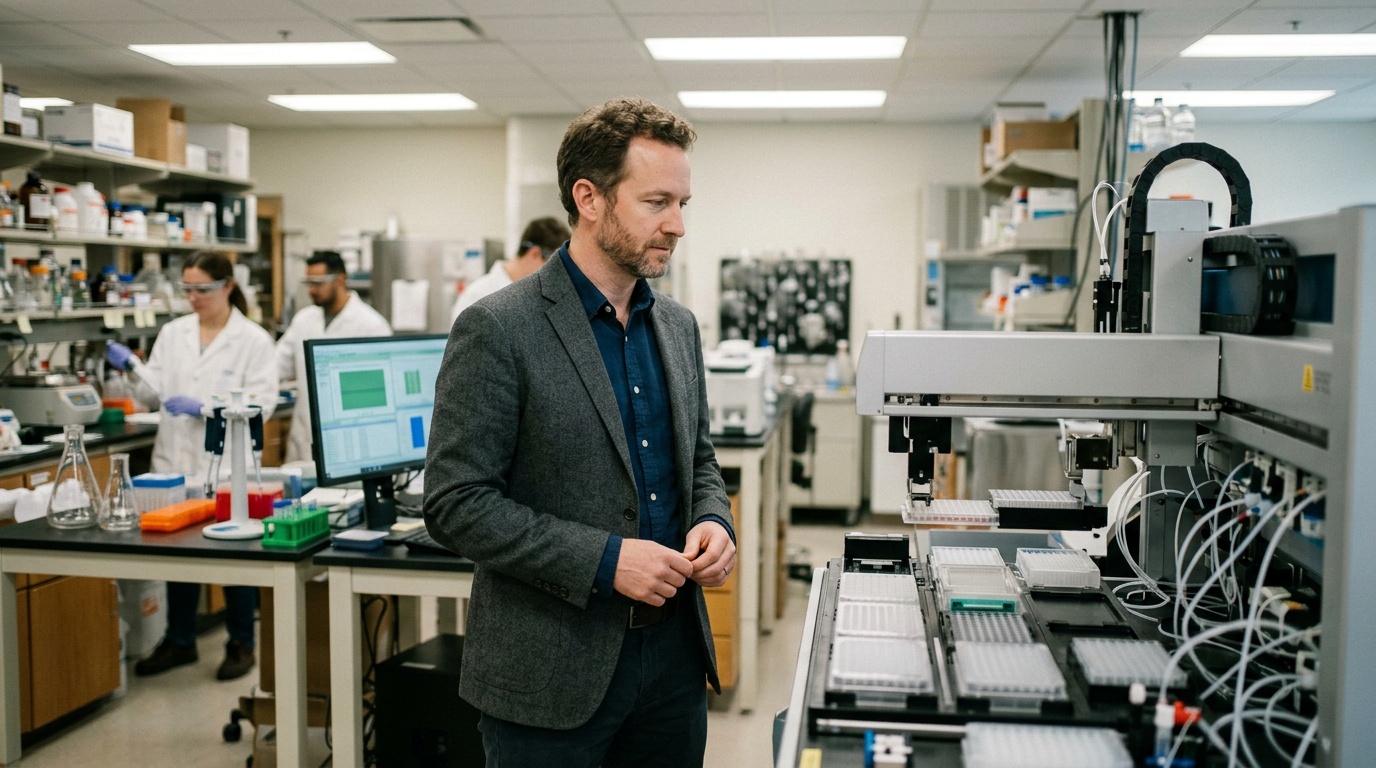
A former OpenAI science lead has launched a robotics startup focused on automating wet laboratory work. The venture targets repetitive experimental tasks that still require extensive manual handling, scheduling, and documentation. Its central premise is straightforward: scientists should design experiments while machines execute standardized procedures. That goal places the company between artificial intelligence, laboratory automation, and scientific infrastructure.
Wet labs differ from purely computational research because they manipulate physical samples under controlled conditions. Small mistakes can alter results, waste expensive reagents, or damage delicate biological material. Automation can reduce that variability, although machines also create new engineering and oversight demands. The startup must therefore deliver reliability alongside speed and convenience.
Why Wet Laboratories Remain Difficult to Automate
Researchers regularly transfer liquids, prepare samples, manage cultures, monitor reactions, and operate specialized instruments. Many procedures involve repeated actions across dozens or thousands of samples. Skilled technicians often perform those actions with pipettes, centrifuges, incubators, and measurement equipment. Manual execution consumes time that scientists could spend interpreting evidence or planning better experiments.
However, laboratory work rarely follows one universal process. Different experiments require specific temperatures, timings, containers, reagents, and safety controls. Biological samples can also behave unpredictably, even when researchers follow identical instructions. A successful robotic platform must handle variation without sacrificing the consistency that makes automation valuable.
Existing laboratories also contain equipment from many manufacturers. Each instrument may use proprietary software, communication protocols, and data formats. Researchers frequently connect these systems through manual procedures or custom integrations. That fragmented environment creates an opening for software that coordinates instruments, robots, samples, and experimental records.
How an Automated Wet Lab Could Operate
The startup’s challenge extends beyond building a robotic arm. An effective system must understand protocols, move materials, operate instruments, and document every action. It must also detect failures before they compromise an entire experiment. These requirements combine mechanical engineering, machine vision, laboratory software, and artificial intelligence.
Robotic Hardware and Laboratory Instruments
A typical automated workcell could include liquid handlers, robotic arms, plate readers, incubators, and storage systems. Robots could transport plates between stations while liquid handlers perform precise transfers. Cameras and sensors could confirm locations, inspect samples, and identify spills. Standardized containers would simplify movement, although many laboratories still use varied formats.
Physical reliability will determine whether laboratories can trust the system. A robot must grip fragile containers without dropping or contaminating them. It must also recognize blocked paths, missing materials, and incorrectly positioned equipment. Human workers solve these problems intuitively, but machines need sensors, rules, and tested recovery procedures.
Software Orchestration and Experimental Records
Hardware provides movement, but software turns individual machines into a coordinated laboratory. An orchestration layer can translate a scientific protocol into scheduled actions. It can assign instruments, reserve materials, and monitor each experiment’s progress. A useful platform must also preserve sample identities and complete records across every step.
Artificial intelligence could help convert written instructions into structured workflows. Models could also optimize schedules, detect unusual measurements, and recommend follow-up experiments. However, laboratories cannot rely on unverified model outputs. The system needs validation rules, permission controls, and clear boundaries between suggestions and approved physical actions.
The Importance of the OpenAI Connection
The founder’s OpenAI experience gives the launch visibility within the technology industry. That background may also shape how the company approaches models, data, and automated decision-making. However, laboratory robotics presents different risks from conversational software. Physical systems must work safely around chemicals, biological materials, expensive instruments, and human operators.
Large language models may provide accessible interfaces for complex laboratory systems. A researcher could describe an experiment and receive a proposed workflow. The platform could then identify missing details, incompatible steps, or unavailable equipment. Scientists would still need to review the plan before robots begin manipulating real samples.
The strongest advantage may come from combining models with structured experimental data. Automated systems can record precise timings, temperatures, volumes, and instrument settings. Those records can support analysis and improve future planning. High-quality data may eventually help models identify patterns that incomplete laboratory notebooks would conceal.
Commercial Opportunities and Scientific Benefits
Pharmaceutical companies, biotechnology startups, universities, and materials researchers could benefit from flexible laboratory automation. Drug discovery programs often screen numerous compounds and test many experimental conditions. Synthetic biology teams repeatedly build and evaluate biological designs. Materials laboratories also combine substances, process samples, and measure physical properties.
Automation can extend operating hours because robots do not require conventional work schedules. Laboratories could run validated processes overnight and return results the following morning. Faster experimental cycles might shorten research timelines and help teams investigate more possibilities. Greater throughput does not guarantee discovery, but it increases the available evidence.
The company could sell systems, charge subscriptions, lease equipment, or operate laboratories as a service. Each model carries different capital and support requirements. On-site installations offer customer control but require maintenance across many locations. Centralized facilities simplify maintenance, although customers must transport samples and trust an outside operator.
Engineering, Safety, and Adoption Barriers
Laboratory customers will expect strong evidence before placing critical work on a new platform. The startup must demonstrate accuracy, repeatability, uptime, and secure data handling. Regulated research may require detailed audit trails and validated processes. Customers will also examine how the system handles contamination, power failures, broken containers, and unexpected measurements.
Competition will come from established instrument manufacturers, automation specialists, cloud laboratories, and internal engineering teams. Many large laboratories already operate robotic systems for narrow workflows. The startup must show that its platform offers broader flexibility or easier deployment. Integration quality may matter more than impressive demonstrations under carefully controlled conditions.
A More Automated Scientific Workflow
The launch reflects growing interest in connecting artificial intelligence with physical experimentation. Automated wet labs could improve reproducibility, increase equipment use, and relieve researchers from repetitive work. They will not remove scientists from the process. Instead, success will depend on productive cooperation between researchers, software, and dependable machines. Real laboratory performance will ultimately determine whether the startup fulfills that promise.
