

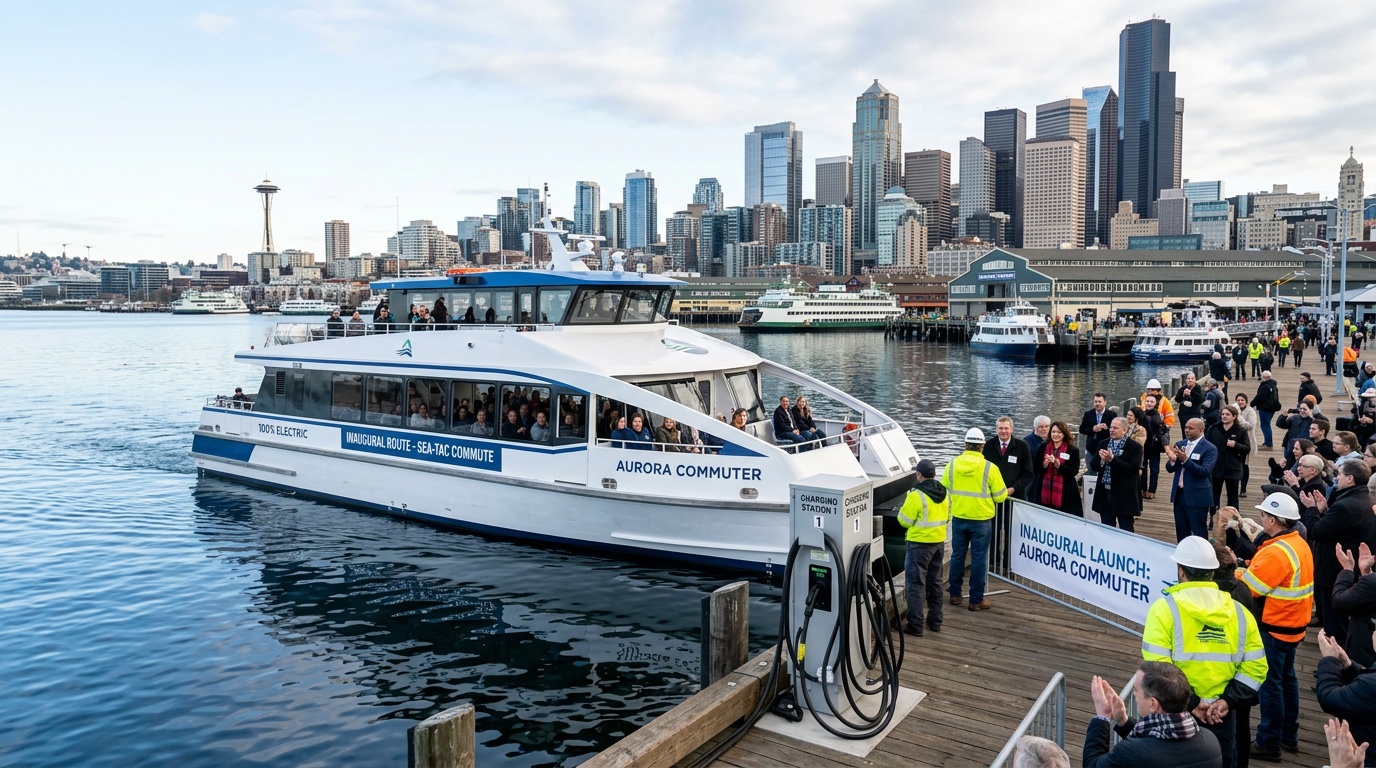
A coastal city has unveiled its first all-electric ferry route, marking a major change in local commuter transport. The battery-powered service will connect busy waterfront communities while reducing pollution from conventional marine engines. Officials expect the route to support daily travel and strengthen the wider public transport network.
The launch reflects growing pressure on coastal cities to address emissions from ferries, buses, cars, and port activity. Ferries provide essential links, but diesel vessels release carbon dioxide, nitrogen oxides, and harmful particles. Electric propulsion removes exhaust emissions during each crossing.
A New Route for Waterfront Commuters
The new route links residential waterfront areas with the city’s central transport district. It targets commuters who previously depended on cars, buses, or diesel ferries. Regular departures should make the service practical for workers, students, visitors, and passengers with appointments.
Transport planners designed the timetable around morning and evening demand. They also coordinated ferry arrivals with nearby bus and rail services. This integration should reduce waiting periods and improve journeys requiring several forms of transport.
The ferry can also relieve pressure on congested coastal roads. Water routes often provide direct connections where road journeys follow longer paths around bays. Faster and more dependable crossings could persuade some drivers to leave their cars behind.
Battery Power Replaces Diesel Engines
The vessel uses rechargeable batteries to power electric motors and onboard systems. Those motors turn the propellers without burning fuel during normal operations. Shore equipment recharges the batteries between journeys or during scheduled overnight periods.
Electric motors deliver torque quickly, allowing smooth acceleration from ferry terminals. They also contain fewer moving parts than conventional combustion engines. That simpler design can reduce mechanical wear and routine maintenance requirements.
However, operators must manage battery temperature, charging speed, and available capacity carefully. Weather, passenger loads, currents, and vessel speed can affect energy use. Digital monitoring systems help crews track consumption throughout each crossing.
Cutting Pollution Along the Waterfront
The ferry produces no tailpipe emissions while operating under battery power. This change directly improves air quality around terminals and densely populated shorelines. People living near busy docks may benefit from lower exposure to diesel exhaust.
Electric propulsion also reduces carbon emissions when charging stations use low-carbon electricity. Actual climate benefits depend on the regional power supply and charging schedule. Renewable energy can further reduce the service’s overall environmental footprint.
Battery production creates emissions and requires minerals, so the vessel does not carry a completely impact-free lifecycle. Manufacturing, maintenance, electricity generation, and eventual recycling all influence total emissions. Even so, efficient electric ferries can outperform diesel vessels over their working lives.
Quieter Journeys Across the Harbor
Passengers should notice less engine noise and vibration inside the electric ferry. Conventional diesel engines create continuous mechanical sounds, especially during acceleration and docking. Electric motors generally provide a quieter and smoother experience.
Lower vessel noise may also benefit waterfront neighborhoods and harbor workers. Underwater sound remains a concern because propellers still create noise. Careful hull and propeller design can limit those effects on marine wildlife.
Charging Infrastructure Supports the Service
The route requires dependable charging equipment at designated terminals. High-capacity electrical connections must deliver energy safely within the operating timetable. Engineers must also protect equipment from saltwater, storms, flooding, and heavy daily use.
Charging strategy strongly affects reliability. Short charging sessions can restore energy during the day, while longer sessions can prepare batteries overnight. Operators may combine both approaches when passenger demand keeps vessels moving for extended periods.
The local electricity network must handle these concentrated power demands. Utilities can schedule charging outside peak periods or use battery storage near terminals. Those measures can reduce pressure on the grid and control electricity costs.
Safety Remains a Central Requirement
Marine authorities require electric ferries to meet strict standards for construction, operation, and emergency response. Battery compartments need fire detection, cooling, ventilation, and isolation systems. Crews also receive specialized training for electrical faults and battery incidents.
Operators must prepare for equipment failures without placing passengers at risk. Backup systems can support navigation, communications, lighting, and essential controls. Detailed evacuation procedures remain necessary, regardless of the vessel’s propulsion technology.
Operating Costs and Public Investment
Electric ferries usually require significant initial spending on vessels, chargers, terminal upgrades, and grid connections. Public funding often supports those investments because transport infrastructure delivers broad social benefits. The city expects lower fuel and maintenance expenses to offset some costs.
Electricity prices remain more predictable than marine fuel prices in many markets. However, operators still face changing energy tariffs and costly battery replacements. Long-term contracts and careful charging schedules can protect budgets from sudden increases.
Passenger numbers will also determine the route’s financial performance. Strong ridership spreads operating costs across more journeys and increases environmental benefits. Reliable schedules, reasonable fares, and convenient connections will influence public acceptance.
Connecting the Ferry With Wider Transport
The city plans to treat the ferry as part of an integrated network, rather than a separate attraction. Shared ticketing can simplify transfers between ferries, buses, trains, and other services. Clear passenger information will help travelers understand departure times and connection options.
Walking and cycling access will also shape the route’s success. Safe paths, bicycle parking, and accessible terminal entrances can expand the ferry’s reach. Passengers should not need a private vehicle to reach either terminal.
Accessible boarding systems remain essential for passengers using wheelchairs, mobility aids, or strollers. Level boarding reduces delays and improves safety for everyone. Staff training can further support passengers who need assistance during busy periods.
Weather and Range Create Practical Limits
Electric propulsion does not remove the operational challenges facing every ferry service. High winds, strong currents, fog, and rough water can disrupt schedules. Crews must place passenger safety above timetable targets during difficult conditions.
Battery range also limits route length and operating flexibility. Reserve capacity allows vessels to handle diversions, delays, and unexpected energy use. Operators must avoid schedules that regularly push batteries close to their safe limits.
A Test for Future Ferry Expansion
The first route will provide valuable information about energy use, reliability, maintenance, and passenger demand. Officials can use that evidence when considering additional electric vessels. Real operating data will carry more value than estimates from controlled trials.
Successful operation could encourage other coastal cities to modernize aging ferry fleets. Many urban waterways remain underused despite growing road congestion. Clean, frequent ferry services can turn those waterways into practical transport corridors.
Still, electric ferries cannot solve every transport problem alone. Cities must also improve land-based transit, walking routes, cycling networks, and urban planning. The greatest reductions will come from coordinated policies that reduce dependence on private cars.
The unveiling therefore represents more than a new vessel or route. It demonstrates how established transport services can adopt cleaner technology without abandoning their essential role. Careful management will determine whether the project delivers lasting environmental and commuter benefits.
