

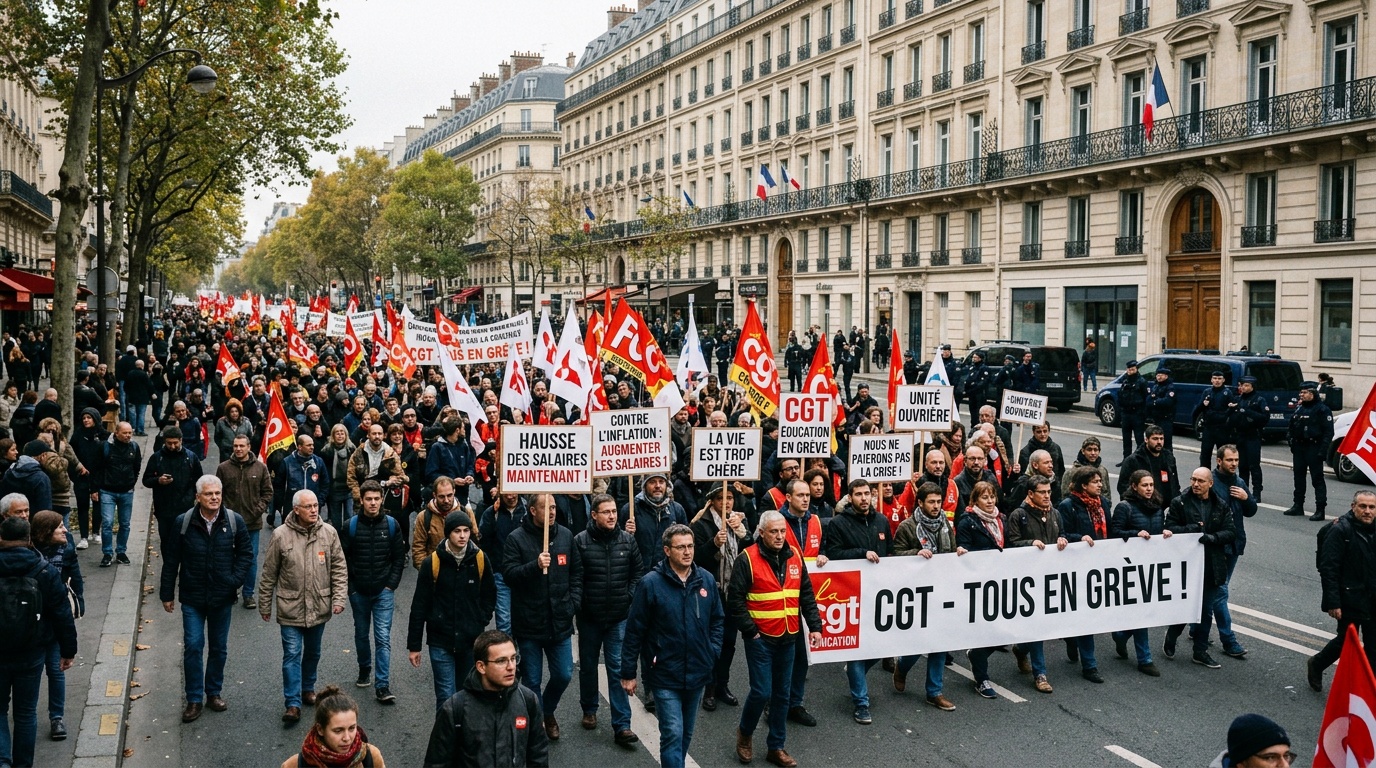
Strike pressure and its causes
France’s nationwide strike movement is gaining force as unions demand stronger protection from rising household costs. Workers have joined stoppages across transport, education, energy, sanitation, and public administration. Participation varies by sector and location, but disruption has sharpened the political argument over purchasing power. Union leaders say wages and public support have not matched the lasting increase in everyday prices.
The government faces pressure from employees who absorbed higher food, housing, fuel, and electricity bills. Inflation has eased from earlier peaks, yet slower inflation does not reverse previous price increases. Families still pay from a permanently higher base while many salaries adjust only gradually. That gap now anchors union demands and gives separate workplace disputes a shared national theme.
What unions are demanding
Most unions want broad pay rises, especially for lower-paid staff and workers covered by lagging agreements. They also seek automatic or faster reviews when inflation erodes negotiated salaries. Public-sector unions highlight the index point, which helps determine civil servants’ basic pay. Private-sector organizers press employers to reopen bargaining and distribute more profits through lasting wage increases.
France already links the statutory minimum wage, known as the SMIC, to inflation through a legal formula. That mechanism protects minimum earners better than many workers immediately above the wage floor. Unions warn that compressed pay scales can leave skilled employees earning only slightly more than new starters. They argue that targeted bonuses cannot replace recurring increases, because bonuses may disappear during weaker business conditions.
Pay protection and wider support
Demands extend beyond monthly pay packets, however, because living costs reflect public policy and essential services. Labor groups seek lower energy burdens, affordable housing, better transport, and stronger funding for hospitals and schools. Some federations also oppose budget cuts that could reduce staffing or weaken local services. These claims connect wage bargaining with a broader dispute over who should bear economic adjustment.
How coordinated action spreads
France’s union system includes several confederations, and each organization chooses its own tactics and priorities. The CGT often favors sustained mobilization, while the CFDT generally emphasizes negotiation before prolonged confrontation. Force Ouvrière, Solidaires, FSU, UNSA, and other organizations also shape national or sectoral campaigns. Their coordination can expand turnout, although disagreements sometimes produce different strike calendars and demands.
As more sectors join, the movement gains visibility and creates mutual pressure across workplaces. Refinery or power action can affect fuel supplies, while rail stoppages alter commuting and business travel. School closures force parents to arrange care, and waste strikes quickly change conditions on urban streets. These effects make industrial action politically powerful, but they can also test public patience.
Transport and energy leverage
Rail workers, metro employees, bus drivers, and aviation staff occupy strategic positions during national mobilizations. Operators publish reduced timetables, and authorities often advise passengers to postpone trips or use alternative routes. French law requires advance declarations from some transport workers, helping managers estimate available staffing. However, minimum-service provisions do not guarantee normal operations or prevent crowding on remaining services.
Energy workers can reduce output, delay deliveries, or interrupt selected operations within safety constraints. Previous French disputes have shown how refinery blockades and depot action can generate shortages and long queues. Electricity unions have also used controlled production reductions to demonstrate workers’ technical and economic leverage. Authorities monitor these actions closely because prolonged disruption could affect businesses, emergency planning, and household confidence.
The household budget argument
Food prices remain central to household anxiety because consumers encounter them during every supermarket visit. Lower-income families spend larger budget shares on necessities, leaving less room for savings or unexpected bills. Renters also face housing pressure, especially in expensive cities and areas with limited supply. Mortgage costs affect buyers differently, while energy charges continue shaping monthly budgets for both owners and tenants.
Official inflation measures track an average basket, but each household experiences price changes differently. Drivers notice fuel costs, parents track food and childcare, and commuters focus on ticket prices. Workers therefore judge purchasing power through personal budgets, not only through national percentages. Unions use that experience to argue that headline improvements may conceal continued pressure on essential spending.
Employers counter that permanent wage increases raise costs and can weaken competitiveness when demand remains uncertain. Small companies often face tighter margins than major groups, particularly after energy and borrowing costs increased. Business organizations may prefer bonuses, profit-sharing, or targeted relief because those measures offer greater flexibility. Unions reject that approach when temporary payments fail to improve pension rights or future salary negotiations.
The government and employer response
President Emmanuel Macron’s government has used energy support, tax measures, and targeted payments during earlier inflation shocks. Officials have also emphasized employment growth and policies designed to make work pay. Ministers usually argue that broad, permanent subsidies cost too much and may support households needing less help. They encourage wage negotiations while warning against a wage-price spiral that could prolong inflation.
Political memory and public support
The confrontation also carries memories of the 2023 pension protests, which mobilized large crowds across France. The government used Article 49.3 to secure passage without an Assembly vote, deepening union mistrust. That conflict demonstrated the unions’ coordination capacity, but it also exposed limits against a determined executive. Current cost pressures allow organizers to rebuild alliances around wages, services, and social protection.
Public support often depends on whether citizens blame the government, employers, or strikers for prolonged disruption. Short actions can publicize grievances without causing lasting hardship, while rolling stoppages create stronger leverage. Yet repeated cancellations, fuel concerns, or school closures can shift sympathy quickly. Union leaders must therefore balance escalation with communication, visible negotiations, and carefully chosen targets.
Negotiating a route forward
France’s labor disputes unfold through both street mobilization and formal bargaining. The government can meet confederation leaders, adjust public pay, or modify planned spending. Employers can negotiate company or industry agreements, including base salaries, allowances, and working conditions. Neither route guarantees a rapid settlement because unions may demand structural commitments rather than one-off concessions.
What could happen next
The next stage will depend on turnout, union unity, public support, and the government’s willingness to negotiate. High participation across several strike days would strengthen claims that discontent reaches beyond militant sectors. Falling turnout could encourage ministers to wait, while concentrated action might still inflict significant disruption. Both sides will watch opinion surveys, workplace votes, transport data, and demonstration numbers.
Economic conditions will matter equally. If food and energy pressures keep easing, households may feel gradual relief despite higher price levels. If wages lag again, unions can argue that workers continue financing the adjustment through weaker living standards. A recession or rising unemployment would complicate demands, because employers would emphasize survival and job protection.
For now, the intensified strikes show how cost-of-living concerns can unite otherwise distinct workplace campaigns. They also reveal a deeper argument about wages, taxation, profits, and the quality of public services. France’s government must weigh fiscal limits against the political cost of appearing unresponsive. Unions must prove that disruption can secure durable gains without losing the public support that gives action legitimacy.
